Privacy Policy: Your email address is 100% safe.
We don't spam and hate it as much as you do :-) You can also unsubscribe from our mailing list at any time.
Subscribe to The FREE Dachshund Training Course to learn how you can easily turn your unruly and disobedient Doxie into a loving, friendly companion. Step-by-step tips for puppy housebreaking, dog obedience training and stopping bad behavior.
Sign Up
Sign Up
Dachshund: Training, Temperament, Exercise Needs & Health (Doxie, Weiner Dog)
About Dachshund
Country of Origin, History of Dachshunds
The Dachshund originates from Germany and it was originally called ‘Teckel’. It is thought that it took roughly one hundred years for the breed to develop and its original purpose was to hunt badgers. In fact, the meaning of the breed's name in German is "badger dog" - from "Dachs" (badger) and "Hund" (dog). Despite their size, even the smallest Dachshund is a keen, fearless hunter! The breed has been a favorite in the United States since the 1950’s and they still continue to grow in popularity today
Dachshund Tools
Breed Selector Tool - is the Dachshund the right breed for you?
Is the Dachshund the right breed for you and your family?
Find out by using our Free Dog Breed Selector Tool
Check Your Dachshund's Learning Style
Are you aware dogs also have a learning style that can greatly affect their ability to housetrain as well as be trained correctly. Evaluate your Dachshund's learning style and personality using our free Learning Style tool so that you are better able to provide him with the proper Dachshund training methods.
Is your Dachshund dominating over you?
Does your Dachshund bark unnecessarily? Does your Dachshund come to you when you call? Download a FREE Report on Dog Dominance for you and your Dachshund and learn how to control your dog.
Do you make these mistakes with your Dachshund?
Are you inadvertently snow-balling bad behavior in your Dachshund? Evaluate your Dog Training Style from our Free Tool and learn how best to deal with your dog.
Dachshund Calorie Calculator
Do you know how many calories your Dachshund needs every day and how many cups of food you should be giving it every day? Click here to use our Dachshund Calorie Calculator.
Description of the Dog
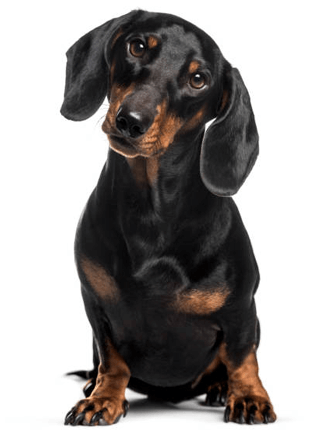
Otherwise known as a ‘sausage dog’, the Dachshund is well known for its extra long body and tiny little legs. There are two main sizes of the breed, either miniature or standard, and within those two different sizes, there are three different types of coat. These include the short haired Dachshund, the long haired Dachshund and the wire haired Dachshund.
The head of the Dachshund is tapered and it has almond shaped eyes which often hold an energetic and pleasant expression. They have long ears which hang down the side of their heads and they have rounded tips which frame the face. The muzzle on this breed tends to be slightly arched and they have a black nose with well open nostrils.
The body is very muscular and the neck is also slightly arched and it flows smoothly into the shoulders. Their front feet have arched toes, thick nails and tough pads. This was to help them dig out badgers from their sets when they used to be used to hunt them. Their back legs are parallel and their thighs are really powerful and strong. The gait of the Dachshund is quite fluid and smooth.
Weight
Male: The Standard weight is 20
pounds and the
Miniature weight is 8 pounds.
Female: The Standard weight is
20 pounds and the
Miniature weight is 8 pounds.
Height
Male: The Standard Dachshund is
usually between 14-18 inches and the
Miniature Dachshund is up to 14 inches in height.
Female: Again the Standard Dachshund is usually between 14-18 inches and the Miniature Dachshund is up to 14 inches in height.

Free Dachshund Training Secrets
Free Course on Dachshund Training & Obedience
Stop All Bad Behavior, Excessive Barking and Biting
Dachshund Personality Traits
Temperament of Dachshund Dogs
Dachshunds are known to be fun loving dogs and they are also tenacious as well as lively too. However, they are also known to become quite irritable and as with many other smaller breeds, they tend to often become jealous.They do make good watchdogs due to the fact that they are naturally wary of strangers and they are also quite bold.
The long haired variety is generally the quietest out of the three and the wire haired variety is more outgoing. It is thought that the miniature variety is generally a lot more timid than the standard Dachshund.
Another trait of this breed is that they can be quite mischievous at times. It loves being around people and is now more of a companion dog than a hunter.Generally the breed is loyal, affectionate, mischievous and outgoing and they tend to melt everyone's hearts.
Although the Miniature Dachshund is thought to be a little bit more timid than the standard Dachshund, you can still train them and socialize them to help build their confidence.Although the Miniature Dachshunds are prone to being a little timid, the Standard Dachshund should not show any timid or aggressive behavior.
Better suited to an indoor or outdoor lifestyle?
Dachshunds are definitely better suited to an indoor lifestyle. They do not really require a yard or garden to run around in so they can live in an apartment if necessary. Even though they do not need a yard or a garden, they do need to be taken outside so that they can relieve themselves and get a little fresh air.
Are they suited to homes with kids?
As with most other breeds, the Dachshund is not naturally good with children. In fact, the breed can easily snap and they do not tolerate small children at all really. Never leave a small child with a Dachshund, especially if the child is not part of the family.They do tend to tolerate older children and more considerate children, just not small ones.
Training
Training can be difficult at times due to the fact that the Dachshund is a very stubborn breed. However, with firm and consistent training, Dachshunds can become quite well trained..
It is important to note that this breed can be a little sensitive to firmness so be sure that your Dachshund is not too scared of you whilst you are training. The easiest way to train a dog is to make it fun and exciting. Your Dachshund will be reluctant to train again if it is traumatized by the experience.Dachshunds generally respond better to a variety of different training methods.
Generally food tends to encourage Dachshunds to train as they are particularly food driven! Overall it is better to be understanding, firm but gentle, and consistent with your training methods. However hard they may be to train, they can be trained if you are persistent and patient.
Free Dachshund Training Secrets
Free Course on Dachshund Training & Obedience
Stop All Bad Behavior, Excessive Barking and Biting
Dachshund Activity Level
How active is the breed?
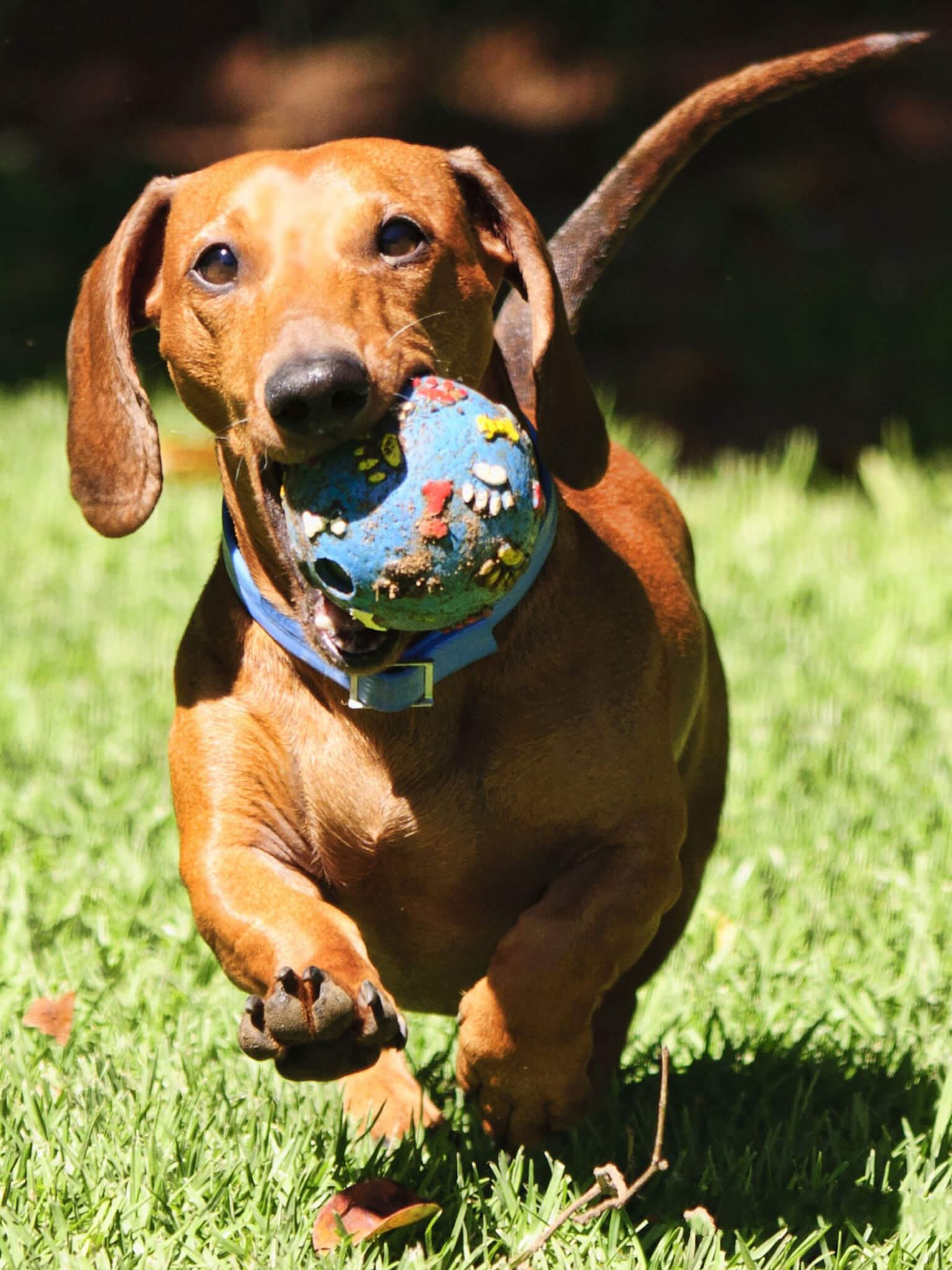
The Dachshund does tend to be quite active both indoors and outdoors. Indoors they may become destructive if they are not given plenty to do or if they are not taken out for a walk during the day.Exercising them as often as possible will help to tire them out. Two walks a day should be sufficient to tire the Dachshund out enough throughout the day. However, really the breed only needs one walk per day.
Exercise Needs
Puppies do not need as much exercise as adults do. Playing with a few s with your puppy should be enough exercise for them. However, when they get into adulthood they do need a little more exercise, but overall they are not an overly active breed.
Is your Dachshund causing you trouble by eliminating inside your house? Get our Free tips on Housebreaking your Dachshund and put an end to all the housetraining nightmares - permanently.
Training your Dachshund can be fun and a rewarding experience for both you and your dog. Get step-by-step tips on Dachshund Training – now.
How to take care of a Doxie Puppy?
It is important to establish a routine with your Dachshund. Make sure you feed at least three small meals per day and ensure that they have fresh drinking water available at all times too. Like all puppies, your Dachshund will need plenty of rest and quiet time in order for them to settle and grow.
Overall they do not need any different care compared to other breeds other than the fact that you should not over feed them.
Do not over-feed your Dachshund as they are prone to gain weight easily and extra weight can lead to various health problems.
If you have a Dachshund dog or puppy at home and you want to train it into the most loving pet, Sign-up for our Free Dachshund Training Course.
Grooming
Each different variety of Dachshunds needs a different amount of grooming. The long haired variety for example, needs a lot more grooming than the short haired variety. Longer haired dogs tend to shed more often and they need daily grooming with a firm bristled brush.
The wire haired variety also needs daily grooming with a bristled brush in order to stop any tangles from forming in the coat. The smooth haired variety only needs its claws trimming regularly, and it simply needs to be wiped over with a damp cloth a couple of times a week. All varieties will need their ears checked daily for any signs or irritation and inflammation.
Grooming your dog yourself, at your home and at your convenience will help you build a strong bond with your Dachshund. You will not only save yourself the hassle of taking him to a groomer regularly, you save some money too.
With the short haired variety the coat is quite shiny. The coat of the wire haired variety tends to be rough and thick and it has a smooth undercoat too. Finally the long haired variety tends to have a slightly wavy and it seems to be longer on the chest and at the neck.
Generally the Dachshund comes in a wide variety of colors and the only color that doesn’t seem to be apparent is white.
Coat
Dachshunds come in three types of coat – Smooth/Short-haired, Long and Wire. Smooth are the most common, and have a dense, shiny short coat. Long-haired Dachshunds have a very soft silky coat with fringes on the underbody, chest, legs tail and ears. The coat pattern is similar to that of an Irish Setter!
Wirehairs have short wiry coats which are very dense and have a dense undercoat. They have a beard, bushy eyebrows and usually prominent ridges of hair above the eyes.
Free Dachshund Training Secrets
Free Course on Dachshund Training & Obedience
Stop All Bad Behavior, Excessive Barking and Biting
Health and Care
Genetic Problems
There are various different problems which can occur with a Dachshund. Canine Intervertebral Disk Disease is one of these problems and it occurs when the back gives in for whatever reason. This stops the dog from walking and often the dog ends up in a specially designed wheelchair for dogs.
Dachshunds are also prone to bloat which is usually only a problem with bigger dogs. It occurs in the Dachshund due to the fact that it is deep chested and it tends to happen when the dog has had a drink and taken in a large gulp of air, and then it goes straight on to exercise and run around.
Unlike bloat in humans, bloat in a dog can be fatal and so it really is a serious problem which you need to be aware of.Obesity is a common problem in Dachshunds as they put on weight extremely easily. Obesity can be quite a severe problem in this breed because they have such tiny legs and long backs.
Breeding the Dog and any Cautions
Breeding Dachshunds does not seem to be any more dangerous than breeding some other types of dogs. As with all breeds there is always a risk that there will be complications and so it always helps to do some research before even thinking about breeding any dog.
Do you have a nice warm place for the puppies to be once they are born? Is it possible to have a vet on hand in case something does go wrong? There are so many questions you need to ask yourself before you breed your Dachshund.
An Dachshund's health is directly related to it's diet. Find out how you can help your Dachshund to live longer.
Litter Size: 3-4 pups
Life Span
Dachshunds tend to live anywhere between 15-18 years. They live a lot longer than larger breeds do, and this is due to the fact that they do not have as much pressure on their hearts.
National Breed Clubs
National Breed Club
e.g. In Australia the National Breed club for the Dachshund is the 'National Dachshund Council'. In America there is a National Miniature Dachshund Club, and a Dachshund Club of America.
Recognition
The Dachshund is recognized by: FCI, AKC, ANKC, KC, CKC, NZKC, UKC.
Group: Hound
AKC Popularity Ranking: 12
Also known as: Standard Dachshund, Miniature Dachshund, Rabbit Dachshund, Teckel, Sausage dog.
Train Your Dachshund To Listen To You
Get Instant Access to Your Training Now - For Free
Sign up for our Free Dachshund Mini Course to have a housebroken, obedient dog that happily comes to you every time you call.
You'll learn new commands to obedience-train your dog as well as how to housebreak your dog in 6 days or less.
You'll also learn how to eliminate bad habits like barking, nipping or biting, jumping, or pulling on the leash.Here's just s small fraction of what else you'll learn in the course:
How to lead and think like a pack dog - the new psychology.
3 dangerous mistakes that most Doxie owners make when they are trying to potty train their dogs.
The 2 main reasons why your dog barks excessively and how to control its excessive barking.
How to obedience train your Dachshund to permanently end behavioral problems like Jumping, Aggression, Pulling on Leash.
A surprisingly easy way to teach your dog cool new tricks.
How to improve your dog's lifespan and keep it from getting overly heavy with a healthy and nutritious diet.
Getting Pro help fast - how to get access to our expert trainers when you need them most.
One hidden psychological trigger that all Dachshunds have... that practically allows you to "analyze" and "control" your dog's every action.
Priority access to the free online seminars conducted by our training experts.
Whereas other dog training related web sites and books offer generic information for dogs in general, ours is the ONLY web site that offers Doxie information specifically, from a renowned panel of experts - because as you probably know, Doxies have their own special training requirements that other dogs don't have.




What Other Dog Owners Say…

Our Free Courses
Dog Obedience TrainingDog Housetraining
Stop Dog Barking
Stop Dog Biting
HomeMade Dog food
Dog Grooming
Adopting A Dog
Read More
PureBred Dog BreedsMixed Dog Breeds
Dog Groups
Training Small Dog Breeds
Training Medium Dog Breeds
Training Large Dog Breeds
Exercising Your Dog
Dog Health
More Articles
Dog Grooming Needs
Our Tribute