Privacy Policy: Your email address is 100% safe.
We don't spam and hate it as much as you do 🙂 You can also unsubscribe from our mailing list at any time.
Subscribe to The FREE Dog Training Course to learn how you can easily turn your unruly and disobedient Dog into a loving, friendly companion. Step-by-step tips for puppy housebreaking, dog obedience training and stopping bad behavior.
Odor Problems in Dogs
Why does a Dog have Doggy Odor?
Like any other animal, dogs will walk, run, and play in areas that might result in their gathering dirt, disease, or odor. Dogs may begin to produce odor due to a number of factors, such as oily skin, dirt accumulation, ear or anal infections, and dental/plaque buildup.
Not only can odor be offensive, it can be a sign of an unhealthy dog. If a dog is not monitored, and the sources of doggy odor are not removed, the dog will develop chronic physical problems.
What to do about Doggy Odor?
When a dog begins to emit doggy odor, closely inspect the dog from head to tail. Check the dog’s ears for debris, red skin, and odor.
If an ear infection is present, it could be the result of the dog’s ears not being properly ventilated. Ear infections are common in dogs who have ears that are floppy or folded over.
If the dog’s ears are not properly ventilated, the inside becomes moist and warm, and infection can easily result.
Look in the dog’s mouth for plaque buildup on the teeth, and for discolored or missing teeth.
In addition to the well-known “dog breath,” additional odor may be coming from the dog’s mouth as a result of food buildup and poor oral hygiene.
Check the dog’s feet; there may be a cut or infection on the dog’s foot pads. This type of injury should be immediately cleaned and bandaged.
Run your fingers through the dog’s coat, and make sure you inspect all sides of the coat. There may be a concealed skin injury underneath the dog’s fur.
Also, check for an oily or greasy texture appearing on the dog’s coat. The coat might be producing dandruff or the skin may be flaky.
One of the most prominent areas for odor generation is the dog’s backside. There could be anal infection, a buildup of feces on the dog’s coat, or the dog might be constipated or have diarrhea, both of which will produce significant odor.
As you are inspecting the dog’s body, take detailed notes on what you see, smell, feel, and hear.
These notes will become valuable when you take the dog to a veterinarian. Also, it will document signs or symptoms that you might forget to tell the veterinarian.
If your dog is exhibiting odor and is found to have an infection or illness, take proactive measures to protect your dog. Take action and make a dog-care schedule for your dog.
Dogs need to be kept clean, but caution must be taken not to give the dog too many baths. If a dog is bathed every week, the dog’s coat is deprived of natural oils. As a result, over-bathing the dog can increase odor. A dog should be bathed once a month.
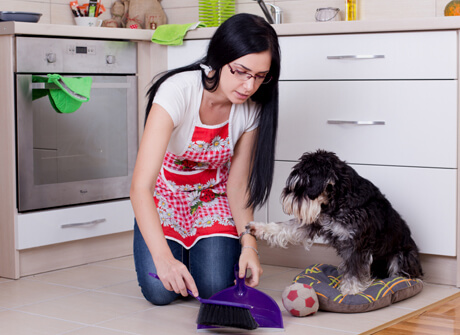
Part of maintaining a clean home includes washing animal bedding, play toys, and the dog’s collar. After washing the dog’s bedding, make sure that the bedding is completely dry before allowing the dog to sleep on it.
If the bedding has been removed from the dryer or brought in from a clothes line, vacuum the bedding with a small hand vacuum; this will remove any debris that was left by the dryer.
A dog should be monitored when it goes outside, especially if your home is in a rural and/or wooded area. The dog might be picking up odors from discarded garbage or a dead animal carcass. Odors from rotting food or meat are extremely pungent.
Also, they can induce vomiting if eaten. If your dog is allowed to go into wooded areas or alleys, follow the dog to see if he is eating carrion or miscellaneous garbage.
When dogs have odor emitting from their teeth or gums, it can be treated with a professional brushing which can include removing plaque from the dog’s mouth.
Ask the vet about dog treats that are designed to help keep teeth and gums clean. Make teeth inspection a regular part of your dog’s cleaning schedule.
When your dog has been playing in dirt or mud, keep two or three old towels ready to clean the dog’s coat.
One towel can be put in water and used to clean the dog’s coat, and the other towel can remain dry and used to dry the dog’s coat. Dogs enjoy physical attention and respond well to having their coats cleaned.
Brushing the dog on a daily basis helps to reduce smell, remove excess fur, and stimulate new hair growth. Finally, ask your veterinarian about changing the dog’s diet. Dog food that contains solid meat promotes healthy skin, teeth, gums, and stools.
High-quality food is available through a veterinarian or at large-scale pet shops. When shopping at a pet store, ask the store staff for recommendations.
Animal odors can result from a number of different sources. To make sure that your dog is free of odor, it is necessary to perform regular visual checkups.
The doggy odor will be removed when the dog’s body is inspected thoroughly, cleaned regularly, and taken to the veterinarian for regular checkups.
Train Your Dog To Listen To You
Sign up for our Free Dog Mini Course to have a housebroken, obedient dog that happily comes to you every time you call.
You'll learn new commands to obedience-train your dog as well as how to housebreak your dog in 6 days or less.
You'll also learn how to eliminate bad habits like barking, nipping or biting, jumping, or pulling on the leash.