
Privacy Policy: Your email address is 100% safe.
We don't spam and hate it as much as you do 🙂 You can also unsubscribe from our mailing list at any time.

Subscribe to The FREE Dog Training Course to learn how you can easily turn your unruly and disobedient Dog into a loving, friendly companion. Step-by-step tips for puppy housebreaking, dog obedience training and stopping bad behavior.
Suspiciousness towards Strangers in Dogs
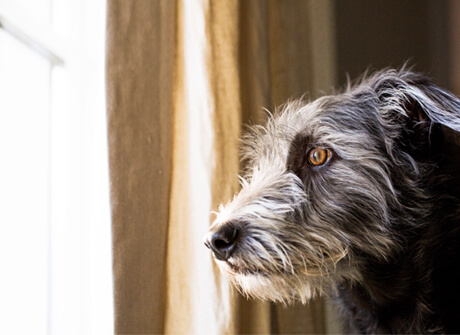
Some dogs, like Dachshunds, tend to be suspicious as a part of the breed’s specific instincts. Dogs can become suspicious when they are not socialized properly as puppies. Dogs of this nature need extensive exposure to sights, sounds, and a variety of people; otherwise, their cautious nature may turn into suspiciousness, and this can lead to biting behavior in the dog.
By nature, some dogs tend to be aloof and standoffish; they need extensive socialization because this has a significant effect on how some puppies like the Dachshunds interact with people and other animals throughout its life. Some puppies must start socializing from the age of seven weeks and continue to six months of age.
Equally important is adolescent socialization in some breeds. Some dogs’s adolescence begins from the ages of six to nine months and ends when the pup is between one and three years old. Dog’s adolescence can involve emotional changes and behavioral problems. An adolescent dog will change its attitude and responses to strangers and other animals frequently.
Understanding if your Dog is Suspicious
Your dog is exhibiting signs of suspiciousness when it growls, whines, barks, urinates, or runs away from unfamiliar people or animals. It is important to note that a dog that has been allowed to develop suspicious behavior will not become accustomed to unfamiliar people or animals. They will only become relaxed with the people or animals with which they live on a regular basis. Once developed, suspiciousness becomes a permanent behavior trait.
When pet owners bring a new animal into the house, they can become very protective, especially if the animal is a puppy. Young dogs are very energetic and are prone to running out of the house and out of an unfenced yard. The animal might become lost or harmed due to its inexperience. Some pet owners overprotect their puppies out of concern for the animal’s safety and their own piece of mind.
The owner of a pup might keep the dog away from unusual sights, sounds, or people. When this occurs, the dog will not experience the socialization that is necessary, and permanent, suspicious behavior may result.
One of the most frequent signs of suspicious behavior in some breeds is called submissive urination. The dog will urinate when it becomes excited; this can be seen when an unknown person enters the home or if the dog is touched suddenly.
Submissive Urination is specific to the dog, and it should not be thought of as bad behavior. The dog is trying to communicate to its guardian that the guardian is in control, and the dog wants to please its guardian, so it acts submissively.
Submissive urination can be treated. The dog must be kept from becoming quickly or unexpectedly excited. The dog can be trained through constant exposure to various stimuli that is known to excite him until the excitement subsides. For example, if the dog urinates when strangers enter the home, ask one or two of these people to help train the dog. Ask them to come into the home quietly. Tell them to speak and move slowly, ignore the dog, and then sit down. Ask them to repeat this behavior several times, and monitor the dog’s behavior.
The dog should become less excited each time the person enters the room. Ignore the dog’s excited behavior and any urination; don’t ever become angry and scold or hit the dog if it urinates in a submissive manner. After the dog is exposed to the stimulus, take him outside to urinate.
How to Control Suspiciousness in Dogs?
Because suspiciousness may become part of the dog’s personality, a formal training program might be the first choice in controlling suspicious behavior in dogs. A training program will help the dog and its guardian(s) to communicate in a manner that will reduce fearful behavior in the dog. Also, a program will help the dog’s guardian know how and when to provide additional training and rewards for desired behavior.
One of the major benefits of training programs is that the dog will receive sustained attention; this attention can make the dog feel more secure, and the dog will experience consistent situations (exposure to people and other animals) that might be uncommon at home. The dog will learn how to respond to these situations in a less excited or anxious manner.
Training after a formal program has ended must be consistent and reliable. Some dogs experience suspiciousness, excitement, and anxiety because he does not know what to expect. When training this breed of dog, the commands should be kept to one word, and that word should be used each time during the training session.
Also, rewards should be as consistent as the commands. Use the same type and size of dog treat. Verbal praise should be plentiful and the words used should be the same as well. The dog will respond well to consistency and predictability.
When training is presented in a uniform and reliable manner, the dog will know what to expect and suspiciousness will be reduced. The dog will gradually generalize this behavior into other situations and circumstances in the home.
Train Your Dog To Listen To You
Sign up for our Free Dog Mini Course to have a housebroken, obedient dog that happily comes to you every time you call.
You'll learn new commands to obedience-train your dog as well as how to housebreak your dog in 6 days or less.
You'll also learn how to eliminate bad habits like barking, nipping or biting, jumping, or pulling on the leash.