Privacy Policy: Your email address is 100% safe.
We don't spam and hate it as much as you do :-) You can also unsubscribe from our mailing list at any time.
Subscribe to The FREE Yorkshire Terrier Training Course to learn how you can easily turn your unruly and disobedient Yorkie into a loving, friendly companion. Step-by-step tips for puppy housebreaking, dog obedience training and stopping bad behavior.
Sign Up
Sign Up
Yorkshire Terrier: Temperament, Exercise, Grooming, Health (Yorkie)
About Yorkshire Terrier
Country of Origin, History of Yorkshire Terriers
As a hunting group, terriers were brought up to have a feisty nature and a high level of courage and tenacity to be able to chase small, burrowing animals over a long distance. The Yorkshire Terrier too was bred for all these qualities, to chase and kill rats, mice and other vermin.
As its name suggests, the Yorkshire Terrier originated in Yorkshire County and the neighboring Manchester County. In the mid-nineteenth century, craftsmen from Scotland who came to Yorkshire for work, brought with them several different varieties of small long-coated terriers, generally known as Scottish terriers.
Although the specific breeds that make up the Yorkshire Terrier are not known, some breeds are commonly thought to be its ancestors. The Scotsmen seeking employment in and around Yorkshire is believed to have brought with them certain terrier breeds such as the Clydesdale, Paisley, Skye and Waterside, some of which are now extinct. The Yorkie was first brought in the United States in the year 1872 and was one of the first twenty five breeds to be approved by the American Kennel Club. At the time of the Victorian era, the Yorkshire Terrier gained particular popularity among the Americans.
Yorkshire Terrier Tools
Breed Selector Tool - is the Yorkshire Terrier the right breed for you?
Is the Yorkshire Terrier the right breed for you and your family?
Find out by using our Free Dog Breed Selector Tool
Check Your Yorkshire Terrier's Learning Style
Are you aware dogs also have a learning style that can greatly affect their ability to housetrain as well as be trained correctly. Evaluate your Yorkshire Terrier's learning style and personality using our free Learning Style tool so that you are better able to provide him with the proper Yorkshire Terrier training methods.
Is your Yorkshire Terrier dominating over you?
Does your Yorkshire Terrier bark unnecessarily? Does your Yorkshire Terrier come to you when you call? Download a FREE Report on Dog Dominance for you and your Yorkshire Terrier and learn how to control your dog.
Do you make these mistakes with your Yorkshire Terrier?
Are you inadvertently snow-balling bad behavior in your Yorkshire Terrier? Evaluate your Dog Training Style from our Free Tool and learn how best to deal with your dog.
Yorkshire Terrier Calorie Calculator
Do you know how many calories your Yorkshire Terrier needs every day and how many cups of food you should be giving it every day? Click here to use our Yorkshire Terrier Calorie Calculator.
A General Appearance of the Dog
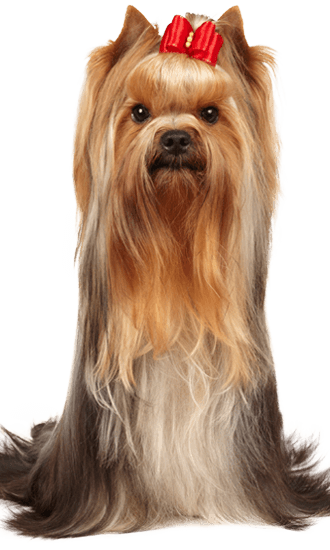
One of the first things to notice about a Yorkshire Terrier is its hairy, long coat and a small but well proportioned body. Though a toy breed, the Yorkshire Terries exudes ample intelligence and vitality, which reflects its activeness. Short and erect, the Yorkshire Terrier has a small head with a prominent set of eyes, and a short muzzle with a deep black nose. Their ears are v-shaped, pointed and should stand erect. Both front and hind legs are straight,with elbows neither turned inwards nor outwards, when viewed from front or back. Yorkshire Terriers have a small, straight tail and a slightly slanting back.
Coat
Steel blue colored body and tail and a rich deep tan around the 'headfall', with the base of the ears and the area around the muzzle darker than the rest of the face. The tan color should not extend to your Yorkshire Terrier's back or neck.
Three important things to note about your Yorkshire Terrier's coat are color, quality and quantity. Moreover, Yorkshire Terriers do not have an undercoat, unlike most other dogs.
A good coat means hair that is soft and silky with ample shine and lustre. All of its body hair, particularly the head hair (known as the head fall), the hair on their muzzle should be long, with a rich tan color. While hair in between their paws maybe clipped to give a neat look, the hair on their ears needs regular trimming to help them stand erect. Yorkies hardly shed their coat but what you need to care about is messy, tangled hair.
Height
Male : 7 - 9 inches
Female : 7 - 9 inches
Weight
Male: 4-7 lbs
Female: 3 - 7 lbs

Free Yorkshire Terrier Training Secrets
Free Course on Yorkshire Terrier Training & Obedience
Stop All Bad Behavior, Excessive Barking and Biting
Yorkshire Terrier Personality Traits
Temperament of the Dog
Despite their small structure, the Yorkshire Terrier has an attitude that is so exuberant and courageous, it would lead us to believe that the dog is not aware of its actual size. Though a toy breed, this dog displays ample courage and alertness which makes it a perfect home guard. This is also because of the fact that the Yorkshire Terriers owing to their origin(as a vermin hunter, ratter) have an acute sense of hearing.
Although Yorkshire Terriers usually live peacefully and in harmony,even with outside pets, they can be at times very territorial, especially the male yorkies. This is why introduction of a new pet cat or dog should be done very carefully. In case you are planning to keep a hamster or a rat(as a pet) along with your Yorkshire Terrier, drop the idea!
Due to their hunting instincts, your Yorkie is sure to devour your other pet, unless of course you plan to watch over like a hawk.
Better suited to an indoor or outdoor lifestyle?
A Yorkshire Terrier is undoubtedly an indoor pet and rightly so, considering some of its basic characteristics. Firstly, the yorkie has a small, light body structure and is surely very easy to carry and barely takes up any space. Despite having a hairy coat, the yorkie hardly ever sheds, making it a true blessing for those of us allergic to dog hair.
Moreover, the dog is swift, alert and yet graceful, and is sure to inform you of just about any intruder. If you do not have a big house or a very spacious backyard, you can still keep a yorkie, for this is one breed that needs hardly any exercise.
Also, the Yorkshire Terrier is above all a fairly well behaved, peaceful dog, tolerant of other pets around them and it is precisely all these qualities that make a yorkie one of the best loved indoor pets.
Are they suited to homes with kids?
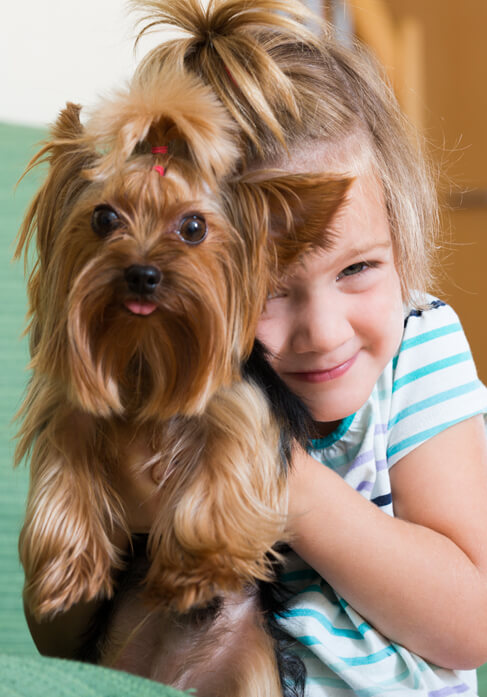
Yorkshire Terriers are usually fond of people and children. But owing to their size and the fragility of the structure, it is best for Yorkshire Terriers to be monitored when interacting with really young children. Moreover temperaments differ among yorkies and some may not prefer children like the others. However, if handled with care and a lot of love, yorkies are sure to give you back the affection and be great companions.
Training
Yorkshire Terriers tend to be a little hard to train, than some other breeds, as a result of their very nature to work without human interaction or assistance of any sort. This independence and free-spirited nature of Yorkshire Terriers make them rather difficult to house-break. However, consistent training will result in your Yorkie learning a great deal. All you really need to do is be patient and invest sufficient time and energy into training your dog.
Free Yorkshire Terrier Training Secrets
Free Course on Yorkshire Terrier Training & Obedience
Stop All Bad Behavior, Excessive Barking and Biting
Yorkshire Terrier Activity Level
Exercise needs of a yorkie is relatively simple and it readily acquires the activity level of its owner's. Moreover, a Yorkshire Terrier hardly requires rigorous exercises, owing to its frail, miniature structure. However, if the place where you live does not have a harsh weather, it is okay to take your yorkie out on walks frequently.
How to take care of a Yorkie Puppy?
It is needless to say that puppies would need extra care right from the time of birth till they are old enough to move around the house freely on their own. Update yourself on various puppy diseases such as Toxic Milk, Hypoglycemia, Fading puppies etc. From the time they are about 8 weeks old, puppies would need proper vaccination at regular intervals, talk to your vet and schedule appointments as per your pup's requirements.
Be sure to remove all possible hazardous things from your pup's reach, such as moth balls, detergents, bleaches, aerated cans, plastic scraps, fruit pits and foodstuffs such as chocolates, bones or play items like balls, batteries etc.
Keep your puppy well protected and make it feel safe. Often plastic or fiberglass crates or cages acts like an indoor home to them. Buy one that does not have any sharp edges but is comfortable at the same time. However, do not leave your puppy on its own before you have accustomed him to be in that way.
Grooming
Yorkshire Terriers require ample bathing and brushing to help their coat be clean and silky. A dry, tangled coat needs to be first wet with warm water and slowly worked out with fingers. Soft pin brushes with a rubbery texture is a good grooming device. Brush hair daily or weekly,(depending upon your dog's need) with a metal comb that has long teeth, to ensure you cover the entire length of the coat.
Be careful not to break your dog's hair in case it is tangled or feels dry. If you must blow dry your dog's coat, then make sure you dry them under low to medium heat, since their skin is far more sensitive to heat and burns easily. The area around and under your dog's eyes needs to be cleaned of the mucous and dried on a regular basis. Use a damp soft cloth or cotton wads to gently clean under the eyes.
To keep your Yorkshire Terrier's
ears perfectly erect, trim them every few weeks
carefully,along the contours, so as not to ruin
its original shape or cut the ear leather.
Excessive hair needs to be trimmed from significant
areas such as the rectum (to help your pet keep
clean at all times) and under the paw.
Although most photographs of Yorkshire Terriers show them in long coats, it is only one of the styles. If you fail to regularly groom, shampoo or condition your dog's long coat, it will be a mess. To keep your Yorkshire Terrier's coat short, you may give your dog a short crop - more popularly known as the 'puppy cut'. This one is no doubt relatively easy to maintain, but you'd still need to groom your dog.
Free Yorkshire Terrier Training Secrets
Free Course on Yorkshire Terrier Training & Obedience
Stop All Bad Behavior, Excessive Barking and Biting
Health and Care
Cautions about Breeding the Dog
Before you decide to breed your
dog, it is important that you educate yourself on
the various conditions that may arise, and be prepared.
Is your dog a healthy example of its breed? Several
infections transfer through breeding, therefore
please ensure that the Bacteria Cultures and Brucellosis
Tests have been performed on both the male and the
female dog. Check the female dog additionally for
diseases such as the Luxating Patella's, Cardiomyopathy,
or Hypothyroidism, which are very much a reality
of breeding. Above all, ask yourself if you have
the time or inclination to find out about probable
hereditary faults.
Complications do occur, and it is best not to take
anything, especially your dog's health for granted.
Do not leave your Yorkshire Terrier alone close
to her whelping time, and make sure you stay with
her for a day, both before and after she gives birth
to her young ones. Educate yourself more and more
on raising young puppies and ask your vet about
conditions such as Scepticemia, Toxic Milk, Hypoglycemia,
Fading Puppies etc.
Once the puppies grow up to be eight weeks old, vaccines need to be monitored at regular intervals until they are about four months old. Please remember that breeding your Yorkie will need ample time, money and the best care from you as the owner.
Life Span: Between 12 to 15 years.
National Breed Clubs
National Breed Club: The Yorkshire Terrier Club Of America.
Recognition: CKC, FCI, AKC, UKC, KCGB, CKC, ANKC, NKC, NZKC, APRI, ACR
Group: Toy Group
AKC Popularity Ranking: 10
Also Known As: Yorkie
Train Your Yorkshire Terrier To Listen To You
Get Instant Access to Your Training Now - For Free
Sign up for our Free Yorkshire Terrier Mini Course to have a housebroken, obedient dog that happily comes to you every time you call.
You'll learn new commands to obedience-train your dog as well as how to housebreak your dog in 6 days or less.
You'll also learn how to eliminate bad habits like barking, nipping or biting, jumping, or pulling on the leash.Here's just s small fraction of what else you'll learn in the course:
How to lead and think like a pack dog - the new psychology.
3 dangerous mistakes that most Yorkie owners make when they are trying to potty train their dogs.
The 2 main reasons why your dog barks excessively and how to control its excessive barking.
How to obedience train your Yorkshire Terrier to permanently end behavioral problems like Jumping, Aggression, Pulling on Leash.
A surprisingly easy way to teach your dog cool new tricks.
How to improve your dog's lifespan and keep it from getting overly heavy with a healthy and nutritious diet.
Getting Pro help fast - how to get access to our expert trainers when you need them most.
One hidden psychological trigger that all Yorkshire Terriers have... that practically allows you to "analyze" and "control" your dog's every action.
Priority access to the free online seminars conducted by our training experts.
Whereas other dog training related web sites and books offer generic information for dogs in general, ours is the ONLY web site that offers Yorkie information specifically, from a renowned panel of experts - because as you probably know, Yorkies have their own special training requirements that other dogs don't have.




What Other Dog Owners Say…
Our Free Courses
Dog Obedience TrainingDog Housetraining
Stop Dog Barking
Stop Dog Biting
HomeMade Dog food
Dog Grooming
Adopting A Dog
Read More
PureBred Dog BreedsMixed Dog Breeds
Dog Groups
Training Small Dog Breeds
Training Medium Dog Breeds
Training Large Dog Breeds
Exercising Your Dog
Dog Health
More Articles
Dog Grooming Needs
Our Tribute