Privacy Policy: Your email address is 100% safe.
We don't spam and hate it as much as you do :-) You can also unsubscribe from our mailing list at any time.
Subscribe to The FREE Rottweiler Training Course to learn how you can easily turn your unruly and disobedient Rotti into a loving, friendly companion. Step-by-step tips for puppy housebreaking, dog obedience training and stopping bad behavior.
Sign Up
Sign Up
Rottweiler: Training, Temperament, Exercise, Health (Rottie)
About Rottweiler
Country of Origin, History of Rottweilers
The Rottweilers are probably one of the oldest dog breeds. They may have descended from the Italian Mastiff (which is now the Neapolitan Mastiff). They were used as herding dogs in the Middle Ages.
The dog, as we know it today, was bred in the German town of Rottweil in Wurttemberg. It is from this city that they derived their name.
The first Rottweiler club was formed in Germany in 1914. Finally in 1931, they were recognized by the AKC.
The main task for Rotttweilers was to guard the cattle and defend their human families and their property.
During World War I, they became very popular as police dogs.
Not, it us used for tracking, herding, watchdog duties, carting, police work, competitive obedience, and schutzhund.
Rottweiler Tools
Breed Selector Tool - is the Rottweiler the right breed for you?
Is the Rottweiler the right breed for you and your family?
Find out by using our Free Dog Breed Selector Tool
Check Your Rottweiler's Learning Style
Are you aware dogs also have a learning style that can greatly affect their ability to housetrain as well as be trained correctly. Evaluate your Rottweiler's learning style and personality using our free Learning Style tool so that you are better able to provide him with the proper Rottweiler training methods.
Is your Rottweiler dominating over you?
Does your Rottweiler bark unnecessarily? Does your Rottweiler come to you when you call? Download a FREE Report on Dog Dominance for you and your Rottweiler and learn how to control your dog.
Do you make these mistakes with your Rottweiler?
Are you inadvertently snow-balling bad behavior in your Rottweiler? Evaluate your Dog Training Style from our Free Tool and learn how best to deal with your dog.
Rottweiler Calorie Calculator
Do you know how many calories your Rottweiler needs every day and how many cups of food you should be giving it every day? Click here to use our Rottweiler Calorie Calculator.
A General Appearance of the Dog
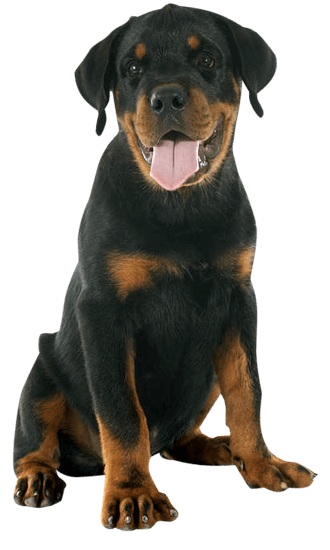
The Rottweiler is a medium large, robust and powerful dog, black with clearly defined rust markings. His compact and substantial build denotes great strength, agility and endurance. He has a broad head with a rounded forehead and a well-developed muzzle. His dark eyes can be friendly or daring. His triangular ears are carried forward. One of the things people find frightening about the Rottweiler is the amount of black – over his body and even inside his mouth. The tail is docked and dewclaws are normally removed. Extremely well-developed musculature is obvious in the jaws, shoulders and hips.
There is much debate about German Rottweiler vs. American Rottweiler. The German version is shorter and stockier with a bigger, more block-y head.
Coat Color
The Rottweiler is mostly black but has rust or mahagony colored markings on his cheeks, muzzle, paws, and legs.
Coat Type
The coat is short, hard, glossy and quite thick. The Rottie is an average shedder. The outer coat is straight, coarse, dense, of medium length and it lies flat against the body. There should be undercoat on his neck and thighs, but how much undercoat the dog possesses is dependent on climatic conditions.
Height
Males: 24 – 27 inches
Females: 22 – 25 inches
Weight
Males: 100 lbs (approx)
Females: 88 lbs (approx)

Free Rottweiler Training Secrets
Free Course on Rottweiler Training & Obedience
Stop All Bad Behavior, Excessive Barking and Biting
Rottweiler Personality Traits
Temperament of the Dog
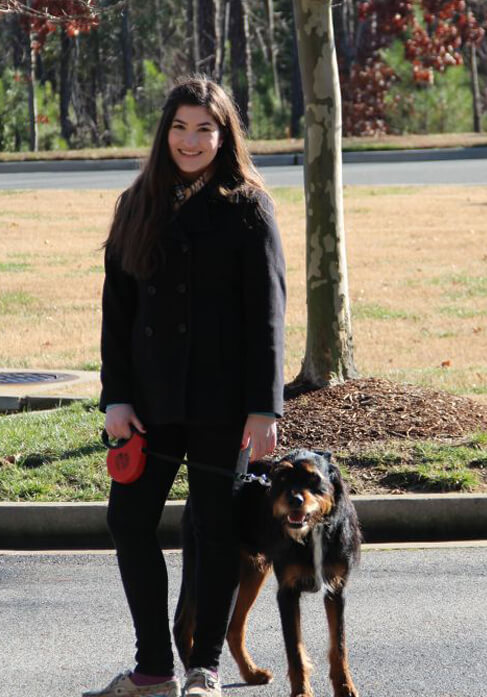
Known for their fierce fighting capabilities when defending their family and property, the Rottweiler is normally a calm, happy, confident dog who loves his family and friends. They love companionship and relish socialization exercises.
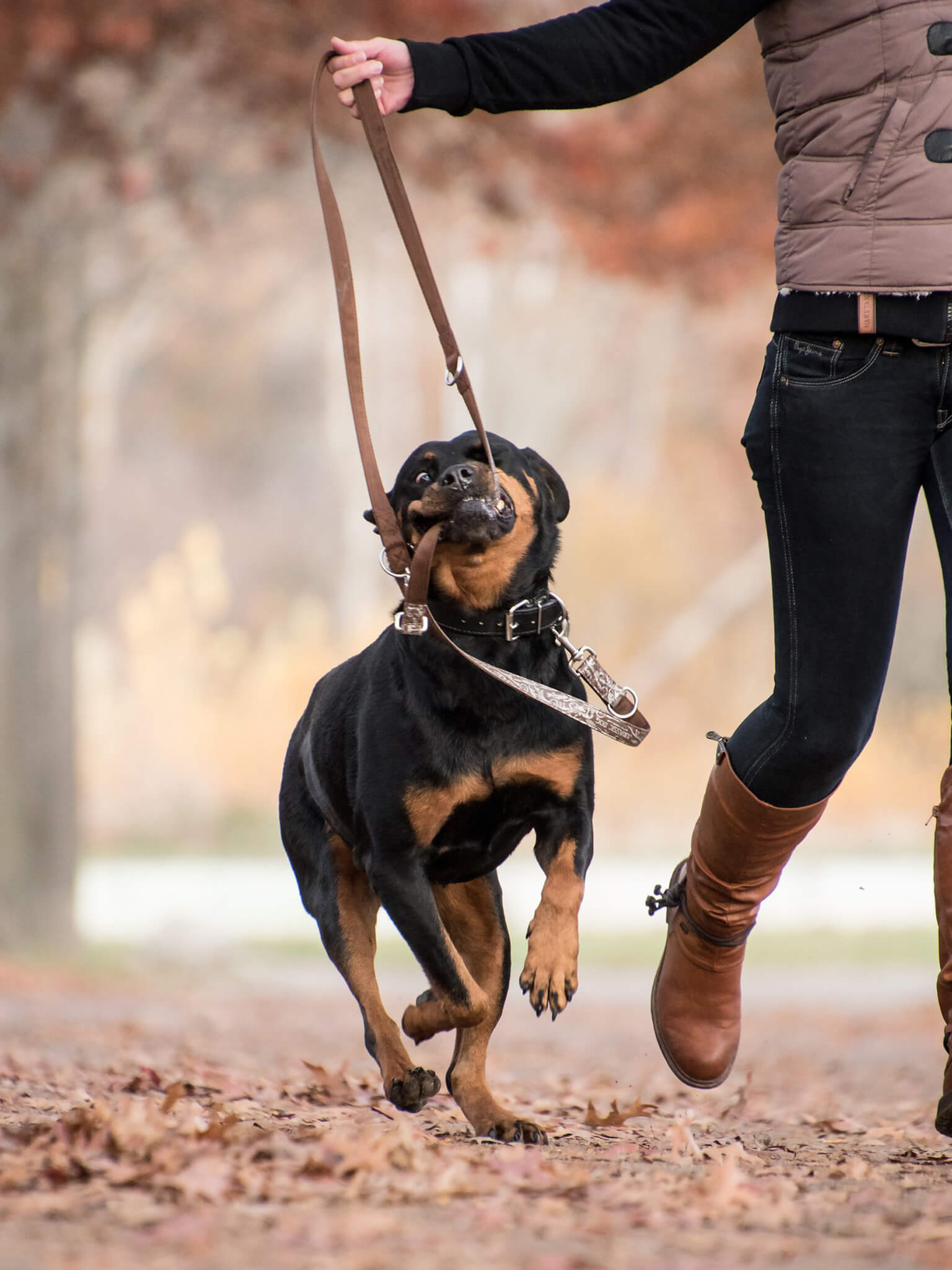
However, if not out of stock that has a nice personality and if not socialized and obedience trained at a young age, Rotties can be hard to handle, aggressive, and unreliable. Having been bred for centuries for guard work, the Rottweiler can easily turn aggressive. Their size and strength will make them impossible to hold on leash should they decide to go some place or be aggressive, so obedience to commands is essential.
They can be aggressive with other dogs and should be kept on leashes in public places. When the Rottweiler is consistently brought up and trained, it will be a good playmate for children. It will accept cats and other household pets as long as the dog has had a positive experience with them while it was young. Friends and relatives of the family are normally enthusiastically welcomed. Strangers can get no further than the sidewalk.
Most people are afraid of a Rottweiler, but that is not the correct reaction to have toward them as it puts them on alert. Proper introductions by the owner will put a correctly trained Rottie at ease and pave the way for a long and happy relationship.
Better suited to an indoor or outdoor lifestyle?
A small, well-fenced yard will be sufficient for a Rottweiler. If he sees something of interest, an invisible fencing system will not hold him. He can live in an apartment if he gets sufficient walks and some play times each week in a well-fenced dog park. The Rottweiler is fairly inactive indoors.
Are they suited to homes with kids?
If they are brought up with children from puppyhood, Rottweilers are good family dogs. Make sure all friends are properly introduced. Either leash or crate the dog if anyone is afraid of him when visiting. He will take advantage of that fear.
Rottweiler Activity Level
How Active is the Breed?
As puppies, Rottweilers are quite energetic, but as adults they are fairly inactive indoors but more active outdoors.
How Much Exercise Does the Dog Need at every stage of its Life?
Puppies like to play with toys and roughhouse with people both indoors and outdoors. However, as they grow into adulthood, they become less active indoors. They still enjoy a good romp outdoors as well as daily walks.
Grooming
Very little grooming is necessary as the Rottweiler has a smooth, glossy coat. A twice monthly brushing with a firm bristled brush keeps it shiny. Bathing is normally unnecessary. They are average shedders.
Free Rottweiler Training Secrets
Free Course on Rottweiler Training & Obedience
Stop All Bad Behavior, Excessive Barking and Biting
Health and Care
Rottweilers are prone to Anterior Cruciate Ligament (ACL) damage.
Being a large, heavy breed, Rottweilers tend to get panosteotitis – growing pains. They should not be jogged or run on a regular basis until after they are a year old.
Rotties snore and drool. They also over-eat and gobble their food, so feed them in 2-3 smaller meals a day.
Genetic Problems
Hip and Elbow dysplasia and entropion are the main genetic problems of Rottweilers. Other problems include ectropian, PRA, cataracts, cancer, some epilepsy, hypothyroidism, Von Willebrand’s disease, OCD, and sub-aortic stenosis.
Breeding the Dog and any Cautions
Talk with several breeders to find the right companion.
Litter Size: 12 puppies are not uncommon
Life Span: 10-11 years
National Breed Clubs
National Breed Clubs
British – British Rottweiler
Association – www.britishrottweiler.co.uk
US – American Rottweiler Club – www.amrottclub.org
Other Recognition: CKC, FCI, AKC, UKC, KCGB, CKC, ANKC, NKC, NZKC, APRI, ACR
Rescue Link: www.rottrescue.org/national_list_rott_rescue.html
Group: Working Group.
AKC Popularity Ranking: 8
Also Known As: Rottie, German Rottweiler, American Rottweiler
Train Your Rottweiler To Listen To You
Get Instant Access to Your Training Now - For Free
Sign up for our Free Rottweiler Mini Course to have a housebroken, obedient dog that happily comes to you every time you call.
You'll learn new commands to obedience-train your dog as well as how to housebreak your dog in 6 days or less.
You'll also learn how to eliminate bad habits like barking, nipping or biting, jumping, or pulling on the leash.Here's just s small fraction of what else you'll learn in the course:
How to lead and think like a pack dog - the new psychology.
3 dangerous mistakes that most Rotti owners make when they are trying to potty train their dogs.
The 2 main reasons why your dog barks excessively and how to control its excessive barking.
How to obedience train your Rottweiler to permanently end behavioral problems like Jumping, Aggression, Pulling on Leash.
A surprisingly easy way to teach your dog cool new tricks.
How to improve your dog's lifespan and keep it from getting overly heavy with a healthy and nutritious diet.
Getting Pro help fast - how to get access to our expert trainers when you need them most.
One hidden psychological trigger that all Rottweilers have... that practically allows you to "analyze" and "control" your dog's every action.
Priority access to the free online seminars conducted by our training experts.
Whereas other dog training related web sites and books offer generic information for dogs in general, ours is the ONLY web site that offers Rotti information specifically, from a renowned panel of experts - because as you probably know, Rottis have their own special training requirements that other dogs don't have.




What Other Dog Owners Say…

Our Free Courses
Dog Obedience TrainingDog Housetraining
Stop Dog Barking
Stop Dog Biting
HomeMade Dog food
Dog Grooming
Adopting A Dog
Read More
PureBred Dog BreedsMixed Dog Breeds
Dog Groups
Training Small Dog Breeds
Training Medium Dog Breeds
Training Large Dog Breeds
Exercising Your Dog
Dog Health
More Articles
Dog Grooming Needs
Our Tribute