Privacy Policy: Your email address is 100% safe.
We don't spam and hate it as much as you do :-) You can also unsubscribe from our mailing list at any time.
Subscribe to The FREE Pug Training Course to learn how you can easily turn your unruly and disobedient Pug into a loving, friendly companion. Step-by-step tips for puppy housebreaking, dog obedience training and stopping bad behavior.
Sign Up
Sign Up
Pug: Breed Temperament, Exercise Needs & Health (Chinese Pug)
About Pug
Country of Origin, History of Pugs
This cute, sturdy breed of dog emerged in China around 400 BC. Pugs were kept as pets by Buddhist monks in China. However, later they made their way to Europe where they were kept by the European nobility as an integral part of European royal lifestyle. It was in 1550 that the pug was declared as the official dog of the House of Orange in Holland and saved the life of Prince Williams by warning him about the approach of Spanish soldiers.
During the Napoleonic Phase in France, Napoleons wife Josephine used her Pug to secretly convey messages when she was imprisoned during the revolution. The pug was brought to England in 1860 and was registered by the AKC in 1885.
There are three different schools of thought regarding the origin of the dog. According to one group, this dog descended from the short haired Pekingese. Others believe that they emerged as a result of a cross of the bulldog with another species. Yet another group go with the idea that they are a form of the French Mastiff.
Pug Tools
Breed Selector Tool - is the Pug the right breed for you?
Is the Pug the right breed for you and your family?
Find out by using our Free Dog Breed Selector Tool
Check Your Pug's Learning Style
Are you aware dogs also have a learning style that can greatly affect their ability to housetrain as well as be trained correctly. Evaluate your Pug's learning style and personality using our free Learning Style tool so that you are better able to provide him with the proper Pug training methods.
Is your Pug dominating over you?
Does your Pug bark unnecessarily? Does your Pug come to you when you call? Download a FREE Report on Dog Dominance for you and your Pug and learn how to control your dog.
Do you make these mistakes with your Pug?
Are you inadvertently snow-balling bad behavior in your Pug? Evaluate your Dog Training Style from our Free Tool and learn how best to deal with your dog.
Pug Calorie Calculator
Do you know how many calories your Pug needs every day and how many cups of food you should be giving it every day? Click here to use our Pug Calorie Calculator.
A General Appearance of the Dog
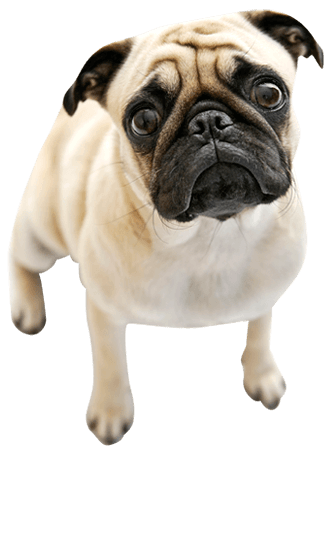
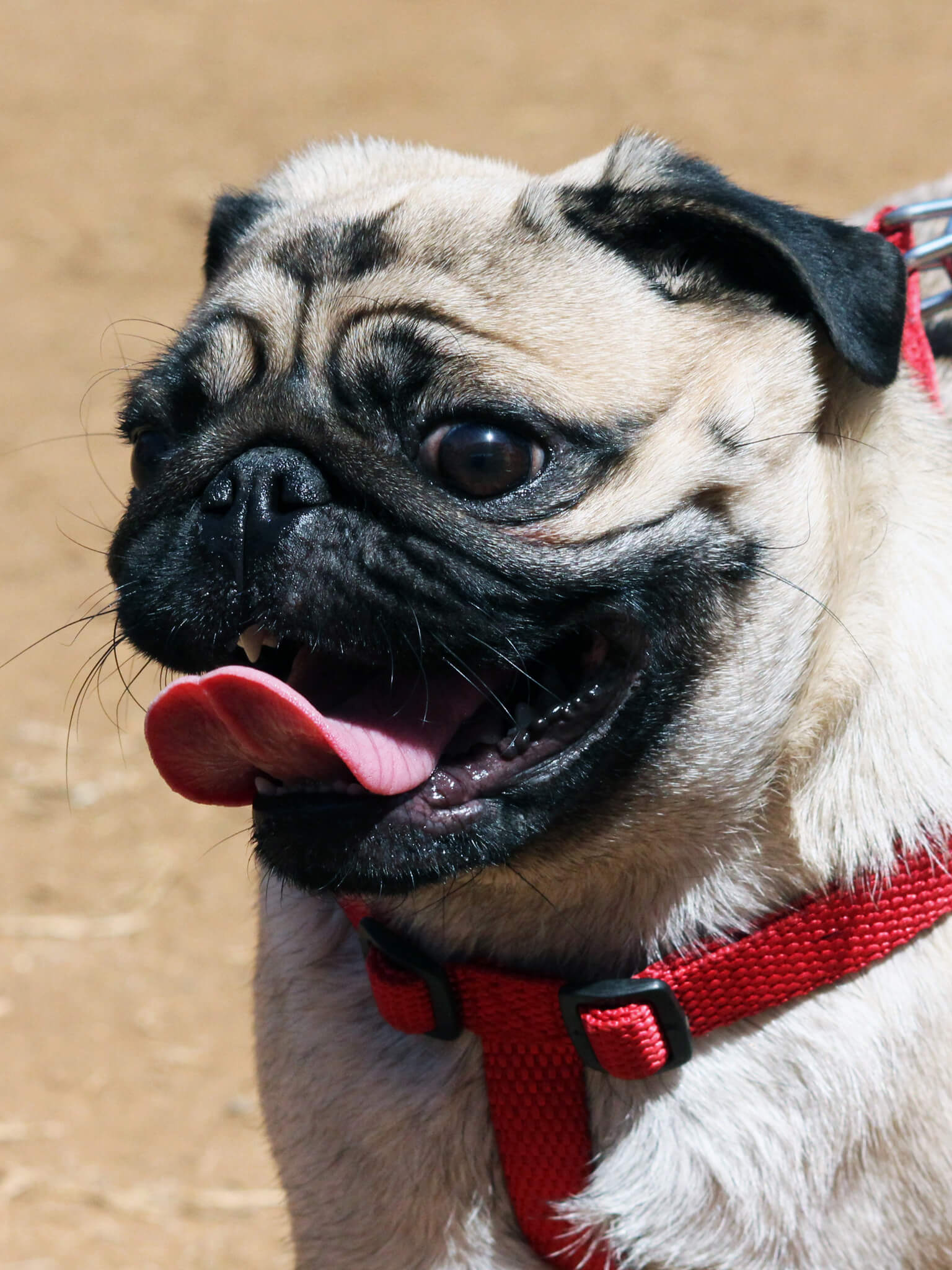
The dog has a short, square, sturdy, compact body and a short back with a short soft coat. A typical feature of the dog is its flat, black, muzzle. Some dogs have moles on their cheeks aside from large, round, expressive eyes and rose shaped ears. The dog has a double curled tail and short, straight,strong limbs.
Coat
The coat color comes in apricot, fawn, black and silver. Pugs have a short, glossy, smooth coat and an undercoat.
Height
Male : 12-14 inches
Female : 10-12 inches
Weight: 13-20 lbs for both males and females

Free Pug Training Secrets
Free Course on Pug Training & Obedience
Stop All Bad Behavior, Excessive Barking and Biting
Pug Personality Traits
Pug Temperament
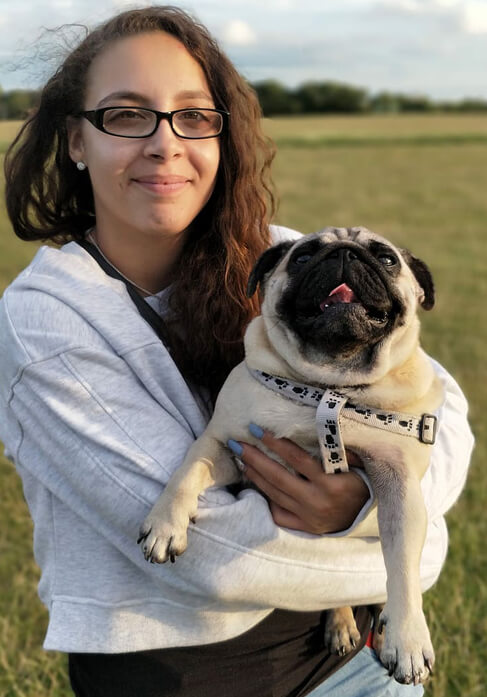
The dog is friendly, affectionate,
boisterous and playful. They are extremely mischievous
and quick -witted.
They are whimsical. They are excellent watchdogs
and are a very intelligent breed. Stern handling
can be harmful for pugs since they are extremely
sensitive dogs.Pugs are often used for therapy .
They are happy and are good with small children.
They can be wary towards strangers, however, if
socialized properly they can behave normally.
They are good with pets and other dogs.
They are perfect companions for small children.
Pugs get bored easily and hence repetitive training
methods can take more time to yield desired results.
Better suited to an indoor or outdoor lifestyle?
These dogs are suitable for the
apartment lifestyle. Houses without yards can get
these dogs as well,but they are inactive indoors.
They are suitable for households with kids.
Are they suited to homes with kids?
Pugs are usually fond of people and children. But owing to their size and the fragility of the structure, it is best for Pugs to be monitored when interacting with really young children. Moreover temperaments differ among yorkies and some may not prefer children like the others. However, if handled with care and a lot of love, yorkies are sure to give you back the affection and be great companions.
Training
Pugs are alert and intelligent and can be easily trained. However, they lack patience and hence repetitive training techniques often bore them. Hence, owners should patiently deal with Pugs. Training techniques should be changed occasionally in order to make them disciplined. Obedience and potty training should be imparted from a very young age. They should be taught to heel, stay, go, sit etc. Pugs are friendly dogs and socialization might further enhance their ability to differentiate friendly and unfriendly behavior. They are unable to take harsh handling and should never be roughly handled.
Free Pug Training Secrets
Free Course on Pug Training & Obedience
Stop All Bad Behavior, Excessive Barking and Biting
Pug Activity Level
The breed is active but they should
never be overexercised since they can develop health
problems.
They should get regular exercise like walks with
owners. They are robust, enthusiastic, and playful
and should receive ample scope to play.
How to take care of a Pug Puppy?
Pug puppies require a lot of care. First and foremost these pups should be provided with a soft collar and comfortable crates,which should be soft and cozy. Moreover,these should always be easily cleanable since puppies are messy. Owners should never try to confine their puppies to the crates since they require adequate amount of exercise through out the day.
Basic hygiene like brushing them
clipping nails, de-worming and vaccination should
be administered from time to time. Healthy nutritional
food should be fed. Puppies should never be overfed
since they can become obese
If the pups have to be left all alone throughout
the day, owners should select a comfortable spot
within the house and place baby gates not only to
prevent them from loitering around and getting hurt
but also to provide them with a space of their own
where they can play as well.
Grooming
Pugs have large eyes and are prone to eye infections. Hence, they should be cleaned regularly. Moreover, they are an allergic breed and they shed. Pugs should be brushed regularly. Owners should use a firm-bristled brush while brushing them and their nails should be clipped occasionally. Their coat do not require much grooming. They should be wiped with a damp cloth to avoid dirt and infections from setting in. Shampooing them frequently should be avoided because chemicals might harm their coat texture.
Free Pug Training Secrets
Free Course on Pug Training & Obedience
Stop All Bad Behavior, Excessive Barking and Biting
Health and Care
Cautions about Breeding the Dog
This is a healthy breed of dog. However, it suffers from some genetic disorders like atopy, cleft palate , collapsing larynx, collapsing and hypoplastic (small, narrow) tracheas, demodectic mange, distichia, dystocia, elongated soft palates, entropion, everted laryngeal saccules, heart disease, hemivertebra, hernias, hip dysplasia
Certain precautionary measures should always be
taken if an owner wishes to breed his Pug. A genetic
test should be conducted to ascertain whether the
Pug suffers from any genetic disorders. It is always
adviced that they should have a caesarian section.
However, loosing the mother dog during whelping
is not uncommon.
Litter Size: 3 puppies
Life Span: Between 12 to 15 years
National Breed Clubs
National Breed Club
British – Pug Dog Club of
UK – http://www.pugdogclub.org.uk/start.html
U. S. – American Pomeranian Club – http://www.AmericanPomeranianClub.org
Recognition: CKC, FCI, AKC, UKC, KCGB, CKC, ANKC, NKC, NZKC, APRI, ACR.
Group: Toy Group
AKC Popularity Ranking: 28
Also Known As: Carlin, Mops
Train Your Pug To Listen To You
Get Instant Access to Your Training Now - For Free
Sign up for our Free Pug Mini Course to have a housebroken, obedient dog that happily comes to you every time you call.
You'll learn new commands to obedience-train your dog as well as how to housebreak your dog in 6 days or less.
You'll also learn how to eliminate bad habits like barking, nipping or biting, jumping, or pulling on the leash.Here's just s small fraction of what else you'll learn in the course:
How to lead and think like a pack dog - the new psychology.
3 dangerous mistakes that most Pug owners make when they are trying to potty train their dogs.
The 2 main reasons why your dog barks excessively and how to control its excessive barking.
How to obedience train your Pug to permanently end behavioral problems like Jumping, Aggression, Pulling on Leash.
A surprisingly easy way to teach your dog cool new tricks.
How to improve your dog's lifespan and keep it from getting overly heavy with a healthy and nutritious diet.
Getting Pro help fast - how to get access to our expert trainers when you need them most.
One hidden psychological trigger that all Pugs have... that practically allows you to "analyze" and "control" your dog's every action.
Priority access to the free online seminars conducted by our training experts.
Whereas other dog training related web sites and books offer generic information for dogs in general, ours is the ONLY web site that offers Pug information specifically, from a renowned panel of experts - because as you probably know, Pugs have their own special training requirements that other dogs don't have.




What Other Dog Owners Say…

Our Free Courses
Dog Obedience TrainingDog Housetraining
Stop Dog Barking
Stop Dog Biting
HomeMade Dog food
Dog Grooming
Adopting A Dog
Read More
PureBred Dog BreedsMixed Dog Breeds
Dog Groups
Training Small Dog Breeds
Training Medium Dog Breeds
Training Large Dog Breeds
Exercising Your Dog
Dog Health
More Articles
Dog Grooming Needs
Our Tribute