Privacy Policy: Your email address is 100% safe.
We don't spam and hate it as much as you do :-) You can also unsubscribe from our mailing list at any time.
Subscribe to The FREE Maltese Training Course to learn how you can easily turn your unruly and disobedient Maltese into a loving, friendly companion. Step-by-step tips for puppy housebreaking, dog obedience training and stopping bad behavior.
Sign Up
Sign Up
Maltese: Breed Characteristics, Care & Exercise Needs

About Maltese
Country of Origin, History of Malteses
The history of Maltese dates back to the ancient times. There are references to this breed in the ancient writings and art works of 5000- 2000 B.C. Maltese, as its name suggests, is believed to have originated from the Isle of Malta in the Mediterranean Sea.
There are, however, evidences which show that Asia is the actual land of origin of this breed. Those who believe Asia to be its place of origin, argue that this breed eventually migrated to Europe through trade.
Maltese was initially imported to Britain and then made its appearance in the U.S. The popularity of this tiny, cute and loveable breed as a companion and showdog has always been on the rise and in 1990's Maltese featured in the list of top 15 breeds of all times.
Maltese Tools
Breed Selector Tool - is the Maltese the right breed for you?
Is the Maltese the right breed for you and your family?
Find out by using our Free Dog Breed Selector Tool
Check Your Maltese's Learning Style
Are you aware dogs also have a learning style that can greatly affect their ability to housetrain as well as be trained correctly. Evaluate your Maltese's learning style and personality using our free Learning Style tool so that you are better able to provide him with the proper Maltese training methods.
Is your Maltese dominating over you?
Does your Maltese bark unnecessarily? Does your Maltese come to you when you call? Download a FREE Report on Dog Dominance for you and your Maltese and learn how to control your dog.
Do you make these mistakes with your Maltese?
Are you inadvertently snow-balling bad behavior in your Maltese? Evaluate your Dog Training Style from our Free Tool and learn how best to deal with your dog.
Maltese Calorie Calculator
Do you know how many calories your Maltese needs every day and how many cups of food you should be giving it every day? Click here to use our Maltese Calorie Calculator.
A General Description of the Dog
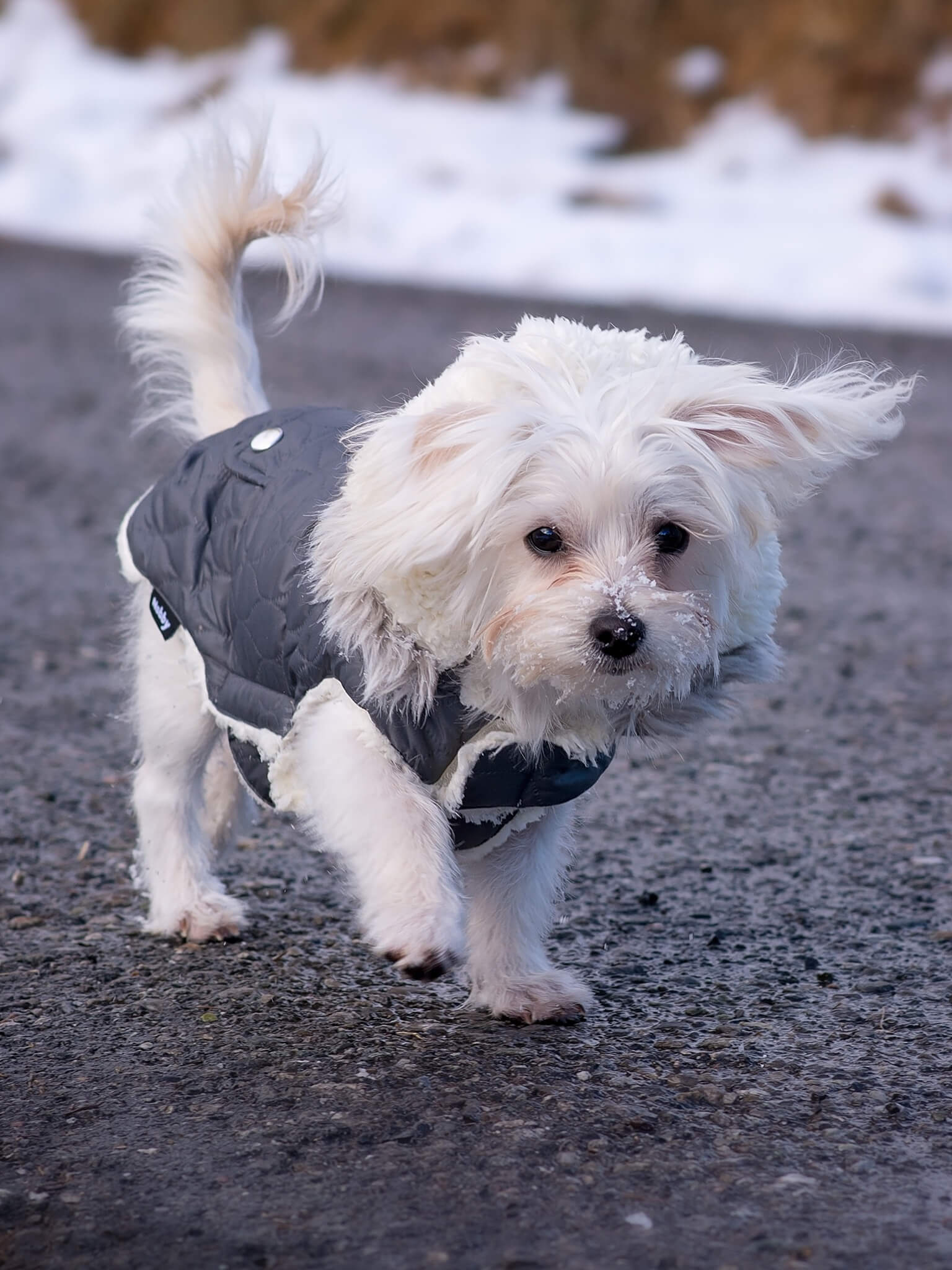
The Maltese is a cute and tiny breed. The general appearance of the Maltese is compact and square with a slightly rounded head and neck, proportionate to his size. Its neck distinguishes him from other breeds because of its high carriage. He has close set expressive, black eyes with dark fringes and beautifully feathered drooping ears. His nozzle is black and teeth are close knit. Maltese have fine-boned legs with black rounded paws. A long hairy tail dangling over the back makes a Maltese look all the more graceful.
If you are planning to adopt a Maltese, learn how to choose a happy, healthy dog or puppy.
Weight
Male: 4-7 pounds
Female: 4-7 pounds
Height
Male : 9-10 inches
Female : 8-9 inches

Free Maltese Training Secrets
Free Course on Maltese Training & Obedience
Stop All Bad Behavior, Excessive Barking and Biting
Maltese Personality Traits

Temperament of the Dog
The Maltese is a bold and trustworthy breed. He is a cute and classic companion dog. All Maltese are generally playful and love it outdoors. They take delight in barking but are quite reserved with strangers. Almost all the members of this breed are intelligent and enjoy learning tricks when lavishly praised for their deeds. The Maltese may be difficult to housebreak and are choosy about food and thus, should be fed only with stuff that would help to keep their teeth strong.
It is not right to over pamper or overindulge a Maltese pup as he may become distraught or unstable. One should not overprotect a Maltese as it may make him overprotective about his owners.
Good with other dogs/ and other animals?
Maltese are generally friendly with other animals and dogs.
Are they suited to homes with kids?
Maltese are loveable breeds but may be cross at times with naughty children. If taken by surprise or agitated , they might get snappy.
Better suited to an indoor or outdoor lifestyle?
Maltese are very active indoors and are best suited to the apartment lifestyle. However, it is good to have a small terrace or lawn for them to romp about because they are very funloving.
What kind of home would they do best in - one with kids, or any such specifications?
Maltese love homes with a lot
of people. They do well with children but one should
not irritate or scare them.
Male Maltese are quite aggressive and should not
be allowed to be around little kids.
Training
Maltese is a loveable breed which can be trained perfectly if one follows a specific schedule. When a maltese is young,say 3-6 months old, he should be taught to locate food and water dishes. He must respond to correction words like-'no' or 'ah-ha' etc. Praise should also be heaped on him generously. One should use words like 'good' to acknowledge his good deeds.
Owners should be careful while crate-training their Maltese. They should learn to sleep quitely in their crates at night and defecate elsewhere. When the pup develops sufficient control over himself his system, he should learn to locate his potty spot. T
he puppy should pick up acceptance words like 'sit','stand','open your mouth' etc. He should also acquire manners like 'easy grabbing'. However, one should not be harsh with one's Maltese as that would only make him aggressive.
Free Maltese Training Secrets
Free Course on Maltese Training & Obedience
Stop All Bad Behavior, Excessive Barking and Biting
Maltese Activity Level
All Maltese are extremely active and playful. They enjoy a regular session of walk outdoors and retain the playful spirit even in their old age. Some Maltese love jumping in small pools of water.A bath, however, is necessary afterwards. Little effort is needed to keep this breed active even if the pup has to accommodate himself in an apartment.
How much exercise does the dog need at every stage of its life?
The Maltese are hardy little dogs and should get adequate exercise outdoors on a regular basis.
Is your Maltese causing you trouble by eliminating inside your house? Get our Free tips on Housebreaking your Maltese and put an end to all the housetraining nightmares - permanently.
Training your Maltese can be fun and a rewarding experience for both you and your dog. Get step-by-step tips on Maltese Training – now.
How to take care of a Maltese Puppy?
How to take care of the breed as a Maltese Puppy?
Owners should start training their Maltese at an early age. One should follow a specific schedule for training one's puppy.
There are three traps which often ensnare puppy owners and lure them into making blunders. These are – Punishment Trap, Food Treat Trap and Spoiling Trap.
Punishments often prove effective initially but enforcing such treatments may be harmful in the long run.
Using food treats to lure the pup may also make the pup addicted. Finally, it remains to be said that the owners of the Maltese breed should not spoil their pups with over indulgence.
If you have a Maltese dog or puppy at home and you want to train it into the most loving pet, Sign-up for our Free Maltese Training Course.
Grooming
It is important to comb and brush the hairy coat of the Maltese regularly; but with gentle care as the coat is very soft. Eyes should be checked and cleaned to prevent staining. One should make it a point to bathe or dry-shampoo the Maltese regularly but its coat should be kept dry. The hairy growth over the eyes is often tied in a knot by the owners to keep it away from the eyes. It is also possible to keep the hair short, for easy grooming.
Grooming your dog yourself, at your home and at your convenience will help you build a strong bond with your Maltese. You will not only save yourself the hassle of taking him to a groomer regularly, you save some money too.
Free Maltese Training Secrets
Free Course on Maltese Training & Obedience
Stop All Bad Behavior, Excessive Barking and Biting
Health and Care
Genetic Problems
The Maltese are prone to sunburn and often suffer from cold. They have skin, eye and respiratory problems. Slipped stifle is also a serious problem with them and may require surgery if the problem persists. Malteses also suffer from hypoglycemia,teeth and gum related problems.
Breeding the dog and any cautions
One needs to protect the breed from water and it is a good idea to paper-train this breed as Maltese are vulnerable and can not brave weather extremes.
An Maltese's health is directly related to it's diet. Find out how you can help your Maltese to live longer.
Litter Size: Litter size should be proportionate to the size of the breed.
Life Span
The Maltese generally live for 15 years ; but the Maltese's lifespan may go up to 18 years if they are taken good care of.
National Breed Clubs
National Breed Club:
British – Maltese Club - carmick@tiscali.co.uk
U. S. – The American Maltese Club –
www.americanmaltese.org
Recognition: AKC,CKC,KCGB,AWKC,APRI,ACR,UKC,FCI
Group: Toy Group.
AKC Ranking: 37
Also Known As: Bichon Maltiase, Often wrongly referred to as Maltese Terrier. Previously known as 'Melitae Dog' , 'Ye Ancient Dogge of Malta', 'The Roman Ladies' Dog' , 'The Comforter', The Spaniel Gentle', 'Shock Dog,' and 'Maltese Lion Dog'.
Train Your Maltese To Listen To You
Get Instant Access to Your Training Now - For Free
Sign up for our Free Maltese Mini Course to have a housebroken, obedient dog that happily comes to you every time you call.
You'll learn new commands to obedience-train your dog as well as how to housebreak your dog in 6 days or less.
You'll also learn how to eliminate bad habits like barking, nipping or biting, jumping, or pulling on the leash.Here's just s small fraction of what else you'll learn in the course:
How to lead and think like a pack dog - the new psychology.
3 dangerous mistakes that most Maltese owners make when they are trying to potty train their dogs.
The 2 main reasons why your dog barks excessively and how to control its excessive barking.
How to obedience train your Maltese to permanently end behavioral problems like Jumping, Aggression, Pulling on Leash.
A surprisingly easy way to teach your dog cool new tricks.
How to improve your dog's lifespan and keep it from getting overly heavy with a healthy and nutritious diet.
Getting Pro help fast - how to get access to our expert trainers when you need them most.
One hidden psychological trigger that all Malteses have... that practically allows you to "analyze" and "control" your dog's every action.
Priority access to the free online seminars conducted by our training experts.
Whereas other dog training related web sites and books offer generic information for dogs in general, ours is the ONLY web site that offers Maltese information specifically, from a renowned panel of experts - because as you probably know, Malteses have their own special training requirements that other dogs don't have.




What Other Dog Owners Say…

Our Free Courses
Dog Obedience TrainingDog Housetraining
Stop Dog Barking
Stop Dog Biting
HomeMade Dog food
Dog Grooming
Adopting A Dog
Read More
PureBred Dog BreedsMixed Dog Breeds
Dog Groups
Training Small Dog Breeds
Training Medium Dog Breeds
Training Large Dog Breeds
Exercising Your Dog
Dog Health
More Articles
Dog Grooming Needs
Our Tribute