Privacy Policy: Your email address is 100% safe.
We don't spam and hate it as much as you do :-) You can also unsubscribe from our mailing list at any time.
Subscribe to The FREE Leonberger Training Course to learn how you can easily turn your unruly and disobedient Leonberger into a loving, friendly companion. Step-by-step tips for puppy housebreaking, dog obedience training and stopping bad behavior.
Sign Up
Sign Up
Leonberger: Personality, Exercise, Grooming
About Leonberger
Country of Origin, History of Leonbergers
The Leonberger is one of the oldest breeds originating in Germany. At the end of the thirties and beginning of the forties of the 19th century, Heinrich Essig, town Councillor in Leonberg, Germany near Stuttgart, crossed a black and white Newfoundland bitch with a so-called “Barry” male from the monastery hospice Grand St.Bernard. Later a Pyrenean Mountain Dog was added. This resulted in very large dogs with predominantly long, white coats. Essig’s aim was for a lion-like dog. The lion is the heraldic animal of the city of Leonberg. The first dogs really called “Leonbergers” were born in 1846. They combined the excellent qualities of the breeds from which they stemmed.
Leonberger Tools
Breed Selector Tool - is the Leonberger the right breed for you?
Is the Leonberger the right breed for you and your family?
Find out by using our Free Dog Breed Selector Tool
Check Your Leonberger's Learning Style
Are you aware dogs also have a learning style that can greatly affect their ability to housetrain as well as be trained correctly. Evaluate your Leonberger's learning style and personality using our free Learning Style tool so that you are better able to provide him with the proper Leonberger training methods.
Is your Leonberger dominating over you?
Does your Leonberger bark unnecessarily? Does your Leonberger come to you when you call? Download a FREE Report on Dog Dominance for you and your Leonberger and learn how to control your dog.
Do you make these mistakes with your Leonberger?
Are you inadvertently snow-balling bad behavior in your Leonberger? Evaluate your Dog Training Style from our Free Tool and learn how best to deal with your dog.
Leonberger Calorie Calculator
Do you know how many calories your Leonberger needs every day and how many cups of food you should be giving it every day? Click here to use our Leonberger Calorie Calculator.
A General Description of the Breed
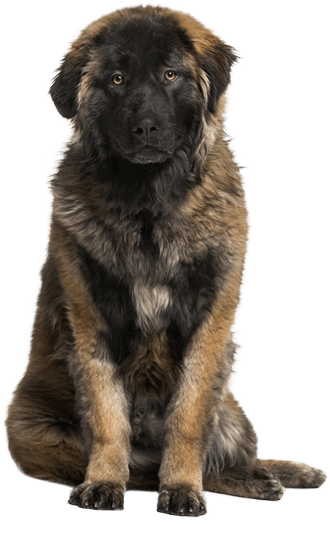
The the Leonberger is a large, majestic, strong, muscular yet elegant dog, distinguishable by its balanced build. The Leonberger has a medium length soft to coarse double coat that is very water resistant. Coat color can range from lion yellow, red, rich mahogany and reddish brown to sandy. It sports a characteristic black mask upto the eyes or above the eyes. The nose and lips are black. The teeth meet in a tight scissors bite. The skull is somewhat domed. It is important that the brown eyes have a gentle, kindly expression. The round-tipped pendant ears are medium-sized. The neck is normally strong with no dewlap. A small white star on the chest and a little white on the tip of the paws are permitted. Leonberger's thick mane creates a lion-like expression. The front and rear legs are feathered. The tail is bushy and set low, reaching at least to the hocks, and the feet have black pads. The Leonberger has webbing between the toes to aid in swimming.
Height
Male: 29-31 inches (74-80 cm.)
Female: 27-29 inches (61-74 cm.).
Weight
Male: 130-170 pounds (59-77 kg.)
Females: 100-130 pounds (45-59 kg.).

Free Leonberger Training Secrets
Free Course on Leonberger Training & Obedience
Stop All Bad Behavior, Excessive Barking and Biting
Leonberger Personality Traits
Temperament of the Breed
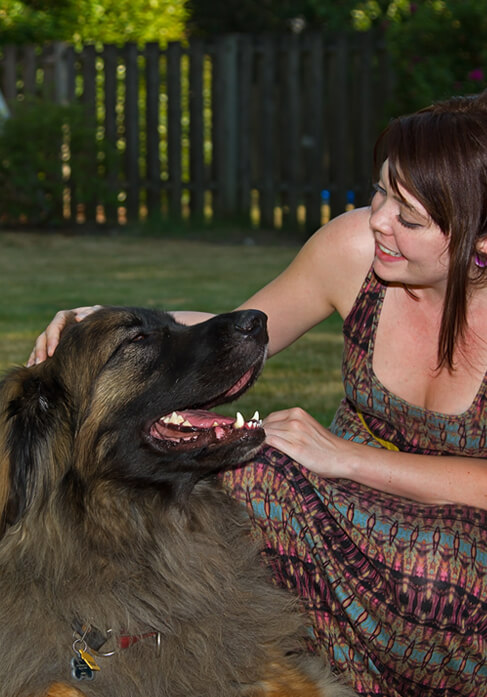
The Leonberger is lively, steady, friendly, calm, eager to please and affectionate with a sweet expression. Leonbergers are sometimes affectionately referred to as "lean-on-bergers" because of their tendency to lean against their loved ones. Their intelligence is extraordinary; their loyalty and love for their families is unparalleled.
Leonbergers are excellent watchdogs, not given to frivolous barking or unnecessary alarms. They instinctively establish and maintain their household's territorial rights.
However, upon receiving the OK from family members, strangers are accepted and welcomed. Fear and aggression in a stranger can activate a dog's protective instincts. With most of these dogs, if the situation becomes too intense, instead of showing any aggression, the Leonberger simply walks away.
Most of these dogs can take bad behavior in their stride. The Leonberger can get along with other dogs. The Leonberger is more agile than many other giant breeds.
Better suited to outdoor or indoor lifestyle?
As a family dog, the Leonberger is an agreeable partner for present day dwelling and living conditions. It doesn’t necessarily need a big yard and house to roam around. They are adaptable and don’t take up only as much space when curled up to sleep as any other medium to large dog.
Suited to families with children?
Leonbergers are considered highly trustworthy and have incredible patience, even with the most obnoxious children. They are perfect for toddlers to nestle into and clutch.
Leonberger Activity Level
How active is the breed?
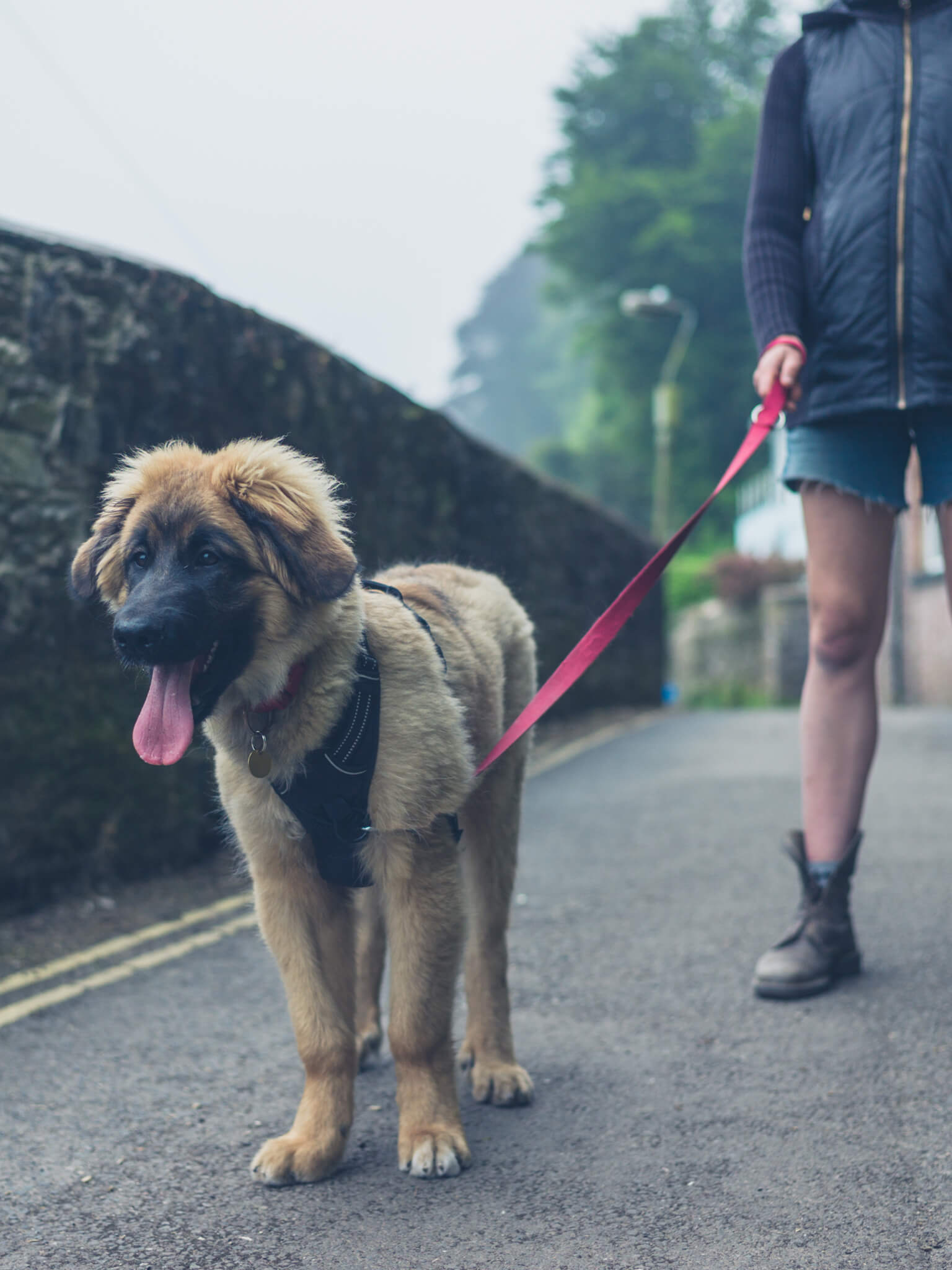
This breed needs only moderate exercise. However, they do need to be taken on a daily walk and provided with a bit of brain stimulation. They love to be included in all family outings and are very adaptable to changing environments. They love to swim (having an instinctive love for water), hike and be trained to pull carts and sleds.
Dogs below 18 months of age are nor recommended for pulling carts.
Trainability
Leonbergers need training and proper socialization from early puppyhood to become excellent watchdogs and companions. They don't respond well to harsh training methods. Aggression may develop with improper training and lack of socialization.
Grooming
The Leonberger sheds very heavily. For this reason, it requires extensive daily brushing and combing. The ears must be kept clean and the teeth should be cleaned when needed. The Leonberger should be bathed only when necessary. Some de-matting is required to avoid hotspots caused due to wetness and damp-wet weather conditions. The backs of ears, feathering on legs, and tail should be checked for mats.
Free Leonberger Training Secrets
Free Course on Leonberger Training & Obedience
Stop All Bad Behavior, Excessive Barking and Biting
Health and Care
Like most giant breeds, they are prone to hip and elbow dysplasia, and other skeletal diseases/disorders. They frequently suffer from eyelid defects and bone diseases. Other diseases known to plague the Leonbergers are Eosinophilic Panosteitis ('Pano'), Addison's Disease (hormonal disorder of the adrenal glands), Entropion and Ectropion Eyes, Hypothyroidism, Bloat (gastric dilation), Osteosarcoma (bone cancer), neuropathic disorders and OCD. Some dogs of this species develop behavioral problems.
National Breed Clubs
Life Expectancy
The median lifespan for a Leonberger is 7 years which is about 4 yrs less than the average purebred dog, but similar to other breeds of their size. However, a life span of 8-10 years is not unheard of.
Group: Working Group.
AKC Popularity Ranking: 93
Also Known As: Leos, which literally means lion
Train Your Leonberger To Listen To You
Get Instant Access to Your Training Now - For Free
Sign up for our Free Leonberger Mini Course to have a housebroken, obedient dog that happily comes to you every time you call.
You'll learn new commands to obedience-train your dog as well as how to housebreak your dog in 6 days or less.
You'll also learn how to eliminate bad habits like barking, nipping or biting, jumping, or pulling on the leash.Here's just s small fraction of what else you'll learn in the course:
How to lead and think like a pack dog - the new psychology.
3 dangerous mistakes that most Leonberger owners make when they are trying to potty train their dogs.
The 2 main reasons why your dog barks excessively and how to control its excessive barking.
How to obedience train your Leonberger to permanently end behavioral problems like Jumping, Aggression, Pulling on Leash.
A surprisingly easy way to teach your dog cool new tricks.
How to improve your dog's lifespan and keep it from getting overly heavy with a healthy and nutritious diet.
Getting Pro help fast - how to get access to our expert trainers when you need them most.
One hidden psychological trigger that all Leonbergers have... that practically allows you to "analyze" and "control" your dog's every action.
Priority access to the free online seminars conducted by our training experts.
Whereas other dog training related web sites and books offer generic information for dogs in general, ours is the ONLY web site that offers Leonberger information specifically, from a renowned panel of experts - because as you probably know, Leonbergers have their own special training requirements that other dogs don't have.




What Other Dog Owners Say…

Our Free Courses
Dog Obedience TrainingDog Housetraining
Stop Dog Barking
Stop Dog Biting
HomeMade Dog food
Dog Grooming
Adopting A Dog
Read More
PureBred Dog BreedsMixed Dog Breeds
Dog Groups
Training Small Dog Breeds
Training Medium Dog Breeds
Training Large Dog Breeds
Exercising Your Dog
Dog Health
More Articles
Dog Grooming Needs
Our Tribute