Privacy Policy: Your email address is 100% safe.
We don't spam and hate it as much as you do :-) You can also unsubscribe from our mailing list at any time.
Subscribe to The FREE Labrador Retriever Training Course to learn how you can easily turn your unruly and disobedient Labrador into a loving, friendly companion. Step-by-step tips for puppy housebreaking, dog obedience training and stopping bad behavior.
Sign Up
Sign Up
Labrador Retriever: Origin, Personality, Training (Labrador, Lab)

About Labrador Retriever
Country of Origin, History of Labrador Retrievers
The Labrador retriever is originally from Newfoundland Canada and was brought to England in the early 1800s. The dog was once known as “St. John's Dogs”, and is one of the most popular breeds in the United States. The dog is not from the Labrador Islands. These dogs were used as retrievers of fish that fell off the hooks of fishermen in the icy waters around Canada and also helped to haul in swimming lines and fishing nets. They are known as strong swimmers and small enough to haul small two-man boats. The dog breed may have been influenced by several breeds of dogs from France, Portugal and the native Indians of Canada.
Labrador Retriever Tools
Breed Selector Tool - is the Labrador Retriever the right breed for you?
Is the Labrador Retriever the right breed for you and your family?
Find out by using our Free Dog Breed Selector Tool
Check Your Labrador Retriever's Learning Style
Are you aware dogs also have a learning style that can greatly affect their ability to housetrain as well as be trained correctly. Evaluate your Labrador Retriever's learning style and personality using our free Learning Style tool so that you are better able to provide him with the proper Labrador Retriever training methods.
Is your Labrador Retriever dominating over you?
Does your Labrador Retriever bark unnecessarily? Does your Labrador Retriever come to you when you call? Download a FREE Report on Dog Dominance for you and your Labrador Retriever and learn how to control your dog.
Do you make these mistakes with your Labrador Retriever?
Are you inadvertently snow-balling bad behavior in your Labrador Retriever? Evaluate your Dog Training Style from our Free Tool and learn how best to deal with your dog.
Labrador Retriever Calorie Calculator
Do you know how many calories your Labrador Retriever needs every day and how many cups of food you should be giving it every day? Click here to use our Labrador Retriever Calorie Calculator.
Description of the Dog
The Labrador is a muscular and solid dog; he is slightly longer than he is tall. They have a slight water resistant double coat. The Labrador has a broad head and fake nose in the eyes are chestnut or hazel and the ears are medium pendant sized ears. They have an Otter Tail that estate near the body and tapers near the end. The feet are webbed are for swimming.
Coat
Solid black, yellow, or chocolate. The silver Labrador is not considered part of the breed standard and is a genetic mutation. There is also suspicion that these dogs were crossed with the Weimeraner.
Water resistant, double coat that is smooth and oily and not wavy.
Height
Male: 22 to 25 inches
Female: 21 to 24 inches
Weight
Male: 60 to 80 pounds, some may
grow to 100 pounds or more
Female: 55 to 70 pounds
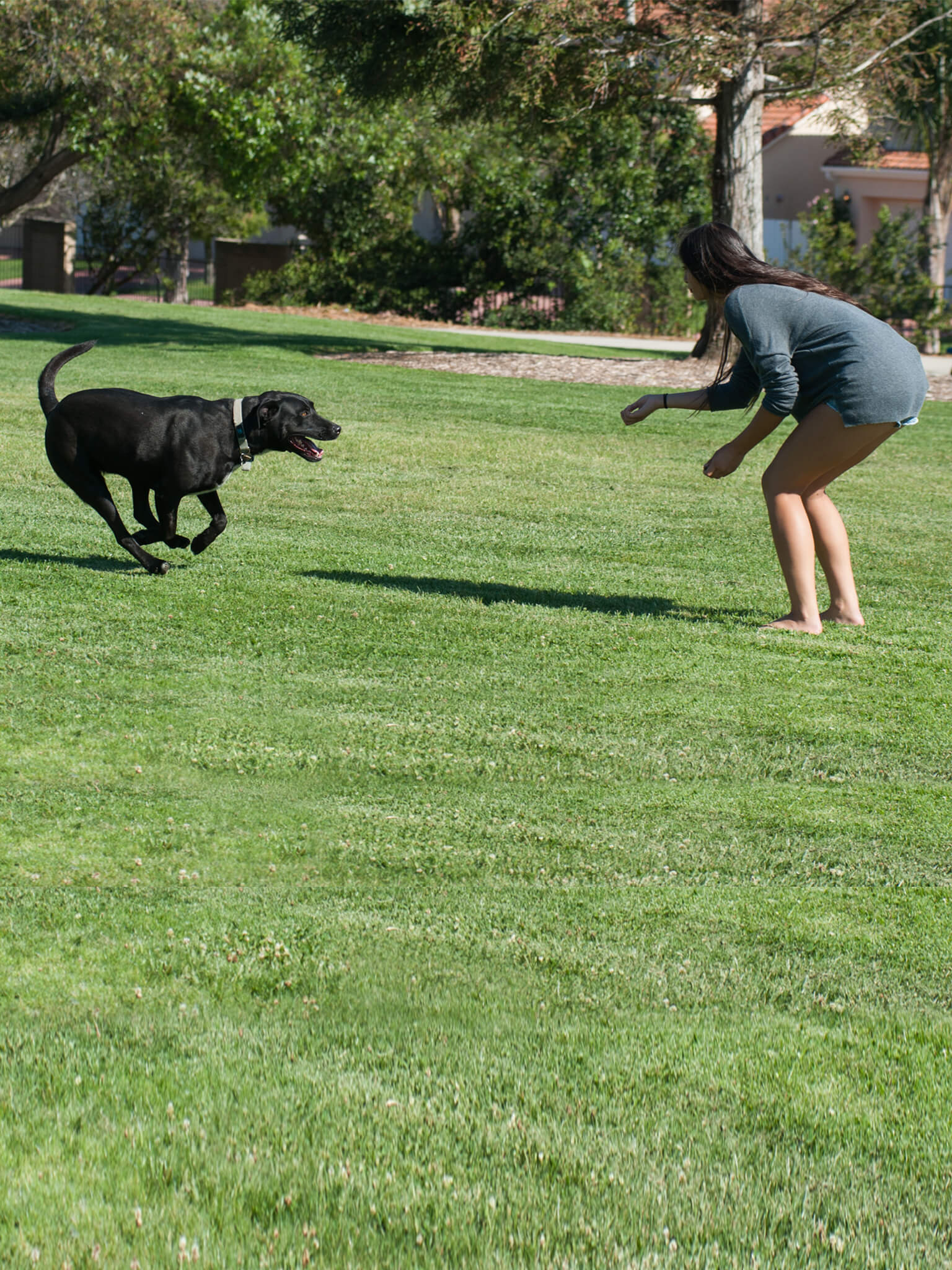

Free Labrador Retriever Training Secrets
Free Course on Labrador Retriever Training & Obedience
Stop All Bad Behavior, Excessive Barking and Biting
Labrador Retriever Personality Traits

Temperament of the Labrador Retriever Dog
The Labrador is a loving, lovable, patient dog, which may be why he is one of the most popular breeds in the United States. They are very good-natured and they love to play. They are very intelligent, loyal and willing. They may be very dominant and independent. English Labradors may be more calm and laid-back.It is important that you buy a Labrador from a reputable breeder, as there is considerable over breeding of these dogs in the United States.
Better suited to an indoor or outdoor lifestyle?
The Labrador is best suited for the outdoors, as they love to play, run and hunt. They may be destructive, if they are allowed to become bored. Puppies may be very energetic while older Labradors may be fine in the home.
Are they suited to homes with kids?
The Labrador has a very good temperament for children.
How to take care of the Labrador Retriever Puppies?
As puppies, they will be very smart and quick to learn and will only require sufficient exercise. They will also need to be properly fed in order to grow properly.
Training
The puppy is very quick to learn and is very intelligent. The Labrador is easily trained and may also serve as watchdogs. They must be kept busy as they may become destructive when young. The Labrador has many talents including hunting, tracking, retrieving, police work, narcotics detection, guide for the blind, service dog for the disabled, search and rescue, sledding, carting, agility and competitive obedience. These dogs may also be trained for the show ring or they may be trained for the hunting fields.
Free Labrador Retriever Training Secrets
Free Course on Labrador Retriever Training & Obedience
Stop All Bad Behavior, Excessive Barking and Biting
Labrador Retriever Activity Level
How active is the Breed?
These dogs are very active as puppies and will require sufficient exercise. They may also require sufficient exercise as adults as they are prone to become overweight. They are very energetic dogs and will require some space to play in.
Exercise Need
These dogs will require exercise at every level of life, especially as puppies.
Grooming
The Labrador has a smooth, shorthaired, double coat that should be regularly combed and brushed with a bristled brush. These dogs are average shedders, but may shed frequently in the summer.
Free Labrador Retriever Training Secrets
Free Course on Labrador Retriever Training & Obedience
Stop All Bad Behavior, Excessive Barking and Biting
Health and Care
Genetic Problems
Prone to hip dysplasia, elbow dysplasia, PRA and eye disorders.
Cancer (it is the #1 cause of death in all Retrievers)
Breeding Labs
When breeding Labradors, you should be sure not to pass on any hip dysplasia that has been inherited.
Litter Size: 10 - 12 puppies is the average litter size.
Life Span: 10 to 13 years
National Breed Clubs
National Breed Club:
British: Labrador Retriever Club
of the U K
U S Breed club: The Labrador Retirever Club, Inc.
- www.thelabradorclub.com
Recognition
AKC, UKC, CKC, FCI, KCGB, CKC, ANKC, NKC, NZKC, CCR, APRI, ACR
Rescue Link: http://thelabradorclub.com/rescue/
Group: AKC Sporting Group, Gun Dog
AKC Popularity Ranking: 1
Also Known As: American Labrador, English Labrador.
Train Your Labrador Retriever To Listen To You
Get Instant Access to Your Training Now - For Free
Sign up for our Free Labrador Retriever Mini Course to have a housebroken, obedient dog that happily comes to you every time you call.
You'll learn new commands to obedience-train your dog as well as how to housebreak your dog in 6 days or less.
You'll also learn how to eliminate bad habits like barking, nipping or biting, jumping, or pulling on the leash.Here's just s small fraction of what else you'll learn in the course:
How to lead and think like a pack dog - the new psychology.
3 dangerous mistakes that most Labrador owners make when they are trying to potty train their dogs.
The 2 main reasons why your dog barks excessively and how to control its excessive barking.
How to obedience train your Labrador Retriever to permanently end behavioral problems like Jumping, Aggression, Pulling on Leash.
A surprisingly easy way to teach your dog cool new tricks.
How to improve your dog's lifespan and keep it from getting overly heavy with a healthy and nutritious diet.
Getting Pro help fast - how to get access to our expert trainers when you need them most.
One hidden psychological trigger that all Labrador Retrievers have... that practically allows you to "analyze" and "control" your dog's every action.
Priority access to the free online seminars conducted by our training experts.
Whereas other dog training related web sites and books offer generic information for dogs in general, ours is the ONLY web site that offers Labrador information specifically, from a renowned panel of experts - because as you probably know, Labradors have their own special training requirements that other dogs don't have.




What Other Dog Owners Say…

Our Free Courses
Dog Obedience TrainingDog Housetraining
Stop Dog Barking
Stop Dog Biting
HomeMade Dog food
Dog Grooming
Adopting A Dog
Read More
PureBred Dog BreedsMixed Dog Breeds
Dog Groups
Training Small Dog Breeds
Training Medium Dog Breeds
Training Large Dog Breeds
Exercising Your Dog
Dog Health
More Articles
Dog Grooming Needs
Our Tribute