Privacy Policy: Your email address is 100% safe.
We don't spam and hate it as much as you do :-) You can also unsubscribe from our mailing list at any time.

Subscribe to The FREE King Shepherd Training Course to learn how you can easily turn your unruly and disobedient King Shepherd into a loving, friendly companion. Step-by-step tips for puppy housebreaking, dog obedience training and stopping bad behavior.
Sign Up
Sign Up
King Shepherd: Breed Personality, Fitness & Care
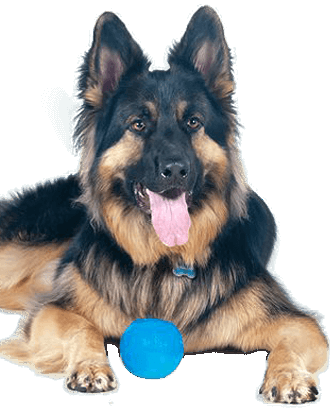
About King Shepherd
Country of Origin, History of King Shepherds
The King Shepherd's origin can be traced to several different breeds. Although there are some differences in opinion regarding the exact breed make-up, it is generally believed that American dog breeders Shelley Watts-Cross and David Turkheimer developed this large breed from American and European German Shepherd Dogs, Alaskan Malamutes, and Great Pyrenees. An official breed club was established in 1995.
King Shepherd Tools
Breed Selector Tool - is the King Shepherd the right breed for you?
Is the King Shepherd the right breed for you and your family?
Find out by using our Free Dog Breed Selector Tool
Check Your King Shepherd's Learning Style
Are you aware dogs also have a learning style that can greatly affect their ability to housetrain as well as be trained correctly. Evaluate your King Shepherd's learning style and personality using our free Learning Style tool so that you are better able to provide him with the proper King Shepherd training methods.
Is your King Shepherd dominating over you?
Does your King Shepherd bark unnecessarily? Does your King Shepherd come to you when you call? Download a FREE Report on Dog Dominance for you and your King Shepherd and learn how to control your dog.
Do you make these mistakes with your King Shepherd?
Are you inadvertently snow-balling bad behavior in your King Shepherd? Evaluate your Dog Training Style from our Free Tool and learn how best to deal with your dog.
King Shepherd Calorie Calculator
Do you know how many calories your King Shepherd needs every day and how many cups of food you should be giving it every day? Click here to use our King Shepherd Calorie Calculator.
A General Description of the Breed
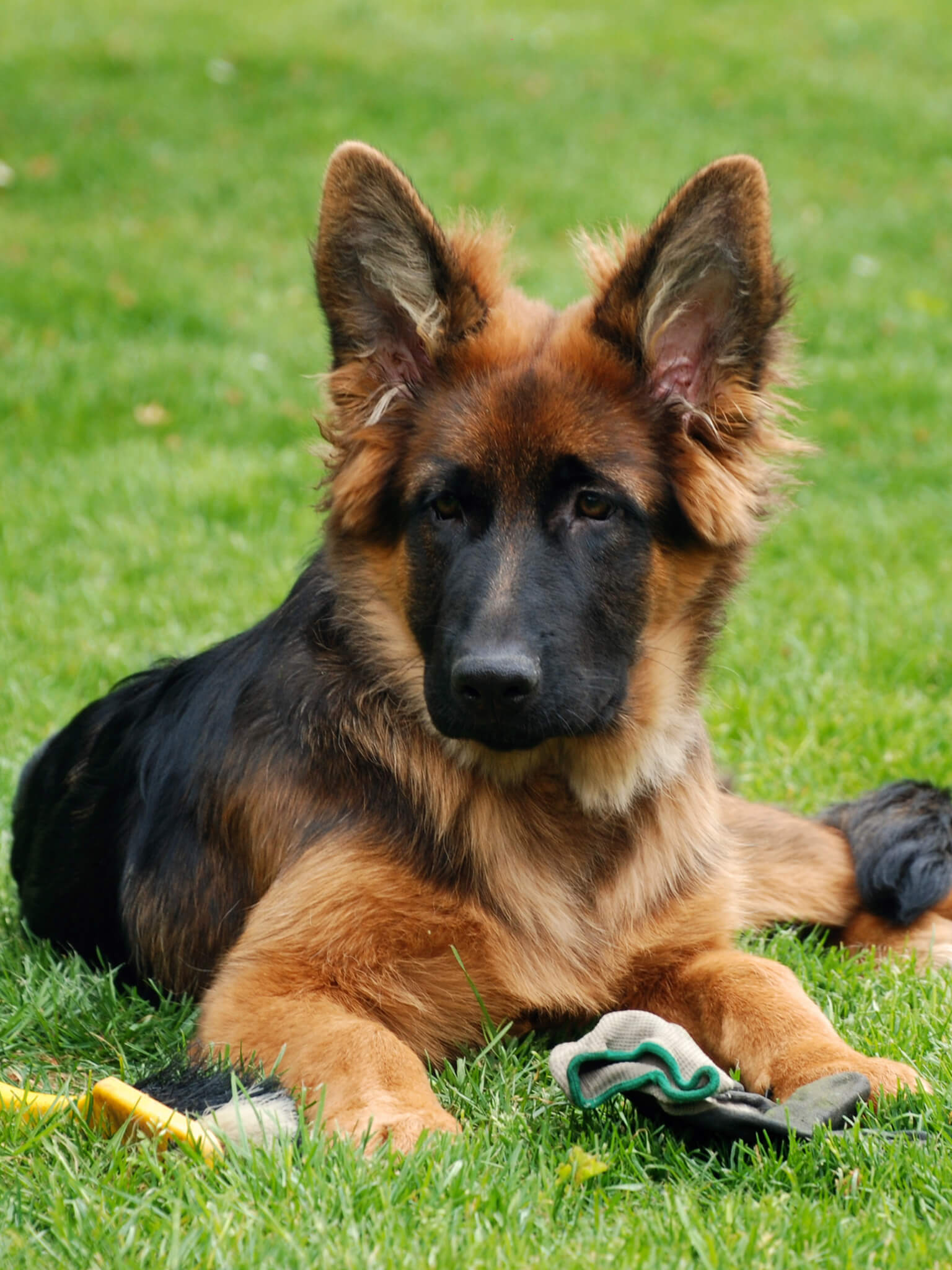
The King Shepherd closely resembles German Shepherd dogs. The build of this breed is heavy bodied, heavy boned, slightly long, robust, rugged and muscular; the structure is solid. The head and forehead are immense and well-defined. The cheeks are trapezoid, not too full and moderately curved. The ears are erect, thick and firm and of medium size. The eyes are almond-shaped, set somewhat aslant. The neck is carried erect when the dog is excited, normally being carried horizontally. The chest is extremely deep, broad and wide. The belly is moderately drawn up. The back (including the lumbar region) is straight and well developed. Thickly feathered, the slightly curved tail reaches at least to the hocks. The King Shepherd has round, hard, short, well closed, arched paws with short, hard, dark nails.
Color
The King Shepherd comes in a wide range of acceptable colors : Sable (a brownish tan with brown or black markings or a grayish silver with black markings); bi-colored (predominantly black with red, tan or cream); black saddle with red, tan, gold, cream, or silver markings; solid black and solid white. Strong, rich colors and pigments are highly preferred.
Coat
Coarse-haired variety : The topcoat is very dense. Each single hair stands straight and close to the body. On the head the hair is short, as also on the inside of the ear, the forward side of the legs, the paws and the toes, while on the neck the hair is longer and denser. On the hindquarters and buttocks the hair is longer, down to the pastern or the metatarsus: the thighs are moderately trousered. The length of hair varies from one dog to another, and thus there are many types within the single variety.
Long-haired variety : The coat is longer than that of the preceding variety, not always completely straight, and especially not close to the body. The individual hairs are noticeably longer, particularly inside the ears and behind them, on the back part of the forearm and often in the lumbar region. They form tufts at the ears and fringes from the elbow to the pastern. The trousers are long and dense. The tail is densely feathered with light fringe below.
Height: The normal height of the King Shepherd is 25”-29"/ 63.5-73.7 cm.
Weight
The minimum weight for these dogs should be not less than 100 pounds at maturity, with the ideal weight for male dogs being 120-145 pounds.
Minimum weight for females is 80 pounds at maturity, with the ideal weight being 90-110 pounds.

Free King Shepherd Training Secrets
Free Course on King Shepherd Training & Obedience
Stop All Bad Behavior, Excessive Barking and Biting
King Shepherd Personality Traits
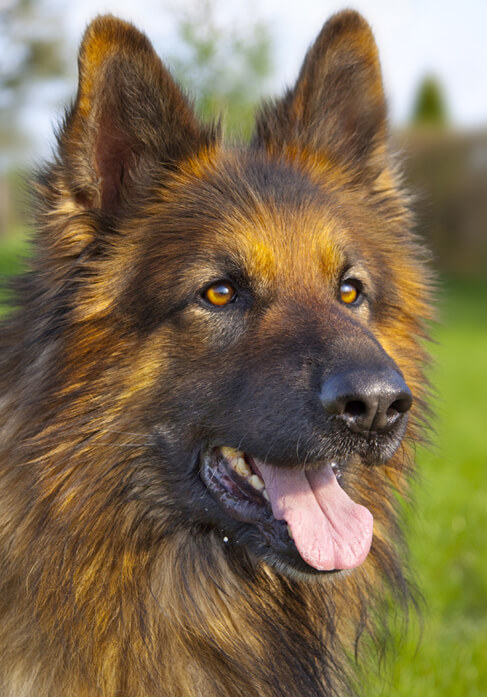
King Shepherd Temperament
The chief qualities of this outstanding breed are : a well-balanced nervous system, readiness, lack of inhibition, vigilance, incorruptibility, combined with courage and cleverness in defense. It is known to be an excellent watch-dog and guard-dog. The King Shepherd is characterized by unsurpassed loyalty towards its master and eagerness to please.
They are also remarkably athletic, very intelligent and easy to train. These qualities, coupled with docility, obedience and friendly disposition, makes the King Shepherd a treasured pet.
Better suited to outdoor or indoor lifestyle?
Owing to its huge size, the King Shepherd is not recommended for apartment life. Though the King Shepherd can prove to be a good companion for kids, they should be allowed to interact with kids only under close supervision because of their stature.
King Shepherd Activity Level
How active is the breed?
As the King Shepherd holds tremendous energy and stamina, it needs vigorous exercise. The King Shepherd loves strenuous activities, preferably combined with training of some kind (e.g. obedience training), because these dogs are very intelligent and crave a good challenge.
They need to be taken on a daily brisk, long walk or jog. They also enjoy running alongside while its owner bicycles. If under-exercised, this breed can become restless and destructive.
Grooming
The King Shepherd\'s coat is highly weather-resistant. The King Shepherd sheds and requires a moderate amount of grooming. King Shepherds blow their coats twice a year. They shed their full winter coat in the Spring; starting around April/May till end of June. Then, they shed their full summer coat usually starting around the end of September to the end of October or beginning of November.
A good fifteen minute brushing twice a week and a good bath only when necessary are more than adequate.
Free King Shepherd Training Secrets
Free Course on King Shepherd Training & Obedience
Stop All Bad Behavior, Excessive Barking and Biting
Health and Care
The King Shepherd is normally a healthy breed.
However, there are some infrequent cases of hip dysplasia. Any male King Shepherd measuring less than 27 inches at the shoulders or any female King Shepherd measuring less than 25 inches at the shoulders, or exhibiting any unreasonable expression of, or any form of, fear or sharp shyness, dogs with hanging ears or undershot or overshot bite, blue or liver colored dogs or dogs with lack of pigmentation except solid white coated, or having a nose that is not predominantly black, a dog possessing a long, or narrow muzzle, a docked tail, or one that curls forward above the vertical line from the croup is not fully healthy or normal.
National Breed Clubs
Life Expectancy: 10-11 years.
Group: Herding Group.
AKC Popularity Ranking: Not recognized by AKC
Train Your King Shepherd To Listen To You
Get Instant Access to Your Training Now - For Free
Sign up for our Free King Shepherd Mini Course to have a housebroken, obedient dog that happily comes to you every time you call.
You'll learn new commands to obedience-train your dog as well as how to housebreak your dog in 6 days or less.
You'll also learn how to eliminate bad habits like barking, nipping or biting, jumping, or pulling on the leash.Here's just s small fraction of what else you'll learn in the course:
How to lead and think like a pack dog - the new psychology.
3 dangerous mistakes that most King Shepherd owners make when they are trying to potty train their dogs.
The 2 main reasons why your dog barks excessively and how to control its excessive barking.
How to obedience train your King Shepherd to permanently end behavioral problems like Jumping, Aggression, Pulling on Leash.
A surprisingly easy way to teach your dog cool new tricks.
How to improve your dog's lifespan and keep it from getting overly heavy with a healthy and nutritious diet.
Getting Pro help fast - how to get access to our expert trainers when you need them most.
One hidden psychological trigger that all King Shepherds have... that practically allows you to "analyze" and "control" your dog's every action.
Priority access to the free online seminars conducted by our training experts.
Whereas other dog training related web sites and books offer generic information for dogs in general, ours is the ONLY web site that offers King Shepherd information specifically, from a renowned panel of experts - because as you probably know, King Shepherds have their own special training requirements that other dogs don't have.




What Other Dog Owners Say…

Our Free Courses
Dog Obedience TrainingDog Housetraining
Stop Dog Barking
Stop Dog Biting
HomeMade Dog food
Dog Grooming
Adopting A Dog
Read More
PureBred Dog BreedsMixed Dog Breeds
Dog Groups
Training Small Dog Breeds
Training Medium Dog Breeds
Training Large Dog Breeds
Exercising Your Dog
Dog Health
More Articles
Dog Grooming Needs
Our Tribute