Privacy Policy: Your email address is 100% safe.
We don't spam and hate it as much as you do :-) You can also unsubscribe from our mailing list at any time.

Subscribe to The FREE Jindo Training Course to learn how you can easily turn your unruly and disobedient Jindo into a loving, friendly companion. Step-by-step tips for puppy housebreaking, dog obedience training and stopping bad behavior.
Sign Up
Sign Up
Jindo: Characteristics, Grooming, Health, Training

About Jindo
Country of Origin, History of Jindos
The Jindo is known to have originated on Jindo Island in South West Korea. It is said that Jindo dogs descended from Mongolian battle dogs that were left on Korea's Jindo Island after the 13th-century Mongol invasion of Korea.
Jindo Tools
Breed Selector Tool - is the Jindo the right breed for you?
Is the Jindo the right breed for you and your family?
Find out by using our Free Dog Breed Selector Tool
Check Your Jindo's Learning Style
Are you aware dogs also have a learning style that can greatly affect their ability to housetrain as well as be trained correctly. Evaluate your Jindo's learning style and personality using our free Learning Style tool so that you are better able to provide him with the proper Jindo training methods.
Is your Jindo dominating over you?
Does your Jindo bark unnecessarily? Does your Jindo come to you when you call? Download a FREE Report on Dog Dominance for you and your Jindo and learn how to control your dog.
Do you make these mistakes with your Jindo?
Are you inadvertently snow-balling bad behavior in your Jindo? Evaluate your Dog Training Style from our Free Tool and learn how best to deal with your dog.
Jindo Calorie Calculator
Do you know how many calories your Jindo needs every day and how many cups of food you should be giving it every day? Click here to use our Jindo Calorie Calculator.
A General Appearance of the Dog
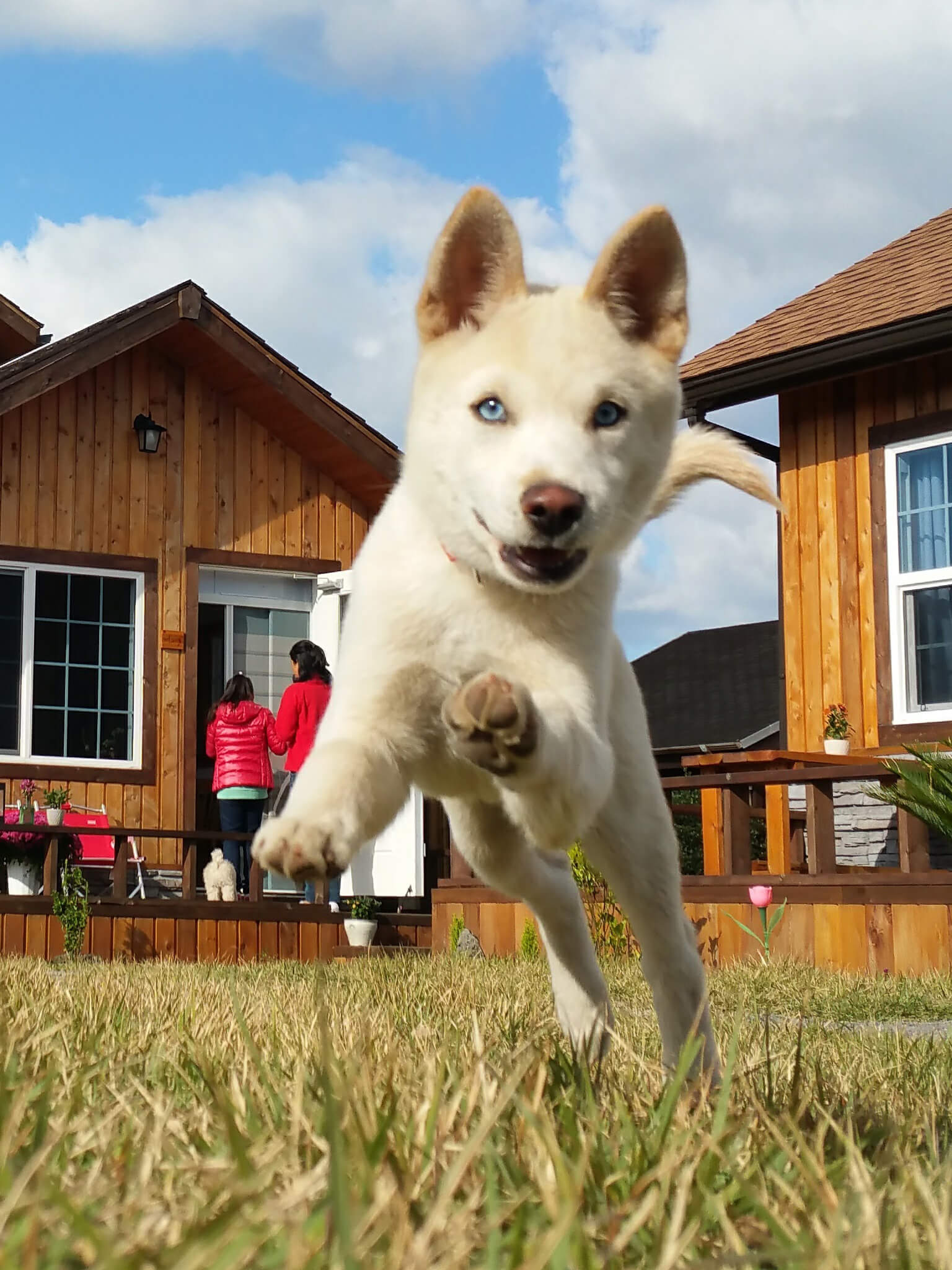
It's medium-sized, coarse, double-coated body is either square or slightly longer than tall. It has been divided into two body types: Tonggol or Gyupgae and Hudu or Heutgae.
The Tonggol or Gyupgae is very muscular and shorter in body, with a depth of chest equal to one-half the height at the withers and a shorter loin, while the Hudu or Heutgae is more slender with somewhat less depth of chest and a slightly longer loin. Typically, males are larger with heavier heads and females have more fox-like features. These two types are gradually being blended into a third type called Gakgol, which retains the length of body of the Hudu style and the depth of chest of the Tonggol style.
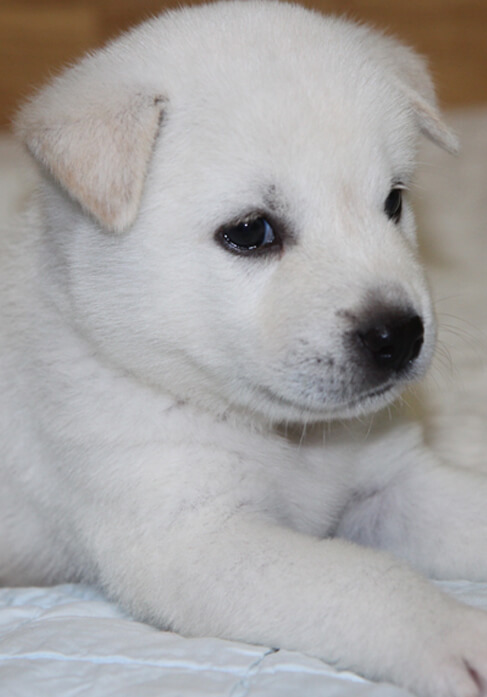
The Jindo may reach full size by 5 months, but takes 2 years to mature physically and emotionally. A Jindo dog can either have a ring tail (rolled on its back) or an erect tail (straight up). Jindo dogs commonly possess Gingko nut-shaped yellowish brown eyes with clear pupils. The ones with reddish eyes are considered better hunters. They have erect, triangular, symmetrical ears. Korean law currently recognizes only white Jindo and red (tan) Jindo.
Some Jindo Island residents have valued black, black/tan and red/white ones for being good hunters over the years. The UKC recognizes five different coat colors: white, fawn, gray, black and tan, and brindle (tiger pattern).
Height: At maturity, desirable height is 19.5 to 21 inches for male dogs of this breed and 18.5 to 20 inches for females.
Weight: Healthy Jindo males should weigh 35-45 lb. While the ideal weight for female Jindo is 30-40 lb.

Free Jindo Training Secrets
Free Course on Jindo Training & Obedience
Stop All Bad Behavior, Excessive Barking and Biting
Jindo Personality Traits
Temperament of the Dog
The Jindo is characterized by fierce and unwavering loyalty towards its master. It often takes much time for the dog to adjust to a new master or environment. However, there are many examples of older Jindo dogs being adopted out of shelters in the United States and becoming very loyal friends to their new owners.
Second, it has a miraculous instinct for returning home. Indomitable hunting instinct is another of the Jindo's prized specialities. It is capable of finding and hunting deer,rabbits etc. all by itself with the help of its superior sense of smell,courageousness and competitiveness.
The Jindo, when trained, displays amazing self-control when it comes to resisting temptations offered by strangers.
What makes the Jindo a favorite pet is its fastidious nature. It trains itself to defecate and urinate at specific places and keeps itself clean. Moreover, it refrains from stealing food and obediently awaits the master's permission to eat. Its protective nature, coupled with its superior sense of smell and hearing and ability to judge a stranger, makes it a treasured watchdog.
The Jindo has all the qualities to make a wonderful pet. However, like other independent breeds, they need firm handling by experienced, efficient masters. It is generally gentle, obedient and affectionate with people it is familiar with and aloof with strangers. A mistreated or badly trained Jindo can become violent.
Better suited to an indoor or outdoor lifestyle?
The Jindo should be allowed to live indoors with the family as opposed to being relegated to the yard where he might get into mischief out of boredom or loneliness. They have been known to scale walls or fences 8 feet high. As long as they are sufficiently walked, the Jindo can be pleasant apartment dwellers due to their natural fastidiousness.
Are they suited to homes with kids?
Because of its prey drives, it might not be very reliable around other smaller animals and children, unless properly socialized from an early age. A Jindo sometimes takes resort to aggressiveness in its interaction with other dogs, in order to establish dominance over territory.
Jindo Activity Level
How Active is the Breed?
Jindo dogs need reasonable space to roam and run. A minimum of two, 30-minute brisk walks are necessary to keep a Jindo dog fit and happy. Because of its prey drives, it is recommended that the Jindo be kept on leash during its walks. Although they are not naturally good at fetching, they can be trained to fetch.
Grooming
The Jindo has a double coat that sheds heavily twice a year. During the shedding season, extra care must be given to the coat. Warm baths can help the process along.
However, many of these dogs display a curious aversion from running water and avoid situations that might get them wet. They let themselves be washed, although with great reluctance. Daily brushing is necessary to remove the undercoat.
Free Jindo Training Secrets
Free Course on Jindo Training & Obedience
Stop All Bad Behavior, Excessive Barking and Biting
Health and Care
Genetic Problems
The Jindo is a relatively healthy dog. However, they are susceptible to Hypothyroidism.
National Breed Clubs
Life Span
A healthy Jindo Dog is expected to live between 12 and 15 years.
Group: Hunting Dog.
AKC Popularity Ranking: Foundation Stock Service.
Also Known As: Korean Jindo Dog.
Train Your Jindo To Listen To You
Get Instant Access to Your Training Now - For Free
Sign up for our Free Jindo Mini Course to have a housebroken, obedient dog that happily comes to you every time you call.
You'll learn new commands to obedience-train your dog as well as how to housebreak your dog in 6 days or less.
You'll also learn how to eliminate bad habits like barking, nipping or biting, jumping, or pulling on the leash.Here's just s small fraction of what else you'll learn in the course:
How to lead and think like a pack dog - the new psychology.
3 dangerous mistakes that most Jindo owners make when they are trying to potty train their dogs.
The 2 main reasons why your dog barks excessively and how to control its excessive barking.
How to obedience train your Jindo to permanently end behavioral problems like Jumping, Aggression, Pulling on Leash.
A surprisingly easy way to teach your dog cool new tricks.
How to improve your dog's lifespan and keep it from getting overly heavy with a healthy and nutritious diet.
Getting Pro help fast - how to get access to our expert trainers when you need them most.
One hidden psychological trigger that all Jindos have... that practically allows you to "analyze" and "control" your dog's every action.
Priority access to the free online seminars conducted by our training experts.
Whereas other dog training related web sites and books offer generic information for dogs in general, ours is the ONLY web site that offers Jindo information specifically, from a renowned panel of experts - because as you probably know, Jindos have their own special training requirements that other dogs don't have.




What Other Dog Owners Say…

Our Free Courses
Dog Obedience TrainingDog Housetraining
Stop Dog Barking
Stop Dog Biting
HomeMade Dog food
Dog Grooming
Adopting A Dog
Read More
PureBred Dog BreedsMixed Dog Breeds
Dog Groups
Training Small Dog Breeds
Training Medium Dog Breeds
Training Large Dog Breeds
Exercising Your Dog
Dog Health
More Articles
Dog Grooming Needs
Our Tribute