Privacy Policy: Your email address is 100% safe.
We don't spam and hate it as much as you do :-) You can also unsubscribe from our mailing list at any time.
Subscribe to The FREE Japanese Chin Training Course to learn how you can easily turn your unruly and disobedient Chin into a loving, friendly companion. Step-by-step tips for puppy housebreaking, dog obedience training and stopping bad behavior.
Sign Up
Sign Up
Japanese Chin: Origin, Temperament, Training, Exercise (Chin)

About Japanese Chin
Country of Origin, History of Japanese Chins
This breed originated and was developed in China. The Japanese Chin was initially bred for the purpose of accompanying women in the Imperial Palace and as lap dogs for Chinese aristocracy. The Japanese Chin remained in the hands of the upper class, and they were given as gifts to diplomats and foreigners who provided noted services to Japan.
In 1853, Commodore Perry brought the first Chins over to England, and a pair was given to Queen Victoria. Eventually, Chins came to America but there is no record as to their final destination in the United States. This breed was formerly known as the Japanese Spaniel. In 1977, the breed’s name was changed to the Japanese Chin.
Japanese Chin Tools
Breed Selector Tool - is the Japanese Chin the right breed for you?
Is the Japanese Chin the right breed for you and your family?
Find out by using our Free Dog Breed Selector Tool
Check Your Japanese Chin's Learning Style
Are you aware dogs also have a learning style that can greatly affect their ability to housetrain as well as be trained correctly. Evaluate your Japanese Chin's learning style and personality using our free Learning Style tool so that you are better able to provide him with the proper Japanese Chin training methods.
Is your Japanese Chin dominating over you?
Does your Japanese Chin bark unnecessarily? Does your Japanese Chin come to you when you call? Download a FREE Report on Dog Dominance for you and your Japanese Chin and learn how to control your dog.
Do you make these mistakes with your Japanese Chin?
Are you inadvertently snow-balling bad behavior in your Japanese Chin? Evaluate your Dog Training Style from our Free Tool and learn how best to deal with your dog.
Japanese Chin Calorie Calculator
Do you know how many calories your Japanese Chin needs every day and how many cups of food you should be giving it every day? Click here to use our Japanese Chin Calorie Calculator.
Description of the Dog
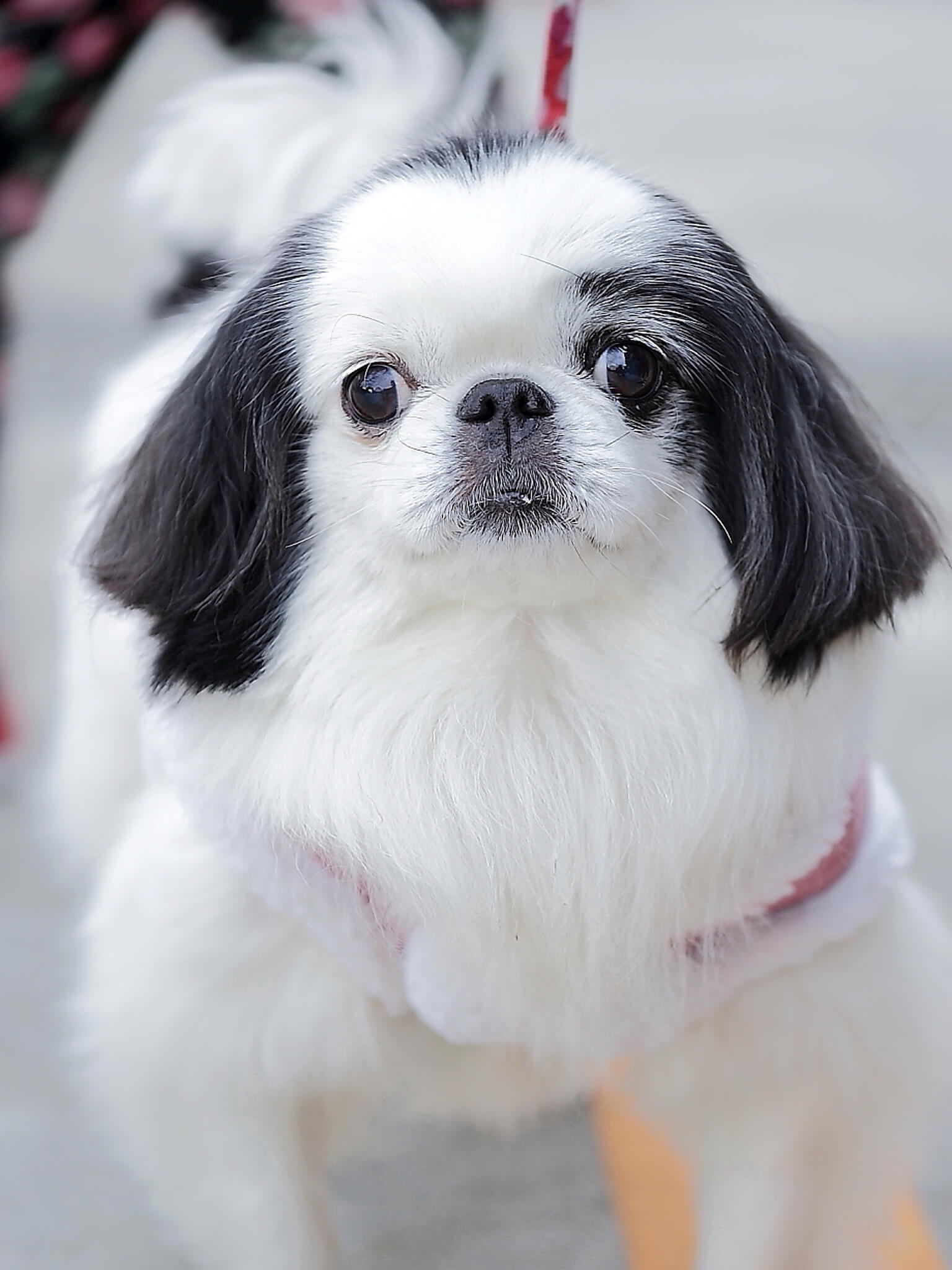
The Japanese Chin has a small, attractive, short face, a well-balanced body, and a feathered coat. This breed has a thick, silky, soft coat that grows straight from the dog’s body. The Japanese Chin has a plumed tail that rests over the dog’s back and curves over both sides of the body.
Coat
This breed has three types of coat: Black and white, red and white (including orange, lemon, and sable), and black and white with tan points (including tan or red spots over the eyes, inside the ears, or on both cheeks).
The coat of the Japanese Chin is soft, straight, and abundant. The dog’s physical outline is firm and square.
Height: Between 8 and 11 inches.
Weight: Between 4 and 7 pounds.

Free Japanese Chin Training Secrets
Free Course on Japanese Chin Training & Obedience
Stop All Bad Behavior, Excessive Barking and Biting
Japanese Chin Personality Traits

Temperament of the Dog
The Japanese Chin is alert, intelligent, and lively. This is a small, perky dog with who appears staid, but enjoys running, playing, and climbing. These dogs are gentle, affectionate, clean, and easily housebroken. The Japanese Chin enjoys comfort and likes to cuddle on soft pillows or a guardian’s lap. This breed loves to be pampered.
Temperament of the Dog
This breed is sensitive, intelligent, and loves to be a companion to its guardian. The Japanese Chin tends to be very responsive and affectionate to familiar people, but it can be hesitant to approach strangers. The Japanese Chin co-exists well with other animals. This breed requires consistent companionship, and it may become anxious when left alone.
Better suited to an indoor or outdoor lifestyle?
The Japanese Chin is well suited to a home or apartment, but it requires exercise, preferably walking, on a daily basis. This breed tends to be easy-going and will accept an outdoor environment. Fencing should be installed if the dog is to be left outside without supervision.
Are they suited to homes with kids?
This breed should only live with older children who are careful not to roughhouse or mistreat the dog. The Japanese Chin is easy-going and loves attention; it is an ideal breed for senior citizens or homes without young children.
Training
This breed can easily learn new tasks and has a high rate of learning. In addition, the Japanese Chin is obedient and trains well by using consistent words, commands, praise, and rewards. Barking might be an issue and the puppy will need to be trained to reduce it.
Free Japanese Chin Training Secrets
Free Course on Japanese Chin Training & Obedience
Stop All Bad Behavior, Excessive Barking and Biting
Japanese Chin Activity Level
The Japanese Chin maintains a high activity level and needs to be walked daily. Also, the dogs need opportunities to run and play. This breed enjoys yard play, but the area must be fenced to prevent the dog’s hunting instincts from leading it into a street or adjacent property.
How to take care of a Chin Puppy?
Care must be taken with a Japanese Chin puppy early on. They require constant exposure to people, sight, sounds, and companionship. If left alone for long periods of time, the Japanese Chin puppy may become shy or suspicious.
Grooming
This breed is very clean, but sheds a great deal. As a result, it requires daily combing and brushing to keep fur from accumulating around the home. The dog responds well to a dry shampoo, which only needs to be used when necessary.
Free Japanese Chin Training Secrets
Free Course on Japanese Chin Training & Obedience
Stop All Bad Behavior, Excessive Barking and Biting
Health and Care
The Japanese Chin has a fragile body, and it may develop eye irritations, breathing difficulties, and dislocated kneecaps. The dog's ears and eyes should be checked and cleaned every day.
Cautions about Breeding the Dog
This breed should be purchased from ethical, reputable breeders only. Ask a breeder for references or research the breeder via the Internet. Do not purchase any animal from a breeder without knowing its reputation.
Litter Size: Between 1 and 3 pups.
Life Span: Between 9 and 10 years.
National Breed Clubs
National Breed Club
In the United Kingdom, the Japanese Chin is promoted by The Japanese Chin Club of America. This organization can be reached via the internet at. http://www.japanesechinclub.co.uk
In the United States, this breed is represented
by The Japanese Chin Club, UK. This organization
can be reached via the internet at http://www.japanesechinonline.org
Recognition
The Japanese Chin was recognized by the American Kennel Club and The Kennel Club in the United Kingdom in 1888.
Group: Toy Group
AKC Popularity Ranking: 104
Also Known As: Japanese Spaniel
Train Your Japanese Chin To Listen To You
Get Instant Access to Your Training Now - For Free
Sign up for our Free Japanese Chin Mini Course to have a housebroken, obedient dog that happily comes to you every time you call.
You'll learn new commands to obedience-train your dog as well as how to housebreak your dog in 6 days or less.
You'll also learn how to eliminate bad habits like barking, nipping or biting, jumping, or pulling on the leash.Here's just s small fraction of what else you'll learn in the course:
How to lead and think like a pack dog - the new psychology.
3 dangerous mistakes that most Chin owners make when they are trying to potty train their dogs.
The 2 main reasons why your dog barks excessively and how to control its excessive barking.
How to obedience train your Japanese Chin to permanently end behavioral problems like Jumping, Aggression, Pulling on Leash.
A surprisingly easy way to teach your dog cool new tricks.
How to improve your dog's lifespan and keep it from getting overly heavy with a healthy and nutritious diet.
Getting Pro help fast - how to get access to our expert trainers when you need them most.
One hidden psychological trigger that all Japanese Chins have... that practically allows you to "analyze" and "control" your dog's every action.
Priority access to the free online seminars conducted by our training experts.
Whereas other dog training related web sites and books offer generic information for dogs in general, ours is the ONLY web site that offers Chin information specifically, from a renowned panel of experts - because as you probably know, Chins have their own special training requirements that other dogs don't have.




What Other Dog Owners Say…

Our Free Courses
Dog Obedience TrainingDog Housetraining
Stop Dog Barking
Stop Dog Biting
HomeMade Dog food
Dog Grooming
Adopting A Dog
Read More
PureBred Dog BreedsMixed Dog Breeds
Dog Groups
Training Small Dog Breeds
Training Medium Dog Breeds
Training Large Dog Breeds
Exercising Your Dog
Dog Health
More Articles
Dog Grooming Needs
Our Tribute