Privacy Policy: Your email address is 100% safe.
We don't spam and hate it as much as you do :-) You can also unsubscribe from our mailing list at any time.
Subscribe to The FREE Italian Greyhound Training Course to learn how you can easily turn your unruly and disobedient IG into a loving, friendly companion. Step-by-step tips for puppy housebreaking, dog obedience training and stopping bad behavior.
Sign Up
Sign Up
Italian Greyhound: Personality, Exercise, Health, Detailed Facts & Information
About Italian Greyhound
Country of Origin, History of Italian Greyhounds
The Italian Greyhound is
the smallest member of the family of gazehounds
(hounds that hunt by sight). They have probably
originated over 2,000 years ago in what is
today either Greece or Turkey. By the Middle
Ages, They could be found all through southern
Europe. The breed was a popular breed among
Egyptian, Greek, and Roman aristocrats. When
miniature dogs become popular in sixteenth
century Italy, this dog was in great demand.
Thus, it became known as the 'Italian Greyhound.'
This breed was so popular during the Middle Ages, it was depicted in Renaissance art.
Although the first recorded showing of the breed in the United States occurred in 1886, they were not officially recognized by the AKC until 1954.
Italian Greyhound Tools
Breed Selector Tool - is the Italian Greyhound the right breed for you?
Is the Italian Greyhound the right breed for you and your family?
Find out by using our Free Dog Breed Selector Tool
Check Your Italian Greyhound's Learning Style
Are you aware dogs also have a learning style that can greatly affect their ability to housetrain as well as be trained correctly. Evaluate your Italian Greyhound's learning style and personality using our free Learning Style tool so that you are better able to provide him with the proper Italian Greyhound training methods.
Is your Italian Greyhound dominating over you?
Does your Italian Greyhound bark unnecessarily? Does your Italian Greyhound come to you when you call? Download a FREE Report on Dog Dominance for you and your Italian Greyhound and learn how to control your dog.
Do you make these mistakes with your Italian Greyhound?
Are you inadvertently snow-balling bad behavior in your Italian Greyhound? Evaluate your Dog Training Style from our Free Tool and learn how best to deal with your dog.
Italian Greyhound Calorie Calculator
Do you know how many calories your Italian Greyhound needs every day and how many cups of food you should be giving it every day? Click here to use our Italian Greyhound Calorie Calculator.
A General Appearance of the Dog
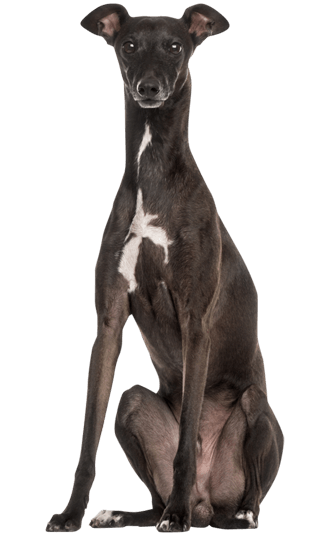
The Dog appears to be an elegant, miniature Greyhound. This fine-boned cousin has an arched back, a long neck and long, thin legs and tail which ends in a slight upward arch. Its narrow ears lie back along its head, but often stand up in a very alert posture. He has a high-stepping, elegant gait that gives the impression of being aristocratic.
This dog bark only when necessary. When they do bark, their voices are deeper than one would expect for such a fragile-looking dog.
The breed is a lean, active dog
that has high spirits and wants to please its guardian.
This breed are clean dogs that tend to be free of
odor.
Coat
This breed appears in blue, cream, faun, red, solid black, or white colours. The dog has a short, smooth, glossy coat.
Height: Between 13 and 15 inches.
Weight: Between 8 and 14 pounds.

Free Italian Greyhound Training Secrets
Free Course on Italian Greyhound Training & Obedience
Stop All Bad Behavior, Excessive Barking and Biting
Italian Greyhound Personality Traits
Italian Greyhound Temperament
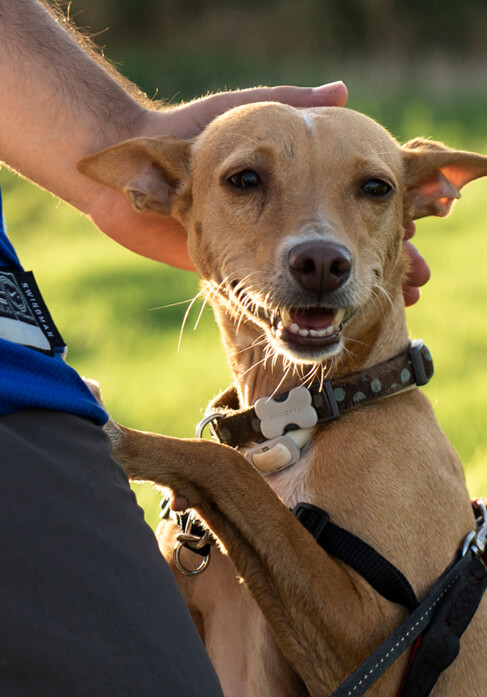
This dog is a quiet breed; it should not live in a home where there is a lot of noise. This breed tends to be naturally happy, physically active, and eager to please its guardian. The breed enjoys giving and receiving attention. Also, it behaves well with other pets in the home.
The Dog has an independent temperament and might ignore its guardian or other people when it is occupied in an activity or with play toys. This breed can become emotional and will exhibit separation anxiety when left alone. In addition, if there are loud, angry, or argumentative people nearby, the dog will be sensitive to their behavior. The breed will experience stress in a contentious environment. This breed is likely to become physically ill with digestion problems and neurotic behavior. The dog tends to be a peace loving animal that needs a peaceful, pleasant home.
Better suited to an indoor or outdoor lifestyle?
The breed easily adapts to an indoor environment. This breed can become cold very easily and needs to live in a home that is free of drafts and cold temperatures. They will sleep well in a warm bed located in a temperate home. This breed responds well to daily exercise and consistent attention; the dog is known to have a great deal of energy outdoors. It needs protection from cold when outdoors.
Are they suited to homes with kids?
The breed dislikes noise or contentious behavior. As a result, placing this breed in a home with children is not recommended. However, the breed will appreciate adolescents or young adults who aren't boisterous or abusive. The dog should not be pushed, pulled, or grabbed without warning.
Training
A Greyhound puppy should be trained on a leash and given verbal praise, correction, and food rewards. This breed becomes upset with physical discipline. The dog puppy should be exposed to various sights and sounds, and all training needs to be consistent and administered by a patient guardian. This breed is difficult to housebreak and requires consistent crate training and a doggy door for outside access. This dog puppy may resist going out into cold weather or rain; as a result, a guardian needs to use consistent phrases, rewards, and verbal praise when training the dog to go outside.
Free Italian Greyhound Training Secrets
Free Course on Italian Greyhound Training & Obedience
Stop All Bad Behavior, Excessive Barking and Biting
Italian Greyhound Activity Level
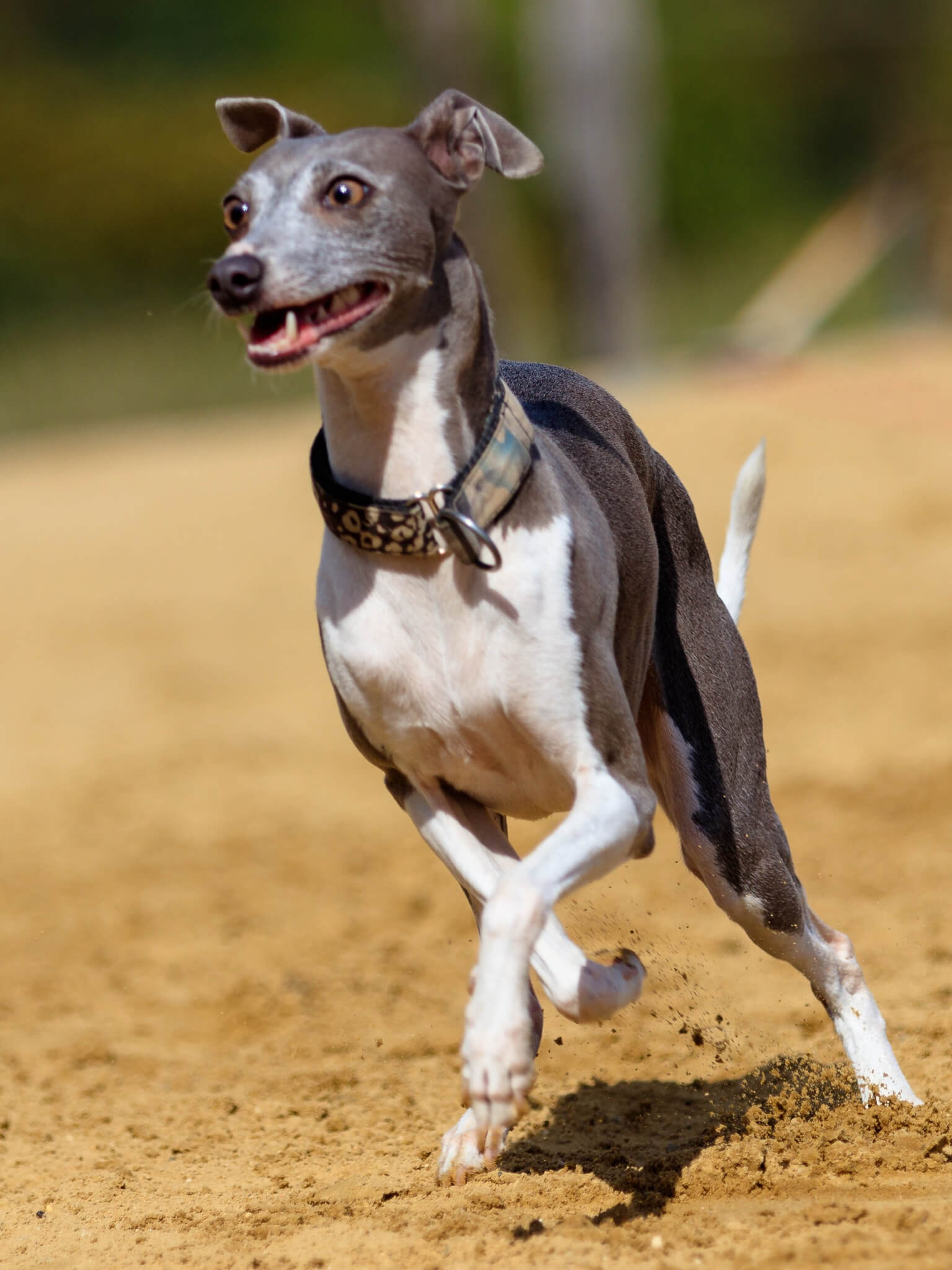
This breed enjoys vigorous activity, such as running or jumping around a yard or careening around a home, jumping on and off furniture. These dogs have a high activity level indoors and a very high activity level outdoors. The dog responds well to regular walks, but they need to expend energy through short bursts of running and jumping. This breed enjoys physical comfort and likes to rest on furniture, under blankets, or on soft pillows.
How to take care of an IG Puppy?
The dog puppy is independent and can be stubborn or manipulative. It will suddenly run away from people or ignore them when called if a sight, sound, or scent catches its attention. If the puppy spends excessive time alone, it will experience separation anxiety, and will get bored and possibly destructive.
This breed of dog requires consistent, attentive companionship and does not respond well to being left alone for more than three or four hours. If the dog has not been socialized when young, it will exhibit shyness or fearfulness.
Grooming
This dog is an easy breed to groom, does not shed much, and tends to be odorless. These dogs only require bathing when necessary, and they enjoy a massage or rub down with soft cloths. They need to be dried thoroughly after any exposure to water and kept warm after a bath.
Free Italian Greyhound Training Secrets
Free Course on Italian Greyhound Training & Obedience
Stop All Bad Behavior, Excessive Barking and Biting
Health and Care
The breed cannot tolerate cold weather. However, if he can be in the house most of the time in cold climates and wear a sweater or warm coat when outside, he will do okay. He will love lying in the sunshine or sleeping under the covers next to you or wrapped in a soft blanket. Some breeds like to wear a soft sweater most of the time.
Many breeds do not think they can potty outside if it is the least bit damp, so will need encouragement by food to go outside in rain or snow. Boots and a coat may or may not help.
This breed is prone to having broken legs, slipped kneecaps, and developing hereditary eye problems.
Cautions about Breeding the Dog
This breed should be purchased from ethical, reputable breeders only. Ask a breeder for references or research the breeder via the Internet. Do not purchase any animal from a breeder without knowing its reputation.
Litter Size: 3 to 5 pups.
Life Span: 14 and 16 years.
National Breed Clubs
National Breed Club
In the United Kingdom, the breed is promoted by The Italian Greyhound Society. .
In the United States, this breed is represented by The Italian Greyhound Club of America.
Recognition
The breed was recognized by the American Kennel Club and The Kennel Club in the United Kingdom in 1886.
Group: Toy Group
AKC Popularity Ranking: 73
Also Known As: Piccolo Levrieve Italiani.
Train Your Italian Greyhound To Listen To You
Get Instant Access to Your Training Now - For Free
Sign up for our Free Italian Greyhound Mini Course to have a housebroken, obedient dog that happily comes to you every time you call.
You'll learn new commands to obedience-train your dog as well as how to housebreak your dog in 6 days or less.
You'll also learn how to eliminate bad habits like barking, nipping or biting, jumping, or pulling on the leash.Here's just s small fraction of what else you'll learn in the course:
How to lead and think like a pack dog - the new psychology.
3 dangerous mistakes that most IG owners make when they are trying to potty train their dogs.
The 2 main reasons why your dog barks excessively and how to control its excessive barking.
How to obedience train your Italian Greyhound to permanently end behavioral problems like Jumping, Aggression, Pulling on Leash.
A surprisingly easy way to teach your dog cool new tricks.
How to improve your dog's lifespan and keep it from getting overly heavy with a healthy and nutritious diet.
Getting Pro help fast - how to get access to our expert trainers when you need them most.
One hidden psychological trigger that all Italian Greyhounds have... that practically allows you to "analyze" and "control" your dog's every action.
Priority access to the free online seminars conducted by our training experts.
Whereas other dog training related web sites and books offer generic information for dogs in general, ours is the ONLY web site that offers IG information specifically, from a renowned panel of experts - because as you probably know, IGs have their own special training requirements that other dogs don't have.




What Other Dog Owners Say…

Our Free Courses
Dog Obedience TrainingDog Housetraining
Stop Dog Barking
Stop Dog Biting
HomeMade Dog food
Dog Grooming
Adopting A Dog
Read More
PureBred Dog BreedsMixed Dog Breeds
Dog Groups
Training Small Dog Breeds
Training Medium Dog Breeds
Training Large Dog Breeds
Exercising Your Dog
Dog Health
More Articles
Dog Grooming Needs
Our Tribute