Privacy Policy: Your email address is 100% safe.
We don't spam and hate it as much as you do :-) You can also unsubscribe from our mailing list at any time.
Subscribe to The FREE Golden Retriever Training Course to learn how you can easily turn your unruly and disobedient Golden into a loving, friendly companion. Step-by-step tips for puppy housebreaking, dog obedience training and stopping bad behavior.
Sign Up
Sign Up
Golden Retriever: Origin, Temperament, Training, Exercise (Yellow Retriever, Goldie, Golden)
About Golden Retriever
Country of Origin, History of Golden Retrievers
Like many of the sporting breeds, the Golden Retriever was developed in Britain in the 1800s. The dog was bred on the Guisachan Estate in Scotland, which was owned by Lord Tweedmouth. Here, the Golden Retriever initially evolved from crossing a yellow Retriever of flat-coat ancestry with a local and now extinct breed known as the Tweed Water Spaniel – a Retriever with a tightly curled coat.
Lord Tweedmouth’s goal was to breed a hunting dog that would be stronger and more active than other Retriever breeds in existence at the time. As a rugged, medium-sized dog, the breed was valued for its ability to hunt on land and in water. Sportsmen admired the dog's athletic ability and diligence while their families enjoyed the gentle, friendly nature of the pet. By the late 1800s, the Golden Retriever was well known in North America.
Golden Retriever Tools
Breed Selector Tool - is the Golden Retriever the right breed for you?
Is the Golden Retriever the right breed for you and your family?
Find out by using our Free Dog Breed Selector Tool
Check Your Golden Retriever's Learning Style
Are you aware dogs also have a learning style that can greatly affect their ability to housetrain as well as be trained correctly. Evaluate your Golden Retriever's learning style and personality using our free Learning Style tool so that you are better able to provide him with the proper Golden Retriever training methods.
Is your Golden Retriever dominating over you?
Does your Golden Retriever bark unnecessarily? Does your Golden Retriever come to you when you call? Download a FREE Report on Dog Dominance for you and your Golden Retriever and learn how to control your dog.
Do you make these mistakes with your Golden Retriever?
Are you inadvertently snow-balling bad behavior in your Golden Retriever? Evaluate your Dog Training Style from our Free Tool and learn how best to deal with your dog.
Golden Retriever Calorie Calculator
Do you know how many calories your Golden Retriever needs every day and how many cups of food you should be giving it every day? Click here to use our Golden Retriever Calorie Calculator.
A General Description of the Dog
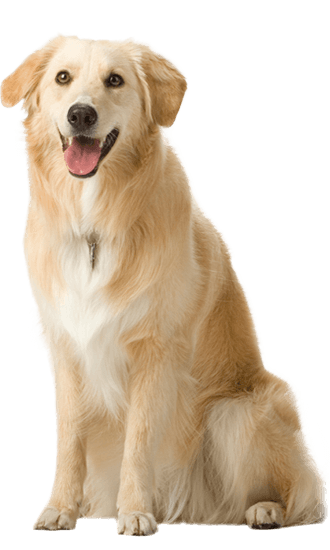
The Golden Retriever is a strong, medium sized dog with a moderately round skull and ears that are triangular, pendant (hanging) and fall approximately to the level of the jaw. In the American line of Golden Retrievers, the eyes are set farther apart and are slanted and triangular in shape, compared to the British line. Males have a broader skull and muzzle and a thicker neck than females. The dog’s medium to dark brown eyes have a deep and gentle expression with a spark of intelligence. The body is slightly longer than tall and is well angulated in the rear. The powerful dog gaits with fluid movement; its thick, muscular tail is carried level with the back and is almost always wagging.
Goldens with undershot or overshot jaws and dogs more than an inch off the stated height are disqualified in the show ring.
Coat
The Golden coat is dense and water-repellent with a thick undercoat. The outer coat is firm and resilient and can be straight or wavy; the legs, underbelly, neck and tail are feathered with longer, lighter hair. As the name suggests, the coat color can range from cream to gold, but must not border on red or mahogany. With the exception of greying or whitening of face or body due to age, any white marking, other than a few white hairs on the chest, are not permitted in the breed standard.
Height
The AKC standard states that males should be 23-24 inches in height at withers; females 21½-22½ inches.
Weight
Male: 65-75 pounds;
Female: 55-65 pounds.

Free Golden Retriever Training Secrets
Free Course on Golden Retriever Training & Obedience
Stop All Bad Behavior, Excessive Barking and Biting
Golden Retriever Personality Traits

Temperament of the Dog
The Golden Retriever is a delightful dog with an excellent temperament both as a gundog or family pet. The playful, affectionate, trustworthy dog has an amiable personality that endears him to young and old alike. As the Golden Retriever matures, its personality develops patience and perseverance.
Although not generally a boisterous breed, this pet will announce visitors and is a good choice for a first pet provided that the owner is capable of managing a dog of this size and strength.
Golden Retrievers are valued as hunting dogs because they can sit for hours in a concealed hunting area, and they can retrieve wild game in cool water or wooded areas. Its steady, agreeable temperament makes it a dependable guide dog for the blind; its concentration and tracking skills make the Golden a success as a Search and Rescue dog; and its gentle nature and loving ways lend themselves to therapy work.
If the Golden has a drawback as a pet, it is his perpetual effervescence, which can get him into trouble with other dogs and can be an annoyance for owners not able to give him frequent attention.
Better suited to an indoor or outdoor lifestyle?
As companion animals, this breed retains an active physical presence and enjoys playing indoors as well as outside. They are suited to both indoor and outdoor environments.
Are they suited to homes with kids?
The dog's affable, gentle nature makes it an ideal choice for a home with children and other pets.
Training
The Golden Retriever is an intelligent and highly trainable dog. In addition to being adept hunters, this breed has been trained as guide dogs for the blind, assistance dogs for the disabled and their keen noses have earned them worldwide recognition as sniffer dogs.
The dog responds best to reward-based methods and enjoys working for treats and praise. The Goldie will enjoy training accompanied by ‘play time,’ consisting of age-appropriate toys or ‘fetching’ activity. Retrievers do well in obedience training due to their focus on their trainer. Training must be gentle and consistent, never harsh, even for the dog that is easily distracted.
However, firmness is also necessary, for a 70-pound dog with bad manners is a nuisance. Early socialization and puppy classes are important for a Goldie pup who must learn to curb his natural friendliness to other dogs and his exuberance for greeting people.
Free Golden Retriever Training Secrets
Free Course on Golden Retriever Training & Obedience
Stop All Bad Behavior, Excessive Barking and Biting
Golden Retriever Activity Level
Exercise Need
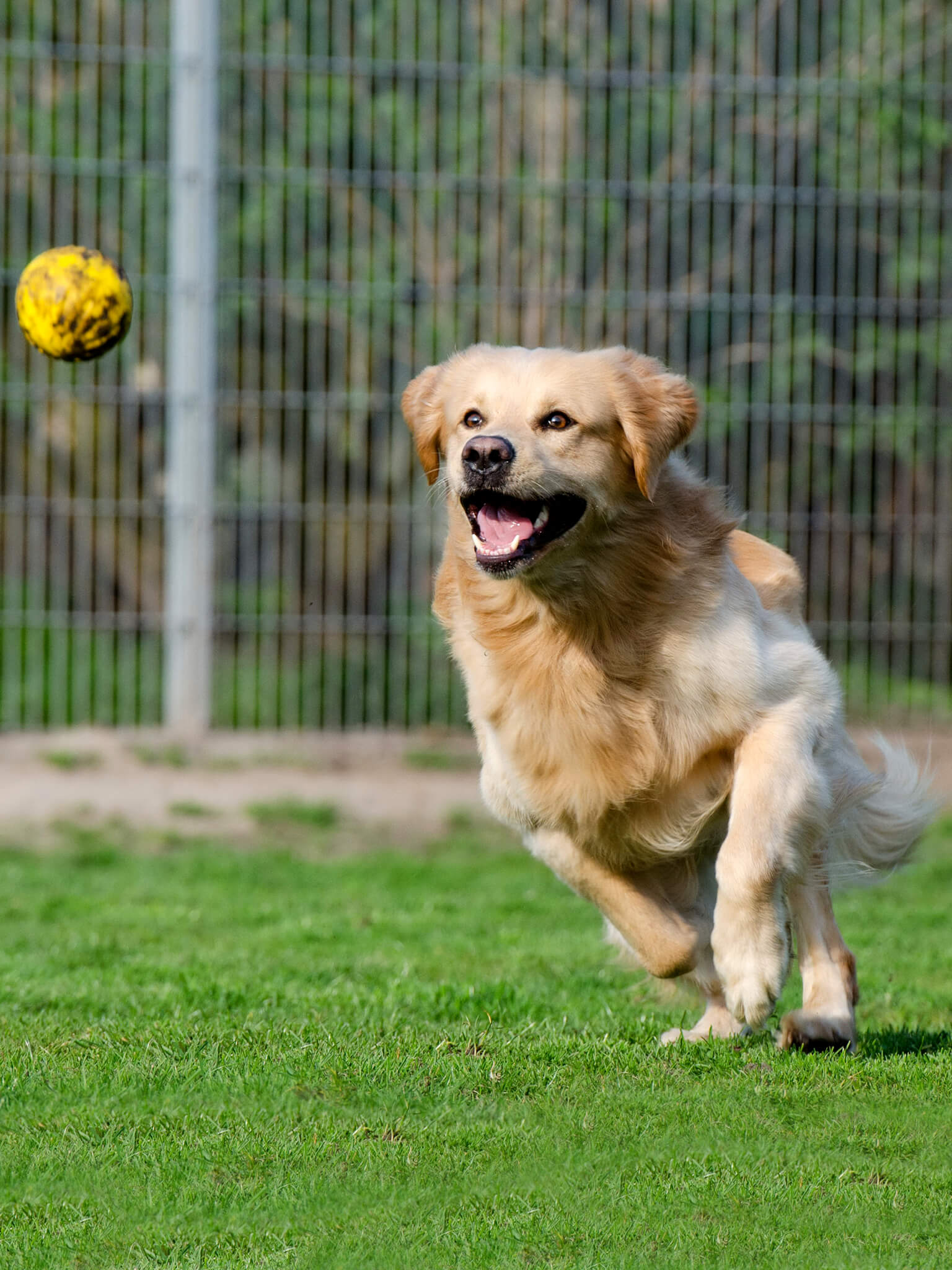
This energetic dog requires an abundant amount of daily exercise. Bred as a hunting and sporting dog, the Golden enjoys games of fetch, swimming and playing with other dogs. Golden Retrievers also enjoy 'hide-and-seek' games and will quickly perceive how the game is played and what is expected.
Golden Retrievers enjoy running along with an owner, but breeders recommend waiting until the dog is fully grown before engaging in running activity, or you can permanently damage the dog's joints. Owners should keep in mind that puppies should not have exercise forced upon them, especially if they are under eighteen months of age.
Grooming
The Golden Retriever has a smooth coat of medium length that is easy to groom. The coat responds well to a palm-sized comb or brush, containing firm bristles. Attention should be paid to the dog’s undercoat as it has greater density than the outer coat. It is recommended that a dry shampoo be used to clean the dog, bathing the animal only when necessary (to prevent coat dryness), and preferably not more than twice a month.
Golden Retrievers also benefit from regular brushing, once daily if possible. Brushing helps to promote a shiny, healthy coat and decreases shedding. The owner needs to check nails and have them trimmed if there is no natural wear. Feet can be trimmed of excess fur to expose nails and prevent slipping when the dog walks. Excess fur can be trimmed around the footpads but not between the pads themselves (to prevent chafing).
Golden Retrievers who hunt on land and are allowed to swim require special attention. Running in the woods can cause small foreign bodies such as burrs and other flora to become lodged under the eyelid or in an ear causing the surface of the eye and the ear to become irritated and inflamed.
Free Golden Retriever Training Secrets
Free Course on Golden Retriever Training & Obedience
Stop All Bad Behavior, Excessive Barking and Biting
Health and Care
Genetic Problems
A generally healthy dog to begin with, careless and indiscriminate breeding has taken a toll on the Goldie, making the breed susceptible to progressive retinal atrophy, an eye disorder that causes blindness; entropion; epilepsy; osteochondrosis; Von Willebrand's Disease, a bleeding disorder; cataracts; heart problems; and skin conditions. A poorly bred pup is also likely to suffer from aggression or other behavior problems.
Goldens are highly susceptible to hip and elbow dysplasia, conditions that can be triggered or exacerbated by too-rapid growth of puppies. The breed tends to put on weight easily and a combination of a healthy balanced diet and regular exercise is needed to keep the dog slim and fit.
Cancer (it is the #1 cause of death in all Retrievers and is especially common in Goldens).
Breeding the Dog and any Cautions
Goldens used for breeding should be put to the test, particularly for hip dysplasia and eye problems. Breeders should be more eager to show a prospective customer these documents than they are to show off the trophies on the mantelpiece. All breeders should keep accurate health, breeding, registration and pedigree records for every dog in their care. These records are the most important papers that go with a puppy to its new home. Keep in mind that a good breeder will always take back a puppy that a buyer cannot cope with, or help find it a new home.
Life Span
The average life span of a Golden Retriever is ten to thirteen years, though there are reports of some dogs living until the age of twenty to twenty-five years, with healthy breeding and life style.
National Breed Clubs
National Breed Club
In the United Kingdom, The Golden Retriever Breed Council promotes the Golden Retriever. http://www.GoldenRetrievers.co.uk/.
In the United States, The Golden Retriever Club of America represents this breed. http://www.grca.org/.
Recognition
The Kennel Club in the United Kingdom initially accepted the Golden Retriever breed for registration in 1903. At that time, the breed was named 'Flat Coats, Golden.' The breed was first recognized as a Retriever in 1911, and the breed name was officially changed to Golden Retriever in 1920.
In the United States, the first Golden Retriever was registered at the American Kennel Club (AKC) in 1894. The AKC first recognized the breed in 1932.
Group: KCGB: Gun Dog, AKC: Sporting Dog
AKC Popularity Ranking:3
Also Known As: Golden
Train Your Golden Retriever To Listen To You
Get Instant Access to Your Training Now - For Free
Sign up for our Free Golden Retriever Mini Course to have a housebroken, obedient dog that happily comes to you every time you call.
You'll learn new commands to obedience-train your dog as well as how to housebreak your dog in 6 days or less.
You'll also learn how to eliminate bad habits like barking, nipping or biting, jumping, or pulling on the leash.Here's just s small fraction of what else you'll learn in the course:
How to lead and think like a pack dog - the new psychology.
3 dangerous mistakes that most Golden owners make when they are trying to potty train their dogs.
The 2 main reasons why your dog barks excessively and how to control its excessive barking.
How to obedience train your Golden Retriever to permanently end behavioral problems like Jumping, Aggression, Pulling on Leash.
A surprisingly easy way to teach your dog cool new tricks.
How to improve your dog's lifespan and keep it from getting overly heavy with a healthy and nutritious diet.
Getting Pro help fast - how to get access to our expert trainers when you need them most.
One hidden psychological trigger that all Golden Retrievers have... that practically allows you to "analyze" and "control" your dog's every action.
Priority access to the free online seminars conducted by our training experts.
Whereas other dog training related web sites and books offer generic information for dogs in general, ours is the ONLY web site that offers Golden information specifically, from a renowned panel of experts - because as you probably know, Goldens have their own special training requirements that other dogs don't have.




What Other Dog Owners Say…

Our Free Courses
Dog Obedience TrainingDog Housetraining
Stop Dog Barking
Stop Dog Biting
HomeMade Dog food
Dog Grooming
Adopting A Dog
Read More
PureBred Dog BreedsMixed Dog Breeds
Dog Groups
Training Small Dog Breeds
Training Medium Dog Breeds
Training Large Dog Breeds
Exercising Your Dog
Dog Health
More Articles
Dog Grooming Needs
Our Tribute