Privacy Policy: Your email address is 100% safe.
We don't spam and hate it as much as you do :-) You can also unsubscribe from our mailing list at any time.
Subscribe to The FREE German Spitz Training Course to learn how you can easily turn your unruly and disobedient German Spitz into a loving, friendly companion. Step-by-step tips for puppy housebreaking, dog obedience training and stopping bad behavior.
Sign Up
Sign Up
German Spitz: Temperament, Exercise, Health

About German Spitz
Country of Origin, History of German Spitzs
The direct ancestors of the German Spitz can be considered the heavily coated Nordic herding dogs. The German Spitz looks familiar to the Pomeranian in size and looks, the Germans never approve of this fact. The earliest mention of the German Spitz can be traced back to the middle of 15th century, in German literature. Centuries ago the German Spitz were used as hunting companions and watch dogs.
German Spitz Tools
Breed Selector Tool - is the German Spitz the right breed for you?
Is the German Spitz the right breed for you and your family?
Find out by using our Free Dog Breed Selector Tool
Check Your German Spitz's Learning Style
Are you aware dogs also have a learning style that can greatly affect their ability to housetrain as well as be trained correctly. Evaluate your German Spitz's learning style and personality using our free Learning Style tool so that you are better able to provide him with the proper German Spitz training methods.
Is your German Spitz dominating over you?
Does your German Spitz bark unnecessarily? Does your German Spitz come to you when you call? Download a FREE Report on Dog Dominance for you and your German Spitz and learn how to control your dog.
Do you make these mistakes with your German Spitz?
Are you inadvertently snow-balling bad behavior in your German Spitz? Evaluate your Dog Training Style from our Free Tool and learn how best to deal with your dog.
German Spitz Calorie Calculator
Do you know how many calories your German Spitz needs every day and how many cups of food you should be giving it every day? Click here to use our German Spitz Calorie Calculator.
Description of the Dog
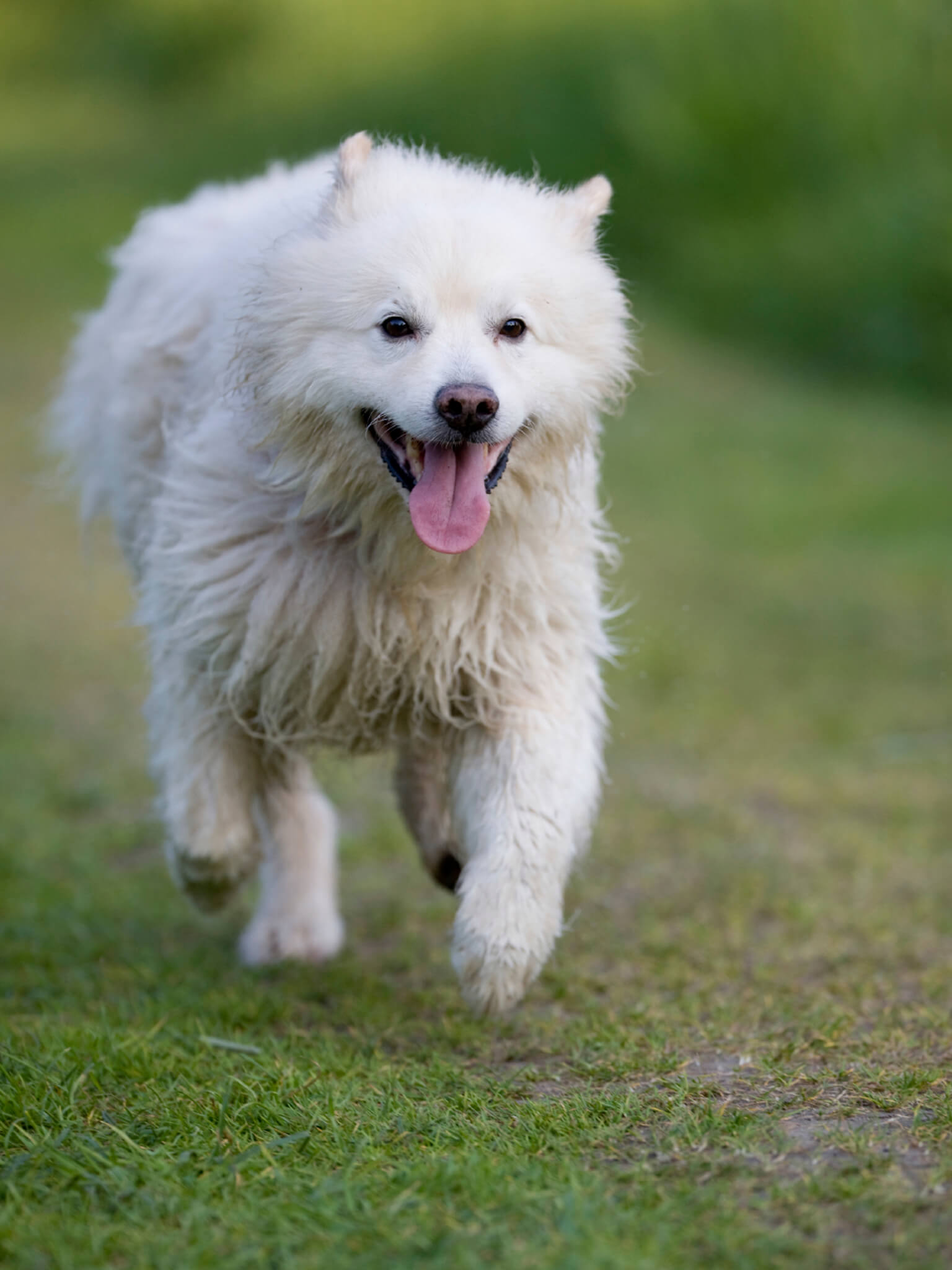
While the Giant German Spitz are seen in colors like white, black or tan, the Standard and Miniature German Spitz can be seen in a variety of shades like black, brown, orange, gray, white. The German Spitz are double-coated with soft, dense fur on the longish side. They have large dark eyes, small triangular ears, a thick head and a tail that tend to curl on the top. Basically, the German Spits is a compact dog, with a well-arched back and a offstanding coat.
Height
The height of three categories of the German Spitz are given below:
Giant German Spitz: 16 to 17 inches
Standard German Spitz:11 to 14 inches
Miniature/Toy German Spitz: 9 to 11 inches
Weight
The average weight of three categories of the German Spitz are given below:
Giant German Spitz: 38 to 40 pounds
Standard German Spitz: 23 to 41 pounds
Miniature/Toy German Spitz: 18 to 22 pounds

Free German Spitz Training Secrets
Free Course on German Spitz Training & Obedience
Stop All Bad Behavior, Excessive Barking and Biting
German Spitz Personality Traits
Temperament of the Dog
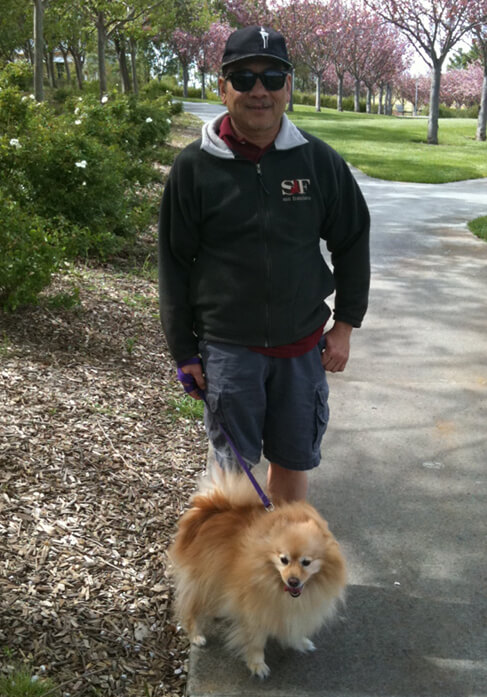
The German Spitz is affectionate, lively, energetic, loyal, intelligent, agile and active by nature. Although they are always eager to please their owners, they are not easy to train. They tend to ask for a lot of attention and love from their human families. Many a times their stubborn and somewhat temperamental personality acts as a hindrance to proper training. They don't mix well with strangers. Socializing and obedience training is important and should be started from an early age.
The German Spitz is not suitable for families having infants. Too much of attention from children tend to make them snappy. A well-trained German Spitz makes an excellent pet and companion. Their alertness makes them good watchdogs. They don't like grooming sessions, thus the owner needs to train them to be calm and patient during these times.
Living Conditions
The German Spitz is quite comfortable living indoors and playing in the nearby park. They make ideal pets for city dwellers, apartment living and those with people living in homes with a small fenced backyard.
German Spitz Activity Level
Exercise
Regular walks are welcome. You can also take the
dog for a running session occasionally to help it
stretch its legs. The German Spitz does not require
a lot of exercise, what it needs is a lot of human
attention and love. The dog will be content if you
take it for a walk with you or just sit at home
spend idle time at home.
Grooming
Grooming involves regular brushing or combing with soft bristled comb or brush to avoid matting. However, unlike other dogs, the German Spitz does not liking the grooming sessions. Thus, the owners should train their dogs to remain calm when the grooming is being done. Baths should be given only when necessary.
Free German Spitz Training Secrets
Free Course on German Spitz Training & Obedience
Stop All Bad Behavior, Excessive Barking and Biting
Health and Care
The German Spitz may suffer from hereditary health disorders like patella luxation or eye problems. They may also suffer from tooth related ailments. Otherwise, they are a healthy breed.
National Breed Clubs
Life Expectancy: 12 to 15 years
Group: Non-Sporting Group.
AKC Popularity Ranking: Foundation Stock Service.
Also Known As: Deutscher Spitz
Train Your German Spitz To Listen To You
Get Instant Access to Your Training Now - For Free
Sign up for our Free German Spitz Mini Course to have a housebroken, obedient dog that happily comes to you every time you call.
You'll learn new commands to obedience-train your dog as well as how to housebreak your dog in 6 days or less.
You'll also learn how to eliminate bad habits like barking, nipping or biting, jumping, or pulling on the leash.Here's just s small fraction of what else you'll learn in the course:
How to lead and think like a pack dog - the new psychology.
3 dangerous mistakes that most German Spitz owners make when they are trying to potty train their dogs.
The 2 main reasons why your dog barks excessively and how to control its excessive barking.
How to obedience train your German Spitz to permanently end behavioral problems like Jumping, Aggression, Pulling on Leash.
A surprisingly easy way to teach your dog cool new tricks.
How to improve your dog's lifespan and keep it from getting overly heavy with a healthy and nutritious diet.
Getting Pro help fast - how to get access to our expert trainers when you need them most.
One hidden psychological trigger that all German Spitzs have... that practically allows you to "analyze" and "control" your dog's every action.
Priority access to the free online seminars conducted by our training experts.
Whereas other dog training related web sites and books offer generic information for dogs in general, ours is the ONLY web site that offers German Spitz information specifically, from a renowned panel of experts - because as you probably know, German Spitzs have their own special training requirements that other dogs don't have.




What Other Dog Owners Say…

Our Free Courses
Dog Obedience TrainingDog Housetraining
Stop Dog Barking
Stop Dog Biting
HomeMade Dog food
Dog Grooming
Adopting A Dog
Read More
PureBred Dog BreedsMixed Dog Breeds
Dog Groups
Training Small Dog Breeds
Training Medium Dog Breeds
Training Large Dog Breeds
Exercising Your Dog
Dog Health
More Articles
Dog Grooming Needs
Our Tribute