Privacy Policy: Your email address is 100% safe.
We don't spam and hate it as much as you do :-) You can also unsubscribe from our mailing list at any time.
Subscribe to The FREE German Shepherd Training Course to learn how you can easily turn your unruly and disobedient GSD into a loving, friendly companion. Step-by-step tips for puppy housebreaking, dog obedience training and stopping bad behavior.
Sign Up
Sign Up
German Shepherd: History, Temperament, Exercise
About German Shepherd
Country of Origin, History of German Shepherds
Shepherd dogs from Bavaria, Thurginia, and Wurtemberg are in the background of the German Shepherd Dog. These dogs included a variety of coat types: long-haired, short-haired, and wire-haired.
In April 1899 the first German Shepherd Dog was registered. Until 1915 both long-haired and wire-haired were exhibited. Most countries only recognize the short-haired for show purposes today.
German Shepherd Tools
Breed Selector Tool - is the German Shepherd the right breed for you?
Is the German Shepherd the right breed for you and your family?
Find out by using our Free Dog Breed Selector Tool
Check Your German Shepherd's Learning Style
Are you aware dogs also have a learning style that can greatly affect their ability to housetrain as well as be trained correctly. Evaluate your German Shepherd's learning style and personality using our free Learning Style tool so that you are better able to provide him with the proper German Shepherd training methods.
Is your German Shepherd dominating over you?
Does your German Shepherd bark unnecessarily? Does your German Shepherd come to you when you call? Download a FREE Report on Dog Dominance for you and your German Shepherd and learn how to control your dog.
Do you make these mistakes with your German Shepherd?
Are you inadvertently snow-balling bad behavior in your German Shepherd? Evaluate your Dog Training Style from our Free Tool and learn how best to deal with your dog.
German Shepherd Calorie Calculator
Do you know how many calories your German Shepherd needs every day and how many cups of food you should be giving it every day? Click here to use our German Shepherd Calorie Calculator.
A General Appearance of the Dog
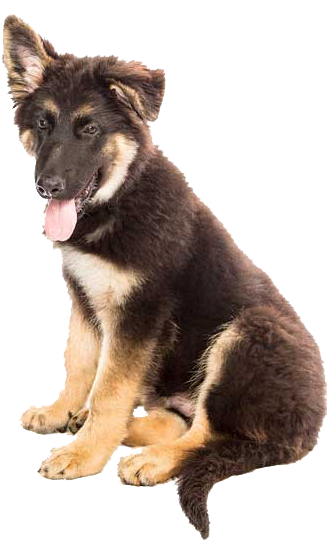
The German Shepherd Dog is one of the most popular and recognizable breeds around the world. German Shepherd Dogs are well-proportioned, muscular yet trim dogs with pricked (stand up) ears. It is agile and quick. The noble-looking German Shepherd (Alsatian) is well-balanced, longer than it is tall. The German Shepherd is a black and tan dog predominantly but can be gray (called blue) or brown (called liver) with varying amounts of those colors. (Blue, liver and white cannot be shown in AKC.) He is usually lighter on the legs and face with dark accents on the ears. He has almond-shaped eyes with a lively, intelligent expression. His bushy tail hangs down.
The German Shepherd is a trotting dog who moves smoothly and rhythmically, covering a lot of ground quickly. Its stride is long, quick, and easy. The hindquarters seem to deliver a power thrust that propels the front end forward. The dog can easily spring from its hindquarters, jumping up or forward to quite a distance.
If you are planning to adopt a German Shepherd, learn how to choose a happy, healthy dog or puppy.
Weight
75-90 lbs
Height
Males: 24-26 inches
Females: 22-24 inches

Free German Shepherd Training Secrets
Free Course on German Shepherd Training & Obedience
Stop All Bad Behavior, Excessive Barking and Biting
German Shepherd Personality Traits
Temperament of the Dog
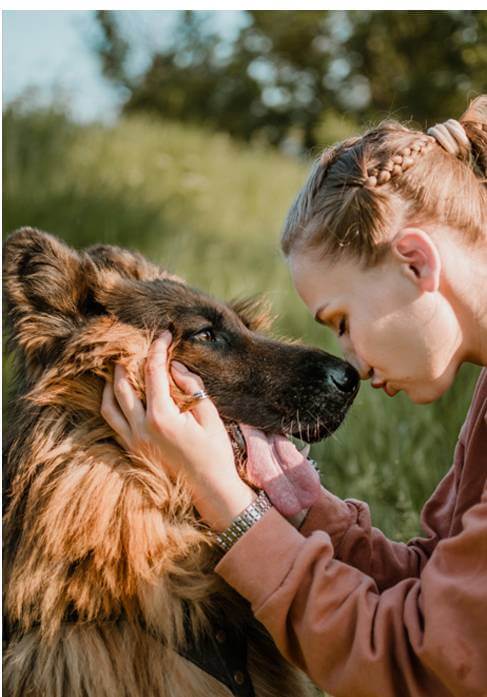
German Shepherds love to be close to their families and are very loyal and protective of their families. They are very eager and alert. They have a high capacity for learning and love to learn. They are obedient and cheerful and very seldom show any stubbornness because they are eager to please.
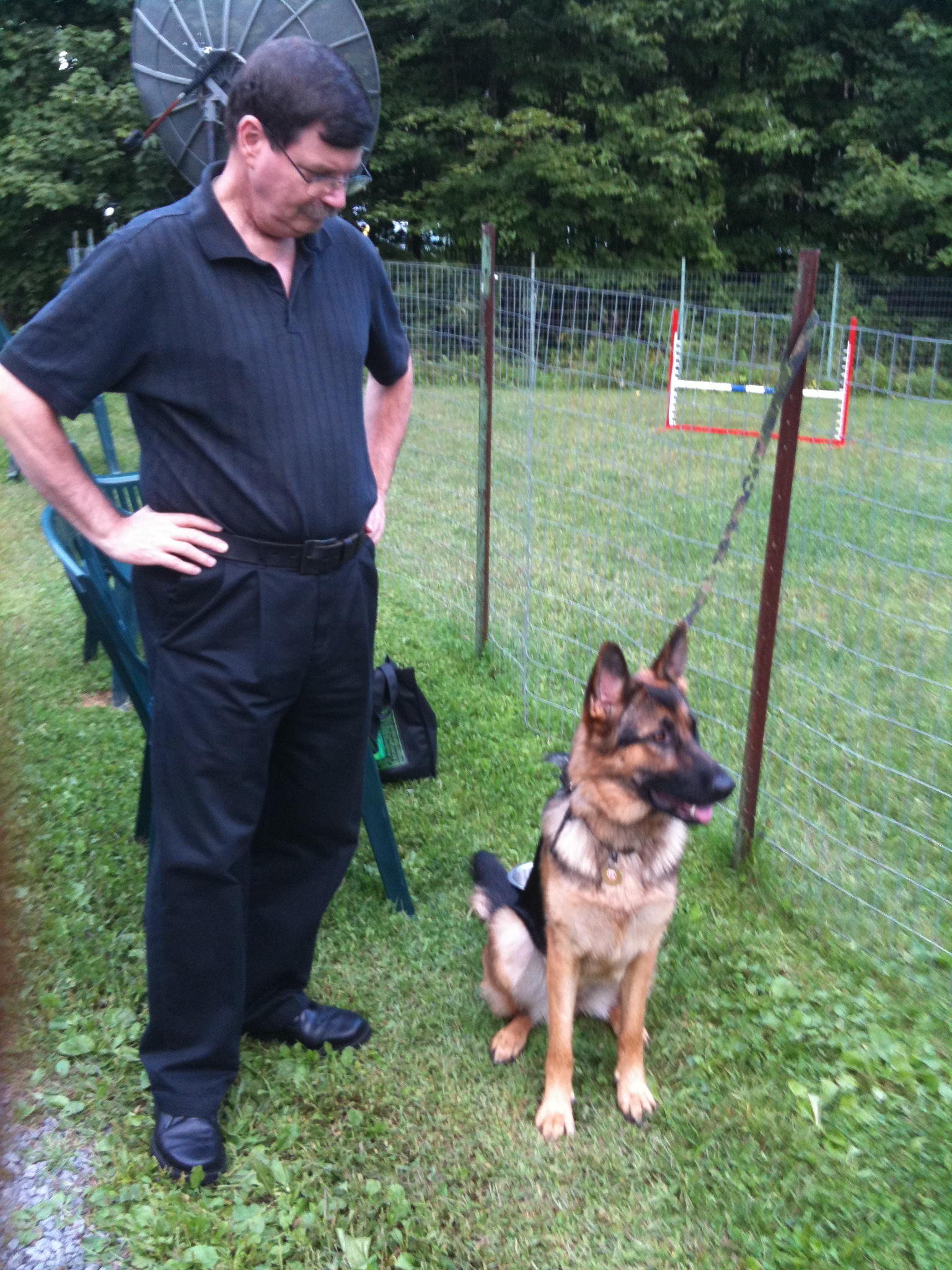
German Shepherds should not be left alone for long periods of time. They must be thoroughly socialized and firmly obedience trained from an early age and throughout their lives. A very firm yet loving attitude is necessary with a Shepherd throughout its life. Normally, Shepherds are not barkers but will bark as a warning of perceived danger.
The German Shepherd Dog does not give affection lightly; it is also known as a "one-man" breed for its tendency to display serious loyalty and fidelity, especially to its owner or main caretaker. He is a bold and punishing fighter if he needs to be.
German Shepherds are used for guard work and search and rescue because they are fearless, direct, calm, confident, and intelligent. Aggression and attacks are usually a result of poor breeding or poor adjustment, handling, or training.
If you start young and teach your puppy its order in your "pack" (all members of the family have to be Alpha), problems with training will be minimized. However, German Shepherds tend to have more dominant personalities than some breeds. Classes are extremely helpful. A German Shepherd Dog that thinks it's the Alpha member of the pack can be difficult to handle or have as a family member.
German Shepherds love jobs. They are used as guard dogs, in police work, to sniff out drugs, as guides for the blind and deaf, in search and rescue, and for military work. As a family dog, your German Shepherd will enjoy obedience, agility, flyball, tracking activities, and schutzhund. Alsatians regularly win advanced obedience and field trials.
Research carefully before getting a German Shepherd. Get to know both parents and any other relatives to make sure of the personality. Unfortunately some breeders are offering shy and nervous Alsatians for sale. These dogs should be avoided at all costs as they can be dangerous. Also, assess the diseases in the lineage.
Better suited to an indoor or outdoor lifestyle?
A German Shepherd can be kept in an apartment, but much prefers living where he has a fenced yard for exercise. He will enjoy a brisk, long walk each day – or, after he is a year old, he can job or go with you when you bike or rollerblade. If he is underexercised, he will become destructive (especially as a youngster). He can be outdoors a large part of the day as long as he has sufficient time with his family.
Are they suited to homes with kids?
A well-bred German Shepherd will do fine in a household with children, especially older children. He will need daily exercise and some activity to keep his mind busy. Children should be taught how to handle the dog and not to hit or yell at him.
If you have a German Shepherd dog or puppy at home and you want to train it into the most loving pet, Sign-up for our Free German Shepherd Training Course.
German Shepherd Activity Level
How active is the Breed?
The German Shepherd is very active throughout his life; however, he is fairly quiet when indoors. He will need daily exercise and some activity to keep his mind busy.
Exercise Need
German Shepherd puppies will be pretty rambunctious. Outdoor play and some training (like obedience) will help to keep his body and mind busy. He will enjoy a brisk, long walk each day – or, after he is a year old, he can job or go with you when you bike or rollerblade. If he is underexercised, he will become destructive (especially as a youngster).
Is your German Shepherd causing you trouble by eliminating inside your house? Get our Free tips on Housebreaking your German Shepherd and put an end to all the housetraining nightmares - permanently.
Training your German Shepherd can be fun and a rewarding experience for both you and your dog. Get step-by-step tips on German Shepherd Training – now.
Grooming
All three coat types are shed throughout the year with heavy shedding in spring and fall. Weekly brushing is a must with daily brushing during the spring and fall.
Grooming your dog yourself, at your home and at your convenience will help you build a strong bond with your German Shepherd. You will not only save yourself the hassle of taking him to a groomer regularly, you save some money too.
Coat Color
The German Shepherd is a black and tan dog predominantly but can be gray (called blue) or brown (called liver) with varying amounts of those colors. He is usually lighter on the legs and face with dark accents on the ears.
Note: White German Shepherds are now considered a separate breed called the American White Shepherd.
Coat Type
There are three coat types: rough (relatively short with undercoat), long rough (longer with undercoat), and long-haired (without undercoat).
The correct German Shepherd Dog coat is relatively short with an obvious undercoat. This is quite waterproof. Some dogs are born with long coats which usually, though not always, are devoid of undercoat. Such coats are more difficult to groom, but many pet owners seem to like the long-coated version. The normal coat is dominant to the long version, so there are three kinds of coat: normal, normal but carrying the long coat gene, and long. About 10% of the pups are born long-coated.
Free German Shepherd Training Secrets
Free Course on German Shepherd Training & Obedience
Stop All Bad Behavior, Excessive Barking and Biting
Health and Care
Genetic Problems
Hereditary diseases include hip and elbow dysplasia (OFA certification of good on both parents is essential), blood disorders, digestive problems, epilepsy, chronic eczema, eye inflammation, dwarfism and allergies.
Unfortunately some breeders are offering shy and nervous Alsatians for sale. These dogs should be avoided at all costs as they can be dangerous.
Breeding the Dog and any Cautions
You will want to have your dog's hips and elbows certified before breeding.
An German Shepherd's health is directly related to it's diet. Find out how you can help your German Shepherd to live longer.
Litter Size: 8 – 12 puppies
Life Span: 12-14 years.
National Breed Clubs
National Breed Clubs
British – German Shepherd Dog Club of the United Kingdom
US – German Shepherd Dog
Club of America - www.gsdca.org
United Schutzhund Clubs of America
Other – German Shepherd
Dog Club of Canada, Verein fur Deutsche Schaferhunde
Other Recognition
German Shepherd Dog Club of Canada,
Verein fur Deutsche Schaferhunde
CKC, FCK, AKC, UKC, KCGB, ANKC, NKC, NZKC, GSDCA,
APRI, ACR
Rescue Link: www.agsra.com
Group: AKC Herding Dog Group, KCGB Pastoral Group
Ranking: 2 in AKC, 4 in KCGB
Also Known As: Alsatians, German Shepherd, Shepherds.
Train Your German Shepherd To Listen To You
Get Instant Access to Your Training Now - For Free
Sign up for our Free German Shepherd Mini Course to have a housebroken, obedient dog that happily comes to you every time you call.
You'll learn new commands to obedience-train your dog as well as how to housebreak your dog in 6 days or less.
You'll also learn how to eliminate bad habits like barking, nipping or biting, jumping, or pulling on the leash.Here's just s small fraction of what else you'll learn in the course:
How to lead and think like a pack dog - the new psychology.
3 dangerous mistakes that most GSD owners make when they are trying to potty train their dogs.
The 2 main reasons why your dog barks excessively and how to control its excessive barking.
How to obedience train your German Shepherd to permanently end behavioral problems like Jumping, Aggression, Pulling on Leash.
A surprisingly easy way to teach your dog cool new tricks.
How to improve your dog's lifespan and keep it from getting overly heavy with a healthy and nutritious diet.
Getting Pro help fast - how to get access to our expert trainers when you need them most.
One hidden psychological trigger that all German Shepherds have... that practically allows you to "analyze" and "control" your dog's every action.
Priority access to the free online seminars conducted by our training experts.
Whereas other dog training related web sites and books offer generic information for dogs in general, ours is the ONLY web site that offers GSD information specifically, from a renowned panel of experts - because as you probably know, GSDs have their own special training requirements that other dogs don't have.




What Other Dog Owners Say…

Our Free Courses
Dog Obedience TrainingDog Housetraining
Stop Dog Barking
Stop Dog Biting
HomeMade Dog food
Dog Grooming
Adopting A Dog
Read More
PureBred Dog BreedsMixed Dog Breeds
Dog Groups
Training Small Dog Breeds
Training Medium Dog Breeds
Training Large Dog Breeds
Exercising Your Dog
Dog Health
More Articles
Dog Grooming Needs
Our Tribute