Privacy Policy: Your email address is 100% safe.
We don't spam and hate it as much as you do :-) You can also unsubscribe from our mailing list at any time.

Subscribe to The FREE Dutch Shepherd Training Course to learn how you can easily turn your unruly and disobedient Dutchie into a loving, friendly companion. Step-by-step tips for puppy housebreaking, dog obedience training and stopping bad behavior.
Sign Up
Sign Up
Dutch Shepherd: Origin, Personality, Training
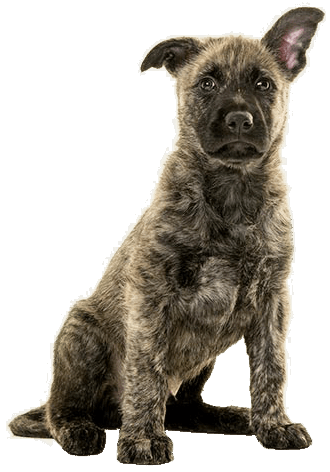
About Dutch Shepherd
Country of Origin, History of Dutch Shepherds
Dutch Shepherds and Belgian Shepherds share a common ancestry in the German Shepherds. However, unlike the Belgian Shepherd the Dutch Shepherd has not been able to attract a huge fan following. This breed had been developed in the Netherlands for use as a herding dog. Its ability to function as a herder and its quick reflexes had made the Dutch Shepherd popular. This had been utilized as an all-purpose farm guard, herder, cart-puller, guard, police and security dog.
The dog had evolved in early 1800s in the
Southern parts of the Netherlands (the province
of Belgium and neighboring Belgium, then part
of Netherlands, in particular). Division by
coat texture of dogs started with the beginning
of dog shows some 100 years ago.
Dutch Shepherd Tools
Breed Selector Tool - is the Dutch Shepherd the right breed for you?
Is the Dutch Shepherd the right breed for you and your family?
Find out by using our Free Dog Breed Selector Tool
Check Your Dutch Shepherd's Learning Style
Are you aware dogs also have a learning style that can greatly affect their ability to housetrain as well as be trained correctly. Evaluate your Dutch Shepherd's learning style and personality using our free Learning Style tool so that you are better able to provide him with the proper Dutch Shepherd training methods.
Is your Dutch Shepherd dominating over you?
Does your Dutch Shepherd bark unnecessarily? Does your Dutch Shepherd come to you when you call? Download a FREE Report on Dog Dominance for you and your Dutch Shepherd and learn how to control your dog.
Do you make these mistakes with your Dutch Shepherd?
Are you inadvertently snow-balling bad behavior in your Dutch Shepherd? Evaluate your Dog Training Style from our Free Tool and learn how best to deal with your dog.
Dutch Shepherd Calorie Calculator
Do you know how many calories your Dutch Shepherd needs every day and how many cups of food you should be giving it every day? Click here to use our Dutch Shepherd Calorie Calculator.
Description of the Breed
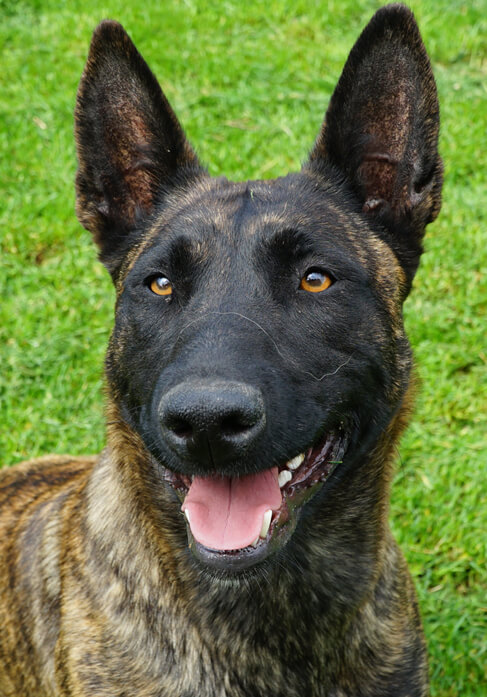
The dog’s body is muscular and symmetrical. It has a long muzzle and strong and rectangular teeth. The eyes of the dog are dark. They are also slightly slanting. The dog has relatively small ears. These remain stiffly erect.
The chest and belly are deep. They are not too drawn up. The feet of the dog are relatively small. They do not have dewclaws. The dog’s toes are well arched and its nails and pads are black. In between the toes protective hairs are present. The dog’s tail is slightly curved.
Coat
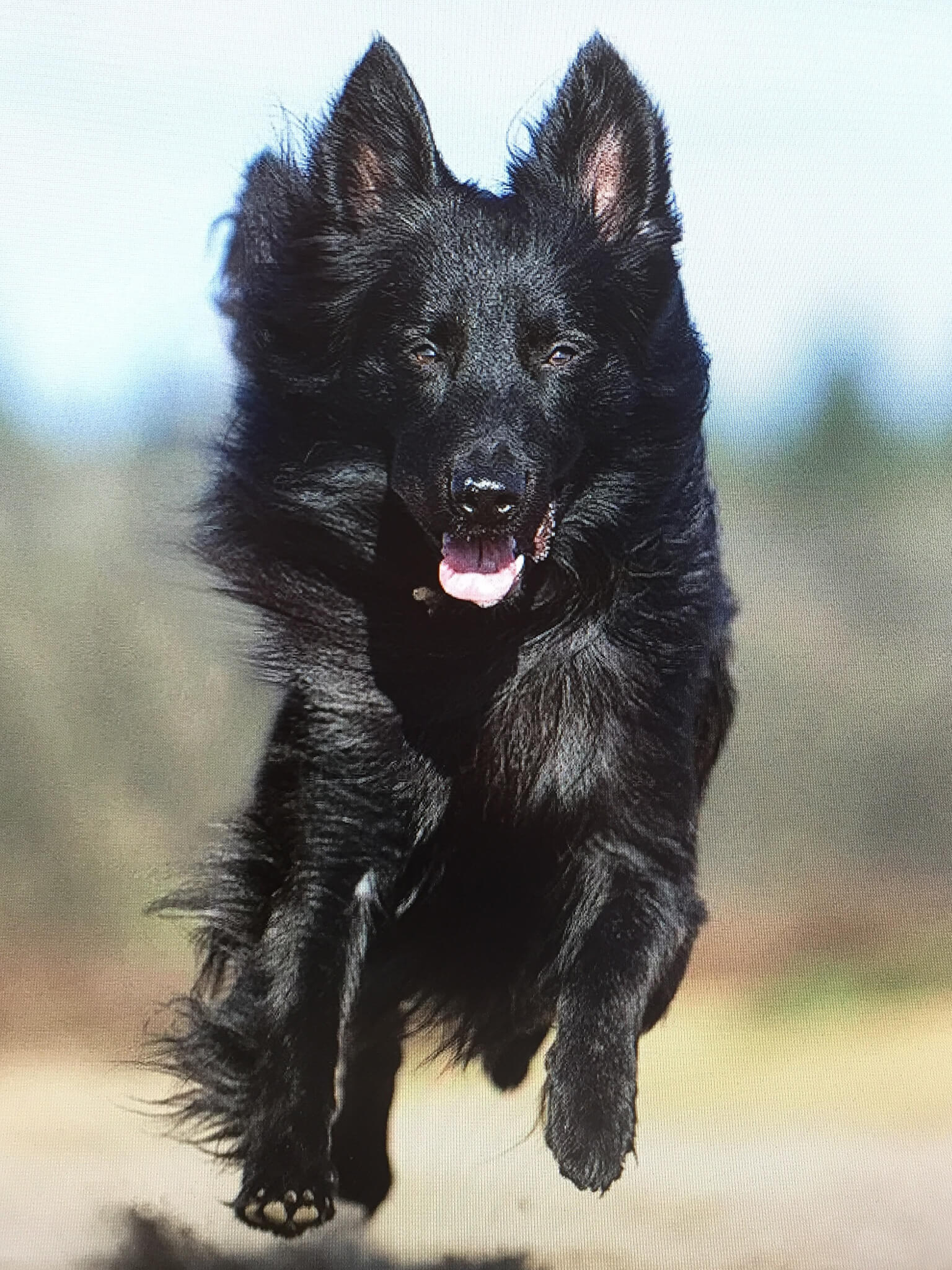
There are three varieties of Dutch Shepherd dogs- the longhaired, shorthaired and wirehaired varieties. While the longhaired dogs have long, straight, flat and harsh hair, the shorthaired ones have fine and dense hair. Again the wirehaired dogs have wiry hairs of medium length.
The coat color range of the three varieties, however, remains same for all- shades of brindle, including gray, silver, yellow, red or gold and blue. The shorthaired Dutch Shepherds are the most common followed by the wirehaired dogs. The longhaired Dutch Shepherds are very rare.
Height: The dogs have heights of 22-25 inches.
Weight: Weights of Dutch Shepherd
dogs vary between 55 pounds and 67 pounds.

Free Dutch Shepherd Training Secrets
Free Course on Dutch Shepherd Training & Obedience
Stop All Bad Behavior, Excessive Barking and Biting
Dutch Shepherd Personality Traits
Temperament of the Dog
If performances at tasks like agility, catch, obedience competitions, guard work, herding, field trailing and companionship is the test then the Dutch Shepherds do stand as the most competent of all shepherd dogs. These dogs are very energetic and remain attached to their territories and work enthusiastically. They have been known to be obedient and loyal dogs- friendly, loving and playful with their owners and their family members. Again, they have also been known to be pretty cunning and smart- as and when the situation demands.
The Dutch Shepherds can be very friendly with children of the home provided the children do not disturb them when they are resting. They have been known to get along very well with other dogs of their breed, dogs of other breeds and other pet animals of the home.
The Holland Shepherd is a wonderful guard of the home. While it stops unwanted visitors in their tracks it greets family members and friends with warmth and enthusiasm.
It is easy to obedience train the dog and make them learn up new commands and skills. The shorthaired dogs are commonly utilized for defense or police dog trials. The dog can well withstand fatigue and bad weather. The all-weather coat that they have offers considerable protection even when temperatures fall down sharply.
Living Conditions
Dutch Shepherd dogs can be kept in apartments provided they are sufficiently exercised. They have an all-weather coat that ensures protection even during cold climates.
Dutch Shepherd Activity Level
Exercise requirement
Since Dutch Shepherds are working dogs they need to be kept exercised both physically and mentally at all times. A daily walk or jog is a must together with other 'running' exercises, which the dog does to its heart's content.
Grooming
The longhaired as well as the shorthaired Dutch Shepherd dogs need regular grooming. The dead and loose hairs are to be removed daily using a comb and brush. In case of the wirehaired dogs the coat ought to be plucked professionally twice a year.
The wirehaired dogs must never be brushed though they may be combed in moderation using a coarse comb. Excessive hair on the ears should also be removed. The all-weather coat of the dog need be bathed only when necessary as otherwise the natural oils in the skin might get removed.
Free Dutch Shepherd Training Secrets
Free Course on Dutch Shepherd Training & Obedience
Stop All Bad Behavior, Excessive Barking and Biting
Health and Care
Just like other working dog breeds the Dutch Shepherds too have few health problems. They are strong, fit and healthy and do not have any health problem specific to their breed.
National Breed Clubs
Life Expectancy: About 12-14 years.
Group: Herding Group.
AKC Popularity Ranking: Miscellaneous Class.
Also Known As: Hollandse Herdershond, Hollandse Herder and Holland Shepherd.
Train Your Dutch Shepherd To Listen To You
Get Instant Access to Your Training Now - For Free
Sign up for our Free Dutch Shepherd Mini Course to have a housebroken, obedient dog that happily comes to you every time you call.
You'll learn new commands to obedience-train your dog as well as how to housebreak your dog in 6 days or less.
You'll also learn how to eliminate bad habits like barking, nipping or biting, jumping, or pulling on the leash.Here's just s small fraction of what else you'll learn in the course:
How to lead and think like a pack dog - the new psychology.
3 dangerous mistakes that most Dutchie owners make when they are trying to potty train their dogs.
The 2 main reasons why your dog barks excessively and how to control its excessive barking.
How to obedience train your Dutch Shepherd to permanently end behavioral problems like Jumping, Aggression, Pulling on Leash.
A surprisingly easy way to teach your dog cool new tricks.
How to improve your dog's lifespan and keep it from getting overly heavy with a healthy and nutritious diet.
Getting Pro help fast - how to get access to our expert trainers when you need them most.
One hidden psychological trigger that all Dutch Shepherds have... that practically allows you to "analyze" and "control" your dog's every action.
Priority access to the free online seminars conducted by our training experts.
Whereas other dog training related web sites and books offer generic information for dogs in general, ours is the ONLY web site that offers Dutchie information specifically, from a renowned panel of experts - because as you probably know, Dutchies have their own special training requirements that other dogs don't have.




What Other Dog Owners Say…

Our Free Courses
Dog Obedience TrainingDog Housetraining
Stop Dog Barking
Stop Dog Biting
HomeMade Dog food
Dog Grooming
Adopting A Dog
Read More
PureBred Dog BreedsMixed Dog Breeds
Dog Groups
Training Small Dog Breeds
Training Medium Dog Breeds
Training Large Dog Breeds
Exercising Your Dog
Dog Health
More Articles
Dog Grooming Needs
Our Tribute