Privacy Policy: Your email address is 100% safe.
We don't spam and hate it as much as you do :-) You can also unsubscribe from our mailing list at any time.
Subscribe to The FREE Dingo Training Course to learn how you can easily turn your unruly and disobedient Australian Dingo into a loving, friendly companion. Step-by-step tips for puppy housebreaking, dog obedience training and stopping bad behavior.
Sign Up
Sign Up
Dingo: Origin, Personality, Fitness & Health
About Dingo
Country of Origin, History of Dingos
Though the Dingo dog is now found in Australia (except Tasmania) it is not truly native to Australia. There are two theories suggested about its arrival to Australian shores. According to one theory, Aboriginal people brought in the Dingoes to Australian over 15,000 years ago. And according to the other theory the Dingo could have been related to the semi-wild dogs that are found throughout South East Asia- these had been brought to Australia by seafarers. Such people could have been using the dogs for trading purposes and/or for consumption. Some Australian native groups had also at a time kept these dogs as an emergency source of food.
The dogs are believed to be the direct descendants of the original pariahs from the Middle East and Southeastern Asia though they became savage and returned to the wild. The Dingoes preying on man’s livestock like sheep and rabbit had given rise to an untidy and quarrelsome relation between man and Dingoes. However, with a little bit of effort these dogs can be re-domesticated pretty easily- at least to a certain extent. Dingoes retain the pariah traits of flight and wariness though and in many areas of Australia legal provisions forbid the keeping of the dogs.
Dingo Tools
Breed Selector Tool - is the Dingo the right breed for you?
Is the Dingo the right breed for you and your family?
Find out by using our Free Dog Breed Selector Tool
Check Your Dingo's Learning Style
Are you aware dogs also have a learning style that can greatly affect their ability to housetrain as well as be trained correctly. Evaluate your Dingo's learning style and personality using our free Learning Style tool so that you are better able to provide him with the proper Dingo training methods.
Is your Dingo dominating over you?
Does your Dingo bark unnecessarily? Does your Dingo come to you when you call? Download a FREE Report on Dog Dominance for you and your Dingo and learn how to control your dog.
Do you make these mistakes with your Dingo?
Are you inadvertently snow-balling bad behavior in your Dingo? Evaluate your Dog Training Style from our Free Tool and learn how best to deal with your dog.
Dingo Calorie Calculator
Do you know how many calories your Dingo needs every day and how many cups of food you should be giving it every day? Click here to use our Dingo Calorie Calculator.
Description of the Dog
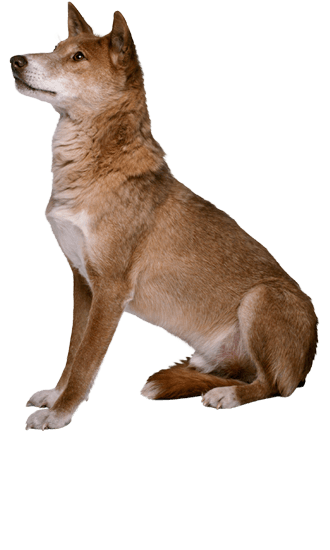
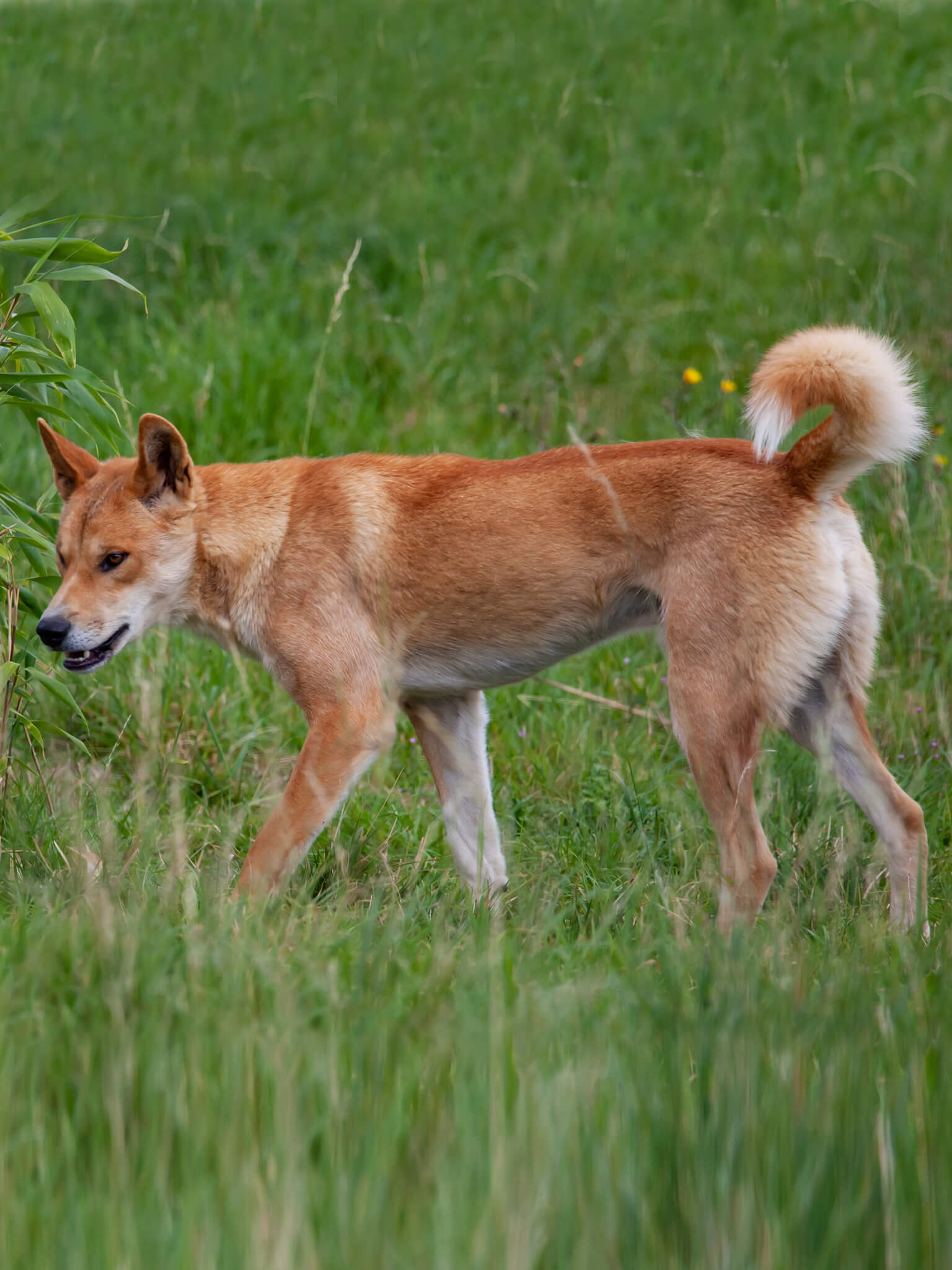
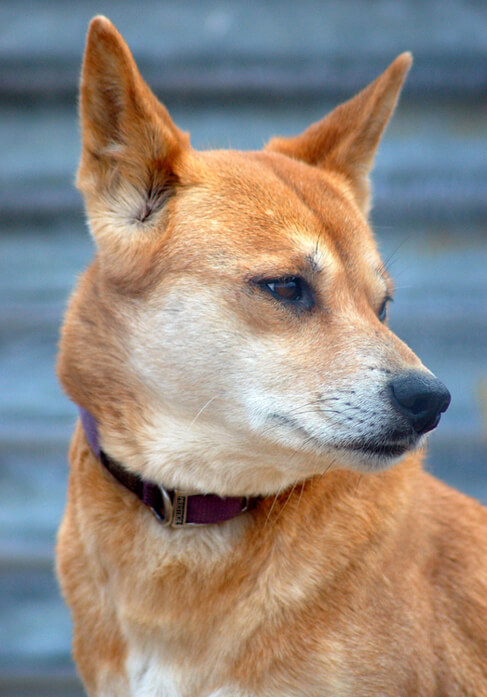
The dog has a shorthaired soft coat. The color of this coat ranges from reddish ginger, rust, yellow to brown and, rarely, also to black with white points on the feet, snout and tail-tip. The length, density and texture of the coat vary according to climate. The dog’s head has got an alert expression with mobile, small, rounded erect ears. The dingo’s eyes are intense and vary in color from yellow to orange. The dog’s tail is pretty long and well furred and appears bushy. Dingoes, however, do not have dewclaws.
Height: The dog’s height varies between 17 inches and 25 inches.
Weight: Dingo dogs weigh 40-70 pounds. However dogs of much higher weights have also been documented.

Free Dingo Training Secrets
Free Course on Dingo Training & Obedience
Stop All Bad Behavior, Excessive Barking and Biting
Dingo Personality Traits
Temperament of the Dog
Dingo dogs have never been fully domesticated. They do not qualify as friends or companions like many other dogs. There can be some reasons cited for this though- remote isolation of the animal and lack of human intervention. Previously untrained, adult Dingoes just cannot be obedience trained.
A Dingo pup may, however, be obedience trained in the best manner with the display of kindness and patience and the extending of firm yet gentle efforts. Such pups to be trained should be the ones taken from the litter before six weeks of age. Once over ten weeks old, the pups are certainly not to be taken out of the wild.
Some unusual traits can be observed in the Dingoes too. They are great tree climbers. They stay interestingly aloof at times. The Dingoes have only one breeding cycle a year unlike other dogs. Female Dingoes, unlike ordinary bitches, choose a single mate for life. The bitches may even mourn themselves to death after the loss of their partners. The Dingo dam may place the litter of pups in the hollow of a tree thus securing their protection from all sides while placing herself in guarding position at the front.
The Dingo dogs exhibit strong co-operative instincts- vocalizing together before a hunt. They live and hunt in packs of various sizes. They do not bark like other dogs. Instead a distinctive yelping or howling can be heard from them at times. The dogs do not also prefer to swim. If needed by they will only wade through water.
Dingoes staying in the wild always tend to shy away from human beings. They also rarely show aggression. They tend to run away rather than attack and bite humans. During breeding season (around May/June) the male dingoes kept as pets become very restless.
Dingo Activity Level
Exercise Needs
Being an undomesticated animal the dog gets lot of exercises in the wild. So, individuals owning the animal need take these dogs on a long walk or jog everyday in order to provide them the exercise that they need.
Living Conditions
Being wild dogs Dingoes are not to be taken into the apartment. They are best kept in a securely fenced enclosure. The dogs can withstand hot climates. They only need sufficient space for activity. Owners must make sure not to take them off their leashes when in a park.
Grooming
The Dingo has got a natural weather-resistant coat. This takes care of itself and no specific grooming requirements are there. The dog also does not have any doggie odor.
Â
Free Dingo Training Secrets
Free Course on Dingo Training & Obedience
Stop All Bad Behavior, Excessive Barking and Biting
Health and Care
The breed does not suffer from any specific health problem.
National Breed Clubs
Life Expectancy
The dogs can live up to 20 years. However, in captivity they usually have a lower lifespan.
Group: Southern, Hound Group.
Train Your Dingo To Listen To You
Get Instant Access to Your Training Now - For Free
Sign up for our Free Dingo Mini Course to have a housebroken, obedient dog that happily comes to you every time you call.
You'll learn new commands to obedience-train your dog as well as how to housebreak your dog in 6 days or less.
You'll also learn how to eliminate bad habits like barking, nipping or biting, jumping, or pulling on the leash.Here's just s small fraction of what else you'll learn in the course:
How to lead and think like a pack dog - the new psychology.
3 dangerous mistakes that most Australian Dingo owners make when they are trying to potty train their dogs.
The 2 main reasons why your dog barks excessively and how to control its excessive barking.
How to obedience train your Dingo to permanently end behavioral problems like Jumping, Aggression, Pulling on Leash.
A surprisingly easy way to teach your dog cool new tricks.
How to improve your dog's lifespan and keep it from getting overly heavy with a healthy and nutritious diet.
Getting Pro help fast - how to get access to our expert trainers when you need them most.
One hidden psychological trigger that all Dingos have... that practically allows you to "analyze" and "control" your dog's every action.
Priority access to the free online seminars conducted by our training experts.
Whereas other dog training related web sites and books offer generic information for dogs in general, ours is the ONLY web site that offers Australian Dingo information specifically, from a renowned panel of experts - because as you probably know, Australian Dingos have their own special training requirements that other dogs don't have.




What Other Dog Owners Say…

Our Free Courses
Dog Obedience TrainingDog Housetraining
Stop Dog Barking
Stop Dog Biting
HomeMade Dog food
Dog Grooming
Adopting A Dog
Read More
PureBred Dog BreedsMixed Dog Breeds
Dog Groups
Training Small Dog Breeds
Training Medium Dog Breeds
Training Large Dog Breeds
Exercising Your Dog
Dog Health
More Articles
Dog Grooming Needs
Our Tribute