Privacy Policy: Your email address is 100% safe.
We don't spam and hate it as much as you do :-) You can also unsubscribe from our mailing list at any time.
Subscribe to The FREE Dalmatian Training Course to learn how you can easily turn your unruly and disobedient Dalmatian into a loving, friendly companion. Step-by-step tips for puppy housebreaking, dog obedience training and stopping bad behavior.
Sign Up
Sign Up
Dalmatian: Breed Personality, Fitness & Care

About Dalmatian
Country of Origin, History of Dalmatians
The Dalmatian is a breed whose heritage is hotly disputed by researchers. There is no evidence that the breed originated in Dalmatia. The Dalmatian is most certainly a dog of very ancient lineage that has come through the centuries virtually unchanged.
Dalmatian Tools
Breed Selector Tool - is the Dalmatian the right breed for you?
Is the Dalmatian the right breed for you and your family?
Find out by using our Free Dog Breed Selector Tool
Check Your Dalmatian's Learning Style
Are you aware dogs also have a learning style that can greatly affect their ability to housetrain as well as be trained correctly. Evaluate your Dalmatian's learning style and personality using our free Learning Style tool so that you are better able to provide him with the proper Dalmatian training methods.
Is your Dalmatian dominating over you?
Does your Dalmatian bark unnecessarily? Does your Dalmatian come to you when you call? Download a FREE Report on Dog Dominance for you and your Dalmatian and learn how to control your dog.
Do you make these mistakes with your Dalmatian?
Are you inadvertently snow-balling bad behavior in your Dalmatian? Evaluate your Dog Training Style from our Free Tool and learn how best to deal with your dog.
Dalmatian Calorie Calculator
Do you know how many calories your Dalmatian needs every day and how many cups of food you should be giving it every day? Click here to use our Dalmatian Calorie Calculator.
Description of the Breed
The Dalmatian is a symmetrical,
muscular, medium-sized dog with superior endurance.
A picture of elegance, the Dalmatian has lean,
clean lines.
The feet are round with well-arched toes and the nails are either white or the same color as the spots. The nose can be black, brown (liver), or blue or a dark gray. The eyes are dark brown, amber, or blue, with an intelligent expression. The ears are soft, narrowing toward the point, carried with a slight upward curve.
Coat
It has a short, hard, dense coat of pure white with black or liver colored spots randomly splashed over it. The spots can be black, brown (liver), lemon, dark blue, tri colored, brindled, solid white or sable.
Puppies are born completely white and the spots develop later.
Height
Dogs 22-24 inches (50-60cm.);
Bitches 20-22 inches (50-55cm.)
Weight: About 55 pounds (25 kg)

Free Dalmatian Training Secrets
Free Course on Dalmatian Training & Obedience
Stop All Bad Behavior, Excessive Barking and Biting
Dalmatian Personality Traits
Dalmatian Temperament
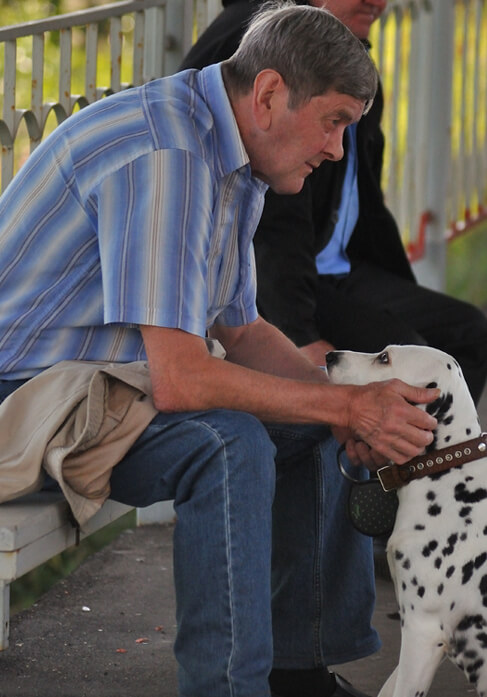
Dalmatians have a vast about of stamina and energy. They are playful, happy-go-lucky, extremely sensitive and loyal. The Dalmatian needs human companionship. For this reason they do not make good yard dogs. They have excellent memory.
The Dalmatian enjoys playing with children, but may be too rambunctious for toddlers. They get along well with other pets, but some may be aggressive with strange dogs; males often dislike other males. Somewhat high-strung, and can be timid without enough socialization. Quite intelligent, but can be willful.
Living Conditions
A Dalmatian is not an ideal dog for apartment dwellers unless it can be taken out for a brisk walk or run several times a day. They are very active indoors and will do best with at least an average-sized yard. This breed should not be kept outside in the cold.
Training
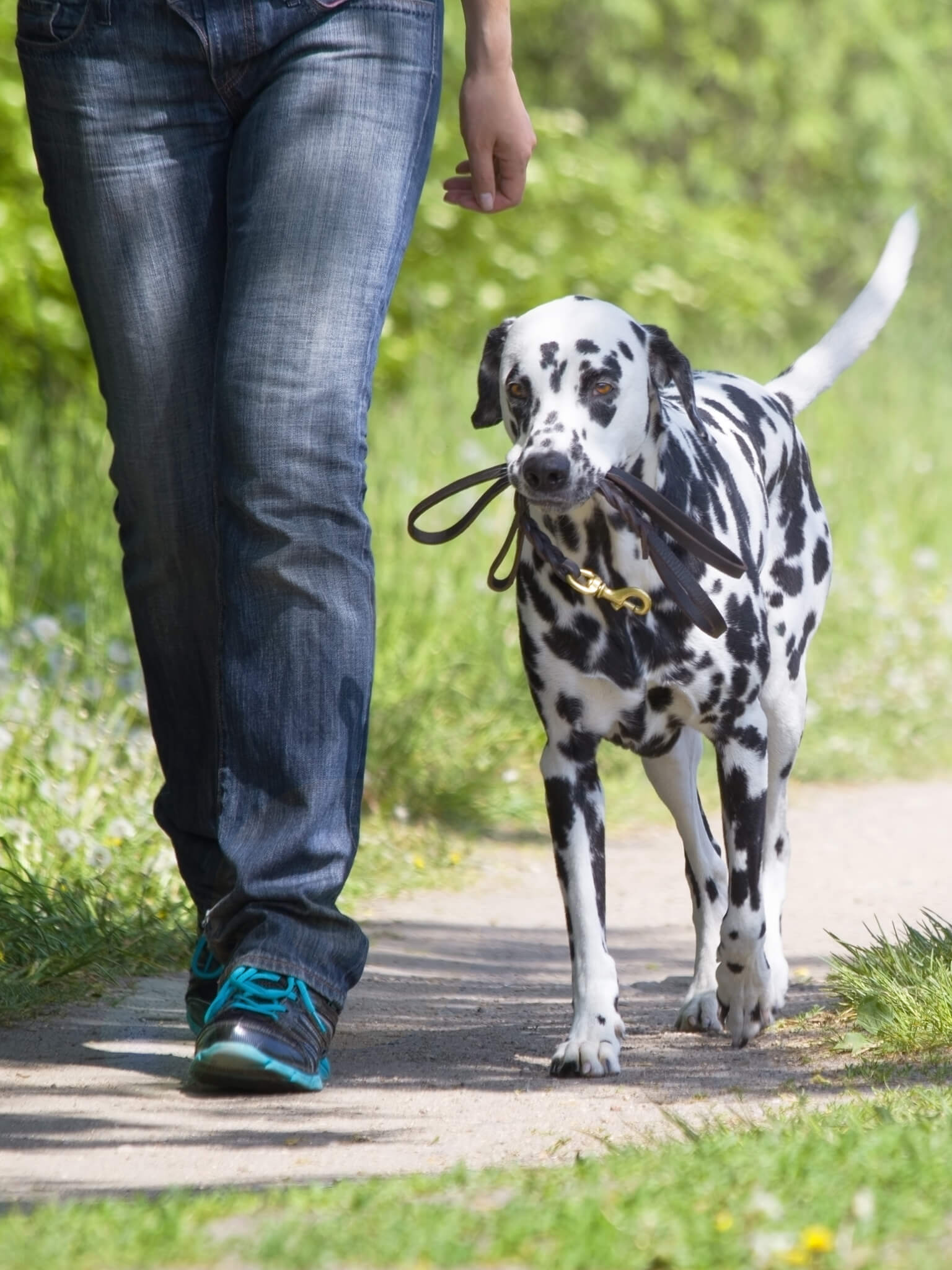
They need to be taken on daily, long, brisk walks, runs or jogs. Lack of adequate exercise can cause a wide array of behavioral problems.
The Dalmatian generally does well with firm, consistent training. The Dalmatian is trainable to a high degree of obedience. They can be trained for defense and are good watchdogs. Generally, their attention spans are limited. More so in the hands of an inexperienced owner who does not create the correct rank order. Combinations of rewards (treats, play and praise, in that order) are the best bets and will go a long way in getting their attention and for training purposes. Gentle consistent corrections are often sufficient to correct unacceptable behavior.
Common complaints heard are that while the owner has been able to get the Dalmatian to respond while on leash or while in familiar areas, it does not obey equally well off the leash or in unfamiliar areas. This problem is not breed specific, however, again a trainer inexperience issue.
Free Dalmatian Training Secrets
Free Course on Dalmatian Training & Obedience
Stop All Bad Behavior, Excessive Barking and Biting
Grooming
The Dalmatian sheds profusely twice a year. It is a hardy, easy to keep breed, though frequent brushing is needed to cope with constant shedding. They do not have a doggy odor and are said to be clean and even avoid puddles. It should be bathed only when necessary.
Free Dalmatian Training Secrets
Free Course on Dalmatian Training & Obedience
Stop All Bad Behavior, Excessive Barking and Biting
Health and Care
In their late teens, both males and females may suffer bone spurs and arthritic conditions. Deafness affects 10-12% of Dalmatian puppies. Every Dalmatian puppy should be BAER-tested for deafness. Urinary stones and skin allergies (especially to synthetic fibers in carpets and upholstery) are also sometimes inherited. Uric acid levels in Dalmatians are higher than in any other breed, sometimes causing urinary blockage. Some Dalmatians suffer from cataracts.
National Breed Clubs
Life Expectancy: About 10-12 years
Breed Club: www.thedca.org
Rescue Link: http://www.thedca.org/rescue.html
Group:Gun Dog, AKC Non-Sporting Group.
AKC Popularity Ranking: 56.
Also Known As: Carriage Dog, Dalmatiner, Dalmatinac, Firehouse Dog, Plum Pudding Dog, Spotted Coach Dog
Train Your Dalmatian To Listen To You
Get Instant Access to Your Training Now - For Free
Sign up for our Free Dalmatian Mini Course to have a housebroken, obedient dog that happily comes to you every time you call.
You'll learn new commands to obedience-train your dog as well as how to housebreak your dog in 6 days or less.
You'll also learn how to eliminate bad habits like barking, nipping or biting, jumping, or pulling on the leash.Here's just s small fraction of what else you'll learn in the course:
How to lead and think like a pack dog - the new psychology.
3 dangerous mistakes that most Dalmatian owners make when they are trying to potty train their dogs.
The 2 main reasons why your dog barks excessively and how to control its excessive barking.
How to obedience train your Dalmatian to permanently end behavioral problems like Jumping, Aggression, Pulling on Leash.
A surprisingly easy way to teach your dog cool new tricks.
How to improve your dog's lifespan and keep it from getting overly heavy with a healthy and nutritious diet.
Getting Pro help fast - how to get access to our expert trainers when you need them most.
One hidden psychological trigger that all Dalmatians have... that practically allows you to "analyze" and "control" your dog's every action.
Priority access to the free online seminars conducted by our training experts.
Whereas other dog training related web sites and books offer generic information for dogs in general, ours is the ONLY web site that offers Dalmatian information specifically, from a renowned panel of experts - because as you probably know, Dalmatians have their own special training requirements that other dogs don't have.




What Other Dog Owners Say…

Our Free Courses
Dog Obedience TrainingDog Housetraining
Stop Dog Barking
Stop Dog Biting
HomeMade Dog food
Dog Grooming
Adopting A Dog
Read More
PureBred Dog BreedsMixed Dog Breeds
Dog Groups
Training Small Dog Breeds
Training Medium Dog Breeds
Training Large Dog Breeds
Exercising Your Dog
Dog Health
More Articles
Dog Grooming Needs
Our Tribute