Privacy Policy: Your email address is 100% safe.
We don't spam and hate it as much as you do :-) You can also unsubscribe from our mailing list at any time.
Subscribe to The FREE Chihuahua Training Course to learn how you can easily turn your unruly and disobedient Chihuahua into a loving, friendly companion. Step-by-step tips for puppy housebreaking, dog obedience training and stopping bad behavior.
Sign Up
Sign Up
Chihuahua: Temperament, Exercise, Health (Chi)
About Chihuahua
Country of Origin, History of Chihuahuas
The Chihuahua may have originated from the Fennec Fox, a very small animal with big eyes and ears. This would explain the tiny frame, luminous eyes and large ears. The breed's name comes from the Mexican State of Chihuahua, where the earliest specimens of the breed were found.
The Techichi, a companion of the ancient Toltecs, is believed to be the ancestor of the Chihuahua. No records of the Techichi are, so far, available prior to the 9th century. Dogs very similar to the Chihuahua were found in the Pyramids of Cholula, predating 1530 and in the ruins of Chichen Itza on the Yucatan Peninsula.
The Chihuahua's origin, therefore, was present-day Mexico. However, the breed may have traveled to Europe with Christopher Columbus. A historical letter written by Columbus to the King of Spain makes reference to the tiny dog. By the mid-1800s, the breed had traveled to the United States from various European countries and from Mexico. It was the first breed registered by the American Kennel Club and consistently ranks in the top 15 breeds in popularity in the US.
Today's Chihuahua, the smallest breed in the world, is much smaller than its predecessor. Perhaps the Chinese Crested, brought from Asia to Alaska across the Bering Strait, was responsible for the reduction in size. Modern Chihuahuas are also found in a myriad of colors.
Chihuahua Tools
Breed Selector Tool - is the Chihuahua the right breed for you?
Is the Chihuahua the right breed for you and your family?
Find out by using our Free Dog Breed Selector Tool
Check Your Chihuahua's Learning Style
Are you aware dogs also have a learning style that can greatly affect their ability to housetrain as well as be trained correctly. Evaluate your Chihuahua's learning style and personality using our free Learning Style tool so that you are better able to provide him with the proper Chihuahua training methods.
Is your Chihuahua dominating over you?
Does your Chihuahua bark unnecessarily? Does your Chihuahua come to you when you call? Download a FREE Report on Dog Dominance for you and your Chihuahua and learn how to control your dog.
Do you make these mistakes with your Chihuahua?
Are you inadvertently snow-balling bad behavior in your Chihuahua? Evaluate your Dog Training Style from our Free Tool and learn how best to deal with your dog.
Chihuahua Calorie Calculator
Do you know how many calories your Chihuahua needs every day and how many cups of food you should be giving it every day? Click here to use our Chihuahua Calorie Calculator.
A General Appearance of the Dog
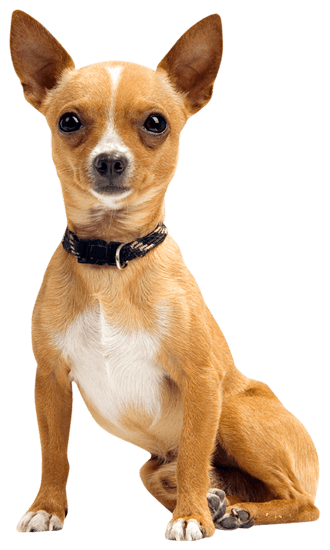
Male Chihuahuas are preferred when they have shorter bodies but they appear to be longer when measured from the shoulders to the buttocks. Chihuahuas are known for their slightly oval head, with a Molera on it, which may not always be there, their small body and large, sharp ears. A Chihuahua's snout is usually short and slightly pointed. They have lean jaws and cheeks and blue, mole, pink or chocolate colored noses. They have slightly arched necks, well-rounded ribs and a tail that is either up or curled in a loop with the tip of it slightly touching the back.
Coat
There are two types of Chihuahuas. One of which has smooth, soft glossy coat, which covers the whole body except the head and ears. The other version has a long coat with an undercoat. This type of coat could be either curly or flat.
Height
Male : 6 - 10 inchess
Female : 6 - 10 inches
Weight
Male: under 6 pounds
Female: under 6 pounds

Free Chihuahua Training Secrets
Free Course on Chihuahua Training & Obedience
Stop All Bad Behavior, Excessive Barking and Biting
Chihuahua Personality Traits

Temperament of the Dog
Chihuahuas can adapt to both tiny apartments as well as busy city lives. Although categorized as highly excitable, edgy dogs, good training can bring out the very best in Chihuahuas, who are lauded for their personality and devotion. Most Chihuahuas are known to bond with usually a single, grown-up member of the family and eventually become possessive about him/her and may not be best suited to be children's pets. Owing to their small size, this breed is very sensitive to cold weather condition. They are extremely devoted towards their owners and equally snappy towards strangers. However training Chihuahuas through positive reinforcement and constant interaction can teach this breed some important socializing skills.
Better suited to an indoor or outdoor lifestyle?
In warm climates, they will need air-conditioning to breathe properly and in cold climates, they will need heat as they do not hold body heat well. Most Chihuahuas will want to wear a sweater indoors and outdoors much of the time. They are ideal as full-time indoor dogs since they can more easily be paper or litter trained than outdoor potty trained. They will like a walk outdoors, but want to stay with their owner or cuddled in a blanket on their beds.
Are they suited to homes with kids?
Because of their loyalty they can do well in households housing elderly individuals. They have sharp teeth and might even unknowingly bite kids while playing and are thus not fit for houses with kids.
Training
They are not easy to train and thus, should be trained through walks and interaction with other dogs and individuals. A small dog like Chihuahua should be crate-trained and obedience training could be imparted as well, but with a bit of persistence. They love attention and hence should be potty-trained through positive reinforcement and are never to be treated harshly. While taking the dog on a walk, one should always put a harness around him and not a leash.
Free Chihuahua Training Secrets
Free Course on Chihuahua Training & Obedience
Stop All Bad Behavior, Excessive Barking and Biting
Chihuahua Activity Level
Short daily walks serve the purpose for these dogs and they do not need a lot of exercise. Taking them on walks occasionally should keep them in good spirits, as the breed likes to travel.
How to take care of a Chihuahua Puppy?
They should be kept indoors till the time they are old enough to go out. They are playful and should be given chewable toys to prevent chewing up of valuable furniture. Their ears and eyes should be cleaned preventing infection from setting in and they need vaccination at the right age. Chihuahua puppies enjoy sunbathing and also need adequate rest. Only nutritional dog food should be fed.
Grooming
Both types need bathing once a month with mild shampoo. The long coated ones should be brushed several times with soft bristles while the smooth coated ones occasional brushing. Strict ear and dental care should to be taken.
Free Chihuahua Training Secrets
Free Course on Chihuahua Training & Obedience
Stop All Bad Behavior, Excessive Barking and Biting
Health and Care
Chihuahuas are sometimes picky eaters, and care must be taken to provide them with adequate nutrition. At the same time, care must be exercised not to overfeed this tiny breed. Overweight Chihuahuas are more prone to joint injuries, tracheal collapse, chronic bronchitis, and shortened life span.
Start your Chihuahua out on a good quality kibble food for small or toy breeds. If your dog is under a year old, use the puppy formula for toy dogs as it will have a higher proportion of fats and carbohydrates than the adult food and that will aid in the puppy's development. Once your puppy is a year old, use the adult version of the food. Check the label and see if the food contains glucosamine because you will want to add a glucosamine supplement if it does not.
Make sure the kibbles are small so that your dog can easily bite and chew them. Dry food is preferred to canned food as the chewing of the kibbles helps to keep the Chihuahua’s gums healthier, jaws stronger, and teeth cleaner. If, however, you have an elderly Chi, most of these manufacturers also make a canned food which you can give in small portions.
Dental care is extremely important for Chi's. Their teeth must be cleaned at least twice a week. Daily is ideal as they are so prone to gum and tooth diseases. The new dental vaccine is a good idea for your Chihuahua.
If your dog is digging at his bottom or scooting, he may need a trip to the vet to get his anal sac emptied.
Genetic Problems
A common habit some Chihuahuas is snorting when they are overexcited or alarmed. Many chis quiver or tremble when keen, alert or anxious. Quivering can also signify the chi is cold or frightened.
His prominent eyes are susceptible to corneal dryness and secondary glaucoma. Chihuahuas are also prone to eye infections due to their large, round, protruding eyes and their relatively low ground clearance.
Chihuahuas are also prone to some genetic anomalies, often neurological ones, such as epilepsy and seizure disorders.
Chihuahuas have moleras, or a soft spot in their skulls, and they are the only breed of dog to be born with an incomplete skull. The molera does fill in with age, but great care needs to be taken during the first six months until the skull is fully formed. Many veterinarians are not familiar with Chihuahuas as a breed, and mistakenly confuse a molera with hydrocephalus (because Chis are prone to that). The Chihuahua Club of America has issued a statement regarding this often deadly misdiagnosis. Chihuahua puppies exhibiting hydrocephalus usually have patchy skull platelets rather than a solid bone, and typically are lethargic and do not grow at the same pace as their siblings.
Chihuahuas are prone to several forms of heart disease, so if your Chihuahua coughs—coughing is one sign of heart disease—visit your veterinarian. One of the common Chihuahua cardiac problems is an inherited heart disease called PDA (patent ductus arteriosus). The gums of dogs with PDA can be bluish rather than pink because blood doesn't follow the normal route through heart and lungs, thus the blood contains more carbon dioxide than normal. Chihuahuas can also have heart valve disease (endocardiosis). Valve disease is made worse if your pet has dental disease because bacteria in the mouth circulate through the blood and grow on the heart valves. It's important to brush your Chihuahua's teeth and provide good oral care.
Tracheal collapse is common in Chihuahuas because the cartilage rings that hold open the airway are fragile. To protect your pet's throat and keep pressure off the airway, use a harness rather than a collar. If your pet develops a collapsing trachea, it may develop a cough. Give your dog a daily supplement with glucosamine to help keep the lining of the airway in a healthy, moist state—just as these supplements help keep the inside of joints healthy, moist , and smooth.
Bone and joint diseases such as arthritis are common even though the Chihuahua is very tiny. Chihuahuas can have bone disease in the hip if the circulation is poor (Legg-Perthes disease).
Chihuahuas, especially males, have a genetic predisposition to developing cystine bladder stones. Visit the veterinarian if your Chihuahua is having difficulty urinating. If cystine stones develop, which is more likely in acidic urine, pets are put on medications, such as potassium citrate, that raise the urinary pH (alkalinize).
Chihuahuas can also be at risk for hypoglycemia, or low blood sugar. This is especially dangerous for puppies. Left unattended, hypoglycemia can lead to coma. Your vet will help you learn how to manage this situation. You may need to give insulin shots or feed your dog a special diet or to feed your dog more often, but only your vet can tell you what will work for your dog.
Cautions about Breeding the Dog
Each Chihuahua is different as they all have a different set of temperament and can develop severe behavioral problems if it has not met its right match. Most of the Chihuahuas have severe complications while whelping and they often have puppies by caesarian section, which are often abandoned after childbirth. Those dogs below 4 pounds of weight should never be bred.
Litter Size: Average: 2
Life Span: 15 years
National Breed Clubs
National Breed Club: Chihuahua Club of America.
Recognition: ACR, NKC, FCI, APRI, ANKC, UKC, KCGB, NZKC, AKC, NKC, CKC
Group: Toy Group.
AKC Popularity Ranking: 33
Also Known As: Chiwawa, Chihuahau, Chiuaua
Train Your Chihuahua To Listen To You
Get Instant Access to Your Training Now - For Free
Sign up for our Free Chihuahua Mini Course to have a housebroken, obedient dog that happily comes to you every time you call.
You'll learn new commands to obedience-train your dog as well as how to housebreak your dog in 6 days or less.
You'll also learn how to eliminate bad habits like barking, nipping or biting, jumping, or pulling on the leash.Here's just s small fraction of what else you'll learn in the course:
How to lead and think like a pack dog - the new psychology.
3 dangerous mistakes that most Chihuahua owners make when they are trying to potty train their dogs.
The 2 main reasons why your dog barks excessively and how to control its excessive barking.
How to obedience train your Chihuahua to permanently end behavioral problems like Jumping, Aggression, Pulling on Leash.
A surprisingly easy way to teach your dog cool new tricks.
How to improve your dog's lifespan and keep it from getting overly heavy with a healthy and nutritious diet.
Getting Pro help fast - how to get access to our expert trainers when you need them most.
One hidden psychological trigger that all Chihuahuas have... that practically allows you to "analyze" and "control" your dog's every action.
Priority access to the free online seminars conducted by our training experts.
Whereas other dog training related web sites and books offer generic information for dogs in general, ours is the ONLY web site that offers Chihuahua information specifically, from a renowned panel of experts - because as you probably know, Chihuahuas have their own special training requirements that other dogs don't have.




What Other Dog Owners Say…

Our Free Courses
Dog Obedience TrainingDog Housetraining
Stop Dog Barking
Stop Dog Biting
HomeMade Dog food
Dog Grooming
Adopting A Dog
Read More
PureBred Dog BreedsMixed Dog Breeds
Dog Groups
Training Small Dog Breeds
Training Medium Dog Breeds
Training Large Dog Breeds
Exercising Your Dog
Dog Health
More Articles
Dog Grooming Needs
Our Tribute