Privacy Policy: Your email address is 100% safe.
We don't spam and hate it as much as you do :-) You can also unsubscribe from our mailing list at any time.
Subscribe to The FREE Carolina Dog Training Course to learn how you can easily turn your unruly and disobedient American Dingo into a loving, friendly companion. Step-by-step tips for puppy housebreaking, dog obedience training and stopping bad behavior.
Sign Up
Sign Up
Carolina Dog: Breed Temperament, Exercise Needs & Health
About Carolina Dog
Country of Origin, History of Carolina Dogs
It is believed that the Carolina Dogs are direct descendants of the ancient pariah dogs, which had accompanied the Asians who had traveled across the Bering Straits some 8000 years ago. These Indian breed dogs coming from the deep southern regions of America were the first dogs to be domesticated in the Americas. The Kentucky Shell Heap Dog and the Basketmaker Dog are two examples of ancient pariahs on the North American continent that are akin to the Carolina Dogs. Indians had used such dogs for tasks like herding. The yellow color of the Carolina Dogs had earned them the name of “Old Yaller”.
Wild dogs had roamed freely in the deserted areas of South Carolina for many years. Dr. I. Lehr Brisbin, Jr. had discovered and named the breed of these wild dogs as Carolina Dogs. While Brisbin had noted that the bone structure of these dogs appeared similar to those of the Dingo other scientists had observed that the bone structure of the dogs bore similarities to the remains of Neolithic dog bones. Such Neolithic dog bones had been obtained from Native American burial sites thousands of years old.
Carolina Dog Tools
Breed Selector Tool - is the Carolina Dog the right breed for you?
Is the Carolina Dog the right breed for you and your family?
Find out by using our Free Dog Breed Selector Tool
Check Your Carolina Dog's Learning Style
Are you aware dogs also have a learning style that can greatly affect their ability to housetrain as well as be trained correctly. Evaluate your Carolina Dog's learning style and personality using our free Learning Style tool so that you are better able to provide him with the proper Carolina Dog training methods.
Is your Carolina Dog dominating over you?
Does your Carolina Dog bark unnecessarily? Does your Carolina Dog come to you when you call? Download a FREE Report on Dog Dominance for you and your Carolina Dog and learn how to control your dog.
Do you make these mistakes with your Carolina Dog?
Are you inadvertently snow-balling bad behavior in your Carolina Dog? Evaluate your Dog Training Style from our Free Tool and learn how best to deal with your dog.
Carolina Dog Calorie Calculator
Do you know how many calories your Carolina Dog needs every day and how many cups of food you should be giving it every day? Click here to use our Carolina Dog Calorie Calculator.
A General Description of the Dog
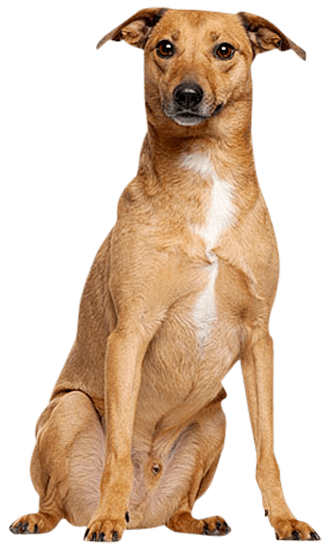
The Carolina Dog has a muscular build and a medium-sized body. Many features of sight hounds can be found in these dogs. The dog’s appearance resembles that of a small Dingo. A host of special features of the dog’s body had been crucial to its survival in the swamps and forests of the South.
The dog has a lean but level and strong torso. Its chest is deep, well developed and is lighter in color compared to the other parts of the body. The belly is well tucked up, as is characteristic of sight hound breeds.
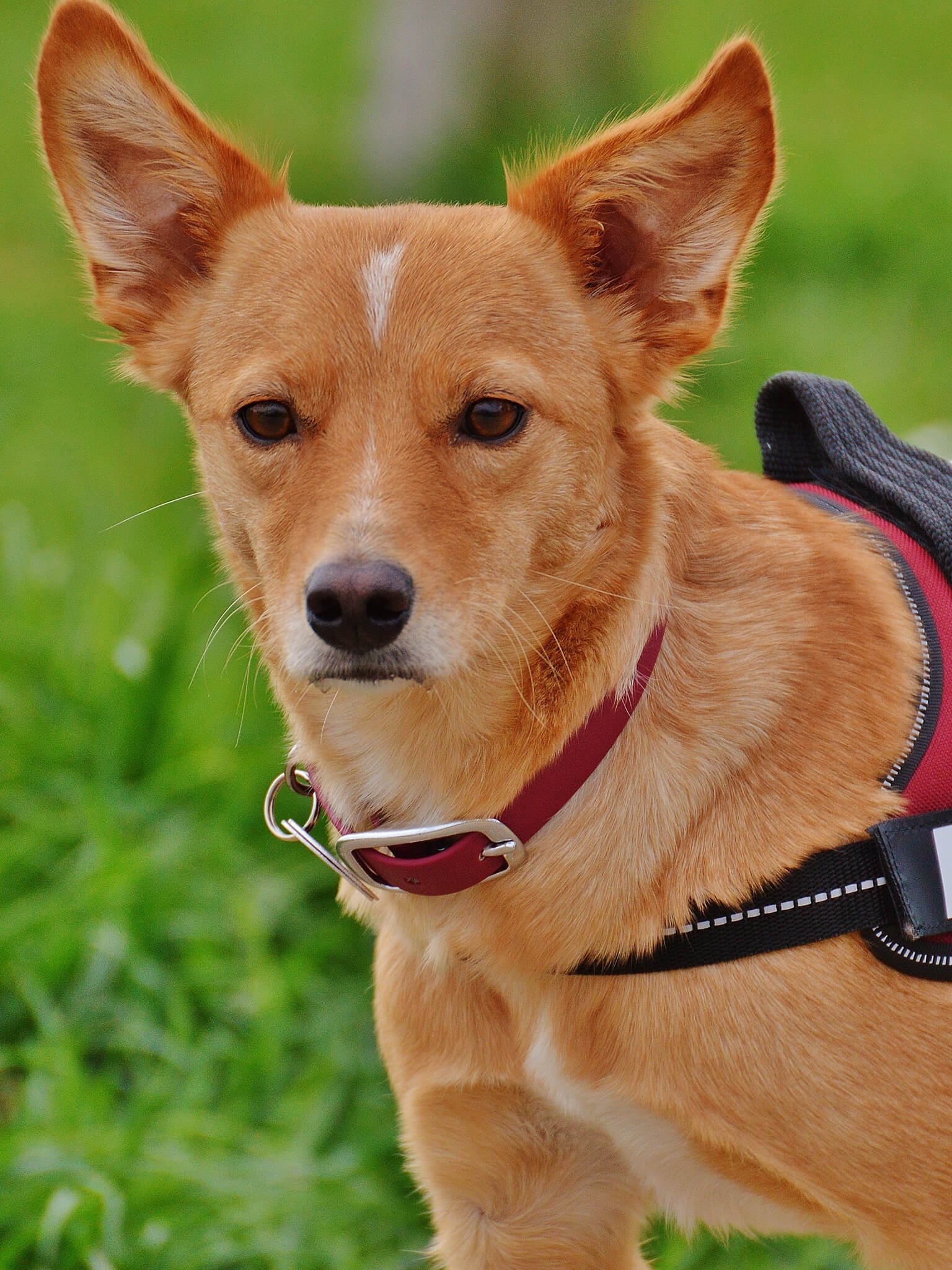
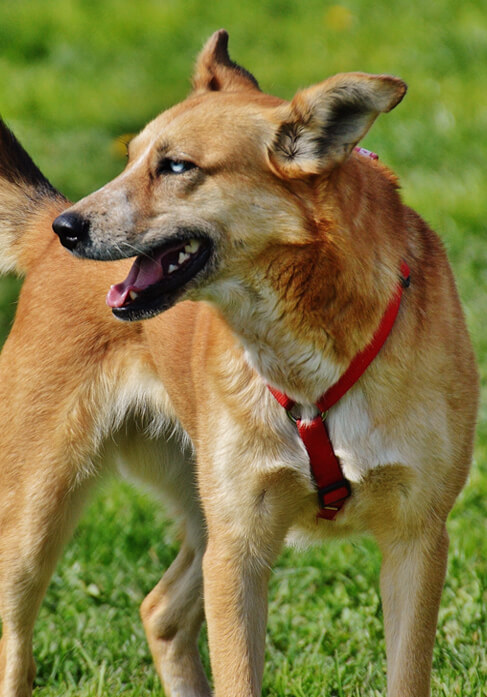
The Carolina Dog has almond shaped dark eyes. The pair of ears is set high and stands erect. The head of the dog is wedge-shaped and the neck is long. The dog’s coat is thick though shorthaired. It is usually deep red ginger in color. However, the coats may also come in spotted white, tan, desert-sand, beige, yellow, red sable and orange colors. There may be pale buff markings on the shoulders and side of muzzle. A dense undercoat forms during season.
The Carolina Dog’s tail exists in the shape of a fishhook and is carried in different positions according to the mood of the dog.
Height: Between 17 inches and 24 inches.
Weight: 30-44 pounds.

Free Carolina Dog Training Secrets
Free Course on Carolina Dog Training & Obedience
Stop All Bad Behavior, Excessive Barking and Biting
Carolina Dog Personality Traits
Temperament of the Breed
Though not a completely domesticated breed the Carolina Dog is accustomed to living in an apartment with a family. However, it is better to introduce the dog as a pup to the owner and the owner's family. After all it is basically a pack dog and may keenly long to bond with the members of its pack/family if brought in as pet at an older age.
It is easy to train the Carolina dogs and with early and proper socialization they turn out to be loyal and amenable companions to all family members. These are clean pets that are easy to housebreak. They usually do not have any problems getting along with children and other household pets. The dogs are playful and sociable and can adapt themselves to both indoor and outdoor living. The dogs have been known to have a tendency to howl at certain noises.
Carolina Dog Activity Level
How active is the breed?
Being a moderately active dog the Carolina Dog needs to get reasonable amount of exercising everyday. One long walk daily or vigorous play can act as good regular exercise for the dog. The dog can also be trained and made to undertake certain special physical activities thus winning applauses while exercising its body.
Suitable for apartment living?
It is to be remembered that Carolina Dogs are a breed have still not been completely domesticated. Hence, they are not really suitable for being kept as pets in apartments. It is best if the dogs kept at places where they get plenty of space around them. They stay fine outdoors if it is not too cold. They adapt well to hot and sunny climates. Their need to exercise considerably needs to be borne in mind while selecting an environment for their living.
Grooming
Being short and close to the body the coat of the Carolina Dog is pretty easy to groom. Once-a-week brushing of the coat is a good enough grooming measure. The coat can be washed occasionally when needed.
Free Carolina Dog Training Secrets
Free Course on Carolina Dog Training & Obedience
Stop All Bad Behavior, Excessive Barking and Biting
Health and Care
There have been reported no major health issues or concerns associated particularly with the Carolina Dogs. However, these are larger dogs and as with other large dogs these too may be sometimes found to be developing hip dysplasia.
National Breed Clubs
Life Expectancy: Life Expectancy of the Carolina Dog is 12-14 years.
Group: Carolina Dogs belong to the Southern group of Sight hounds.
AKC Popularity Ranking: Foundation Stock Service
Also Known As: American Dingo, Indian’s Dog, Dixie Dingo and North American Native Dingo. The common nicknames used for it are- Yellow Dog, Ol’ Yaller and Yaller Dog.
Train Your Carolina Dog To Listen To You
Get Instant Access to Your Training Now - For Free
Sign up for our Free Carolina Dog Mini Course to have a housebroken, obedient dog that happily comes to you every time you call.
You'll learn new commands to obedience-train your dog as well as how to housebreak your dog in 6 days or less.
You'll also learn how to eliminate bad habits like barking, nipping or biting, jumping, or pulling on the leash.Here's just s small fraction of what else you'll learn in the course:
How to lead and think like a pack dog - the new psychology.
3 dangerous mistakes that most American Dingo owners make when they are trying to potty train their dogs.
The 2 main reasons why your dog barks excessively and how to control its excessive barking.
How to obedience train your Carolina Dog to permanently end behavioral problems like Jumping, Aggression, Pulling on Leash.
A surprisingly easy way to teach your dog cool new tricks.
How to improve your dog's lifespan and keep it from getting overly heavy with a healthy and nutritious diet.
Getting Pro help fast - how to get access to our expert trainers when you need them most.
One hidden psychological trigger that all Carolina Dogs have... that practically allows you to "analyze" and "control" your dog's every action.
Priority access to the free online seminars conducted by our training experts.
Whereas other dog training related web sites and books offer generic information for dogs in general, ours is the ONLY web site that offers American Dingo information specifically, from a renowned panel of experts - because as you probably know, American Dingos have their own special training requirements that other dogs don't have.




What Other Dog Owners Say…

Our Free Courses
Dog Obedience TrainingDog Housetraining
Stop Dog Barking
Stop Dog Biting
HomeMade Dog food
Dog Grooming
Adopting A Dog
Read More
PureBred Dog BreedsMixed Dog Breeds
Dog Groups
Training Small Dog Breeds
Training Medium Dog Breeds
Training Large Dog Breeds
Exercising Your Dog
Dog Health
More Articles
Dog Grooming Needs
Our Tribute