Privacy Policy: Your email address is 100% safe.
We don't spam and hate it as much as you do :-) You can also unsubscribe from our mailing list at any time.
Subscribe to The FREE Cane Corso Training Course to learn how you can easily turn your unruly and disobedient Cane Corso into a loving, friendly companion. Step-by-step tips for puppy housebreaking, dog obedience training and stopping bad behavior.
Sign Up
Sign Up
Cane Corso: Characteristics, Grooming, Health, Training (Italian Mastiff)

About Cane Corso
Country of Origin, History of Cane Corsos
The Cane Corso originated in Italy. Their name comes from the word COHORS meaning ‘guard of the courtyard.’ It is known that Cane Corsos were housed in kennels and used by the military in 1137 in Monopoli di Sabina near Rome. For many years, Cane Corso was common throughout Italy. They are mentioned in poetry and prose in the 1500s. They were associated with farmers as a good all-purpose dog – one who can be used to do farm work as well as guard the farm and livestock. Its aggressive and combative nature was necessary for reaching its goal; however, its social nature helped it to react only when necessary and to understand the necessity through human gestures and attitude.
Cane Corso Tools
Breed Selector Tool - is the Cane Corso the right breed for you?
Is the Cane Corso the right breed for you and your family?
Find out by using our Free Dog Breed Selector Tool
Check Your Cane Corso's Learning Style
Are you aware dogs also have a learning style that can greatly affect their ability to housetrain as well as be trained correctly. Evaluate your Cane Corso's learning style and personality using our free Learning Style tool so that you are better able to provide him with the proper Cane Corso training methods.
Is your Cane Corso dominating over you?
Does your Cane Corso bark unnecessarily? Does your Cane Corso come to you when you call? Download a FREE Report on Dog Dominance for you and your Cane Corso and learn how to control your dog.
Do you make these mistakes with your Cane Corso?
Are you inadvertently snow-balling bad behavior in your Cane Corso? Evaluate your Dog Training Style from our Free Tool and learn how best to deal with your dog.
Cane Corso Calorie Calculator
Do you know how many calories your Cane Corso needs every day and how many cups of food you should be giving it every day? Click here to use our Cane Corso Calorie Calculator.
A General Appearance of the Dog
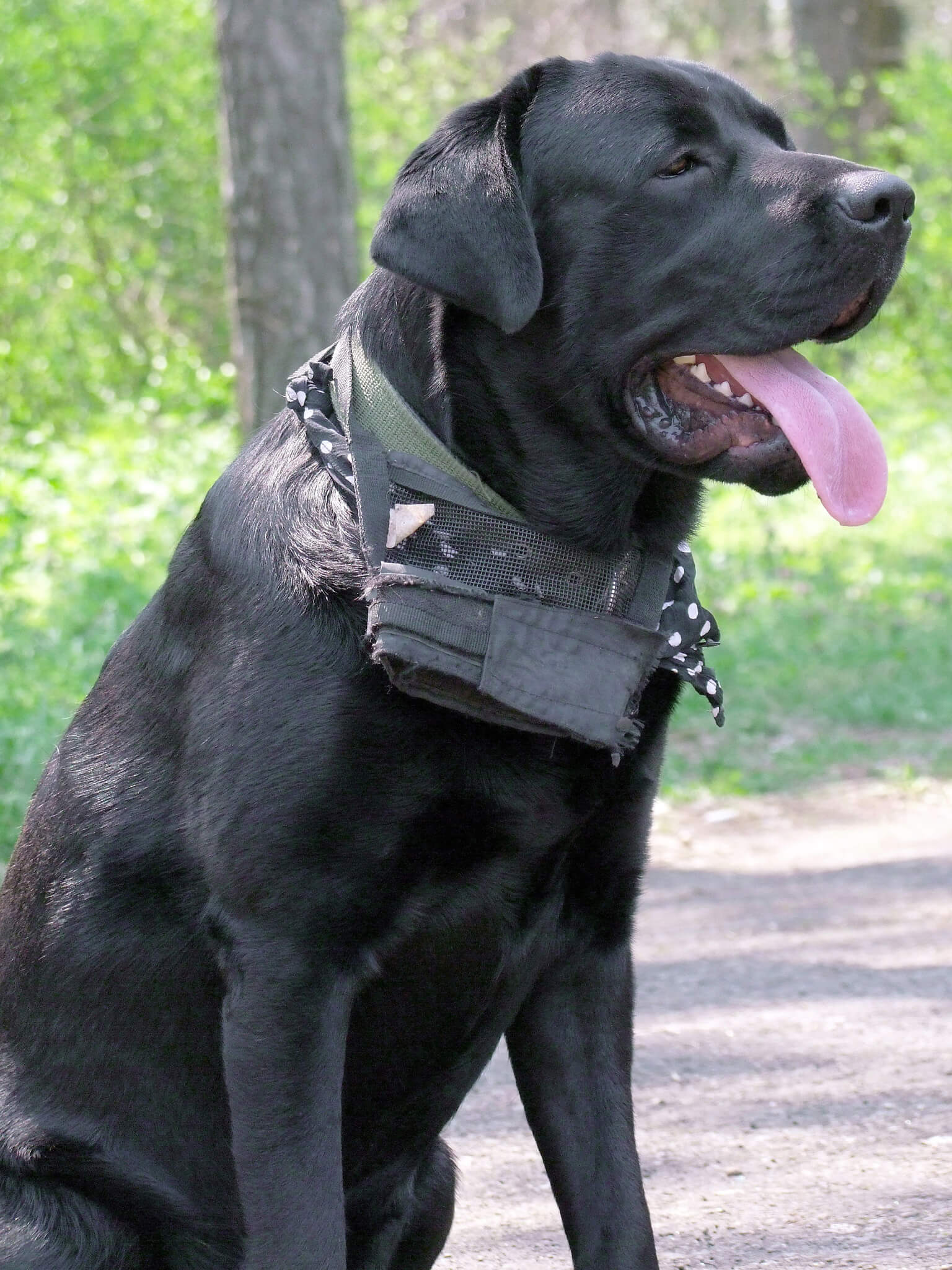
The Cane Corso is a solidly built medium to large mastiff-type dog. His muzzle (nose) is very broad and deep. His broad head has a square appearance because of his jowls. The Corso’s thick skin tightly covers a very powerful, well-muscled body that is broader in front than in back. His tail is short and thick – either naturally or docked – and carried level with his back when he is alert. He is athletic and moves with elegance. He appears noble and majestic and gives the appearance of a guard dog.
Coat Color
Black, red, shades of gray, shades of fawn, and a color composed of stripes of shades of fawn or tan and gray called tubby. Any of these colors can also be brindled. Dark brown eyes and black muzzles are appropriate on black, fawn, red and brindles of these colors. Gray muzzles and lighter eyes are acceptable on lighter colored dogs. A white patch may appear on the chest, throat, chin, backs of the legs, or the toes.
Coat Type
The coat is short, very stiff, and shiny. A dense undercoat gets thicker in cold weather.
Height
Males: 25 – 27 inches
Females: 23.5 – 26 inches
Weight
Males: 90 -110 lbs
Females: 80 – 100 lbs.

Free Cane Corso Training Secrets
Free Course on Cane Corso Training & Obedience
Stop All Bad Behavior, Excessive Barking and Biting
Cane Corso Personality Traits

Temperament of the Dog
The Cane Corso is docile, loving, and affectionate with his owner and family. He warms up to friends who visit often. However, he is a fierce protector of his property and family. He is intelligent and willing to please, so can be easily trained. Socialization and training need to begin when he is young and continue through at least his first two years.
Extremely loyal, this dog knows instinctively when to become terrifying, defensive and protective. The Cane Corso has an even temperament and is very gentle with children.
They are not normally barkers but will bark to alert their owners of a strange situation.
Housebreaking can be difficult if not begun early and continued consistently. All members of the family need to learn to be Alpha with this dog, so the help of an experienced trainer is advised. Obedience training throughout their lives is strongly recommended. Chewing can be an issue with the puppies.
Better suited to an indoor or outdoor lifestyle?
Cane Corso should not be put in the yard and forgotten. While he can handle all types of weather and take care of himself, he greatly desires the attention and love of his family. He is a social dog who wants interaction with people and other dogs if possible. He needs a securely fence yard with room to run. Electric “invisible containment systems” do not deter this dog.
Cane Corso is a fine dog for indoors or even apartments, but remember he is a large dog so needs thorough socialization and early and continuing obedience training. He will need daily vigorous exercise – walks, jogging, runs in a dog park, games of fetch, etc.
Are they suited to homes with kids?
The Cane Corso bonds quickly to his family, especially children. They are protective of the entire family. They are very gentle and patient with children and seem to understand their innocence and vulnerability. They love the attention of the family and enjoy being included in family activities.
Cane Corso Activity Level
How Active is the Breed?
This is an active and athletic breed.
How Much Exercise Does the Dog Need at every stage of its Life?
Puppies are very active and require a number of short playtimes throughout the day. As the dog matures, he can do activities such as jogging with his master. He enjoys playing very actively and he is quite athletic throughout his life.
Grooming
The Cane Corso is easy to groom as he is a light shedder and only needs brushing a couple of times a month. A couple of baths a year are necessary only if he smells bad. He does need monthly tick and flea preventative.
Free Cane Corso Training Secrets
Free Course on Cane Corso Training & Obedience
Stop All Bad Behavior, Excessive Barking and Biting
Health and Care
Cane Corsos are generally a healthy breed, able to withstand a variety of climates and very pain tolerant, except for their ears which are very sensitive.
Genetic Problems
Cane Corsos are prone to hip dysplasia, bloat, red mange (a skin condition caused by mites), and several eye problems including cherry eye, entropion, and ectropion.
Breeding the Dog and any Cautions
Be in contact with other breeders if you choose to breed your Cane Corso.
Litter Size: Litters can be 4-8 puppies.
Life Span: The average lifespan is 10-11 years.
National Breed Clubs
National Breed Clubs
US – Cane Corso Association of America –
www.cancorso.org
International Cane Corso Federation – iccfregistry@yahoo.com
Other Recognition: FCI, NKC, APRI, ACR
The Cane Corso is part of the Foundation Stock Service of the American Kennel Club.
Group: Working Group
AKC Popularity Ranking: 32
Also Known As: Cane Corso Italiano, Italian Mastiff, Cane di Macellaio, Sicilian Branchiero
Train Your Cane Corso To Listen To You
Get Instant Access to Your Training Now - For Free
Sign up for our Free Cane Corso Mini Course to have a housebroken, obedient dog that happily comes to you every time you call.
You'll learn new commands to obedience-train your dog as well as how to housebreak your dog in 6 days or less.
You'll also learn how to eliminate bad habits like barking, nipping or biting, jumping, or pulling on the leash.Here's just s small fraction of what else you'll learn in the course:
How to lead and think like a pack dog - the new psychology.
3 dangerous mistakes that most Cane Corso owners make when they are trying to potty train their dogs.
The 2 main reasons why your dog barks excessively and how to control its excessive barking.
How to obedience train your Cane Corso to permanently end behavioral problems like Jumping, Aggression, Pulling on Leash.
A surprisingly easy way to teach your dog cool new tricks.
How to improve your dog's lifespan and keep it from getting overly heavy with a healthy and nutritious diet.
Getting Pro help fast - how to get access to our expert trainers when you need them most.
One hidden psychological trigger that all Cane Corsos have... that practically allows you to "analyze" and "control" your dog's every action.
Priority access to the free online seminars conducted by our training experts.
Whereas other dog training related web sites and books offer generic information for dogs in general, ours is the ONLY web site that offers Cane Corso information specifically, from a renowned panel of experts - because as you probably know, Cane Corsos have their own special training requirements that other dogs don't have.




What Other Dog Owners Say…

Our Free Courses
Dog Obedience TrainingDog Housetraining
Stop Dog Barking
Stop Dog Biting
HomeMade Dog food
Dog Grooming
Adopting A Dog
Read More
PureBred Dog BreedsMixed Dog Breeds
Dog Groups
Training Small Dog Breeds
Training Medium Dog Breeds
Training Large Dog Breeds
Exercising Your Dog
Dog Health
More Articles
Dog Grooming Needs
Our Tribute