Privacy Policy: Your email address is 100% safe.
We don't spam and hate it as much as you do :-) You can also unsubscribe from our mailing list at any time.

Subscribe to The FREE Border Collie Training Course to learn how you can easily turn your unruly and disobedient Border Collie into a loving, friendly companion. Step-by-step tips for puppy housebreaking, dog obedience training and stopping bad behavior.
Sign Up
Sign Up
Border Collie: Training, Characteristics, Exercise, Health
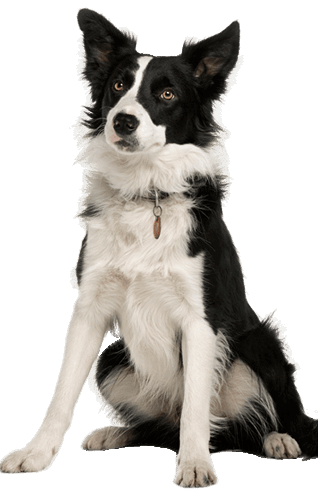
About Border Collie
Country of Origin, History of Border Collies
The Border Collie is a type of herding dog that originated in Northumberland lying on the border of Scotland and England in the United Kingdom. The breed had been developed from old British droving/gathering breeds and spaniels. The mention of the ‘Collie’ or ‘Colley’ type of dogs first appeared towards the end of the nineteenth century. A tri-color dog known as Old Hemp has been regarded as the common ancestor of all Border Collie dogs of the day.
Old Hemp had been bred from a black and tan dog and a black-coated, strong-eyed bitch. Hemp had been a quiet and powerful dog that sheep responded to very easily.
In an effort to produce a dog that could excel at rat baiting and rabbit coursing, Black and Tan Terriers were crossed with the Whippet.
By 1860 Manchester had become the breed centre for these new terriers, and so they became known as Manchester Terriers. Because of their demeanor, they were called the Gentleman's Terrier in Victorian times.
Border Collie Tools
Breed Selector Tool - is the Border Collie the right breed for you?
Is the Border Collie the right breed for you and your family?
Find out by using our Free Dog Breed Selector Tool
Check Your Border Collie's Learning Style
Are you aware dogs also have a learning style that can greatly affect their ability to housetrain as well as be trained correctly. Evaluate your Border Collie's learning style and personality using our free Learning Style tool so that you are better able to provide him with the proper Border Collie training methods.
Is your Border Collie dominating over you?
Does your Border Collie bark unnecessarily? Does your Border Collie come to you when you call? Download a FREE Report on Dog Dominance for you and your Border Collie and learn how to control your dog.
Do you make these mistakes with your Border Collie?
Are you inadvertently snow-balling bad behavior in your Border Collie? Evaluate your Dog Training Style from our Free Tool and learn how best to deal with your dog.
Border Collie Calorie Calculator
Do you know how many calories your Border Collie needs every day and how many cups of food you should be giving it every day? Click here to use our Border Collie Calorie Calculator.
A General Appearance of the Dog
This dog is active and alert. The Collie’s body has strong foot pads and muscular hindquarters. The ears are not cropped and are medium in size. The overall body shape is balanced and appears to be athletic. The Border Collie is strong and can endure the physical demands of work appropriate to the breed. In addition, Collies are known to be intelligent animals, and their facial expression is lively and alert.
Coat
The Border Collie is bred in several color combinations, which include solid color, bi-color, tri-color, merle, and sable.
The dog’s coat can be either rough or smooth. The Border Collie’s coat is thick and water resistant. The topcoat is straight or wavy and is coarser than the undercoat. The undercoat is short and dense, with a softer feel than the topcoat.
Height
This breed is shorter in height than in length.
Male: 19 to 22 inches
Female: 18 to 21 inches.
Weight: 30 - 45 pounds.

Free Border Collie Training Secrets
Free Course on Border Collie Training & Obedience
Stop All Bad Behavior, Excessive Barking and Biting
Border Collie Personality Traits
Temperament of the Dog
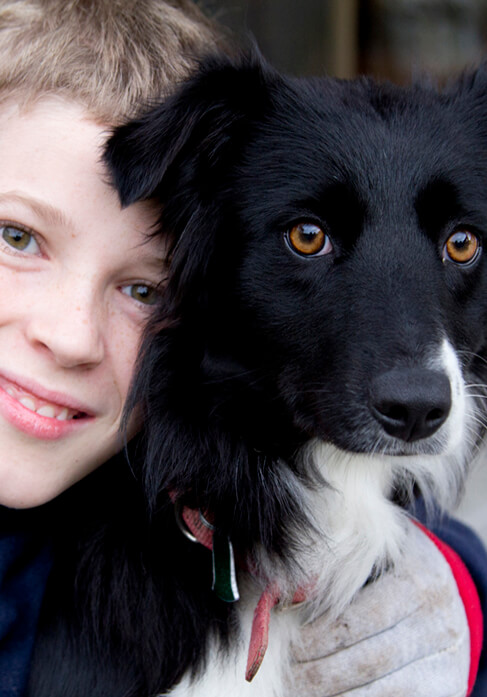
Border Collies are very intelligent and protective of family members as well as well-behaved with people who are familiar to them. However, they are also known to destroy property if they are left idle for long periods of time, and they require a great deal of personal attention. Unfortunately, Border Collies are frequently seen in animal shelters because their owners find that they cannot give them enough attention.
The Border Collie is a 'working dog' and it needs to be challenged. It is more suited to an outdoor environment, and it behaves well with children and cats, but should be monitored if in the presence of other small animals. The Collie behaves well with dogs of the opposite sex, but it tends to be aggressive with dogs of the same sex. Due to its tendency to stare and monitor behavior, the dog is sometimes seen as intimidating people or other animals. Even with proper attention and exercise, a Border collie is an intelligent animal who may act impulsively. For example, the Border Collie has a natural inclination to escape an environment, so care should be taken so that the dog doesn't try to jump over fences or 'bolt' through an opening in the yard.
As a companion animal, the Border Collie shows affection toward people who are familiar, but the dog will be reserved when a stranger is in the home. Border Collies relate to people by demonstrating interest and alertness; the dog will not show fear or apathy. If the dog becomes overtly aggressive, vicious, shy, or reticent, the owner should consider hiring a professional trainer as these behaviors are considered to be serious faults by professional breeders. These dogs require physical and mental exercise on a daily basis. As a result, they are not well suited to an environment that cannot provide this stimulation.
Better suited to an indoor or outdoor lifestyle?
When a person is considering a Border Collie as a pet, he or she must be aware that these animals require consistent physical, as well as mental attention. The dogs respond well to an outdoor, active lifestyle and to long walks, training classes, or another companion dog. In the event that training classes are required, a personal trainer is recommended due to the level of attention required by a Border Collie. An owner needs to prevent the dog from overexertion during periods of high temperature.
Are they suited to homes with kids?
Historically, Border Collies were kept due to their natural inclination for work and high level of energy. In addition, Border Collies were easy to train due to their above-average level of intelligence. As puppies, they easily socialize with people and other animals. However, when Border Collies are house pets, they maintain the herding instinct. It is not uncommon to see these dogs attempt to herd small animals, family members, and even large vehicles into a specific area of the house or yard. They will try to herd children out of a swimming pool! Therefore, these dogs are not suitable for households with small kids.
Training
If Border Collies are left alone for long periods of time without any mental or physical stimulation, they can become destructive and suffer from behavioral problems due to neglect.
A Border Collie needs consistency during training. For example, any words or body movements used during training need to be consistently repeated; otherwise, the Collie will perceive any differences as a new command. As previously stated, Border Collies are very intelligent and will pick up on subtle changes in an owner’s or trainer’s behavior.
When Border Collies are puppies, they experience physical elimination simply as a ‘need,’ not a discipline. The dog will feel a need to urinate or defecate and not have the ability to control the urge. An owner or trainer needs to have the Collie pup go outdoors on a regular schedule every day for at least six months. The time outside should be between thirty and sixty minutes. Border Collies tend to drink a great deal of water during the day, so they need to be put outside frequently and consistently.
Free Border Collie Training Secrets
Free Course on Border Collie Training & Obedience
Stop All Bad Behavior, Excessive Barking and Biting
Border Collie Activity Level
How active is the breed?
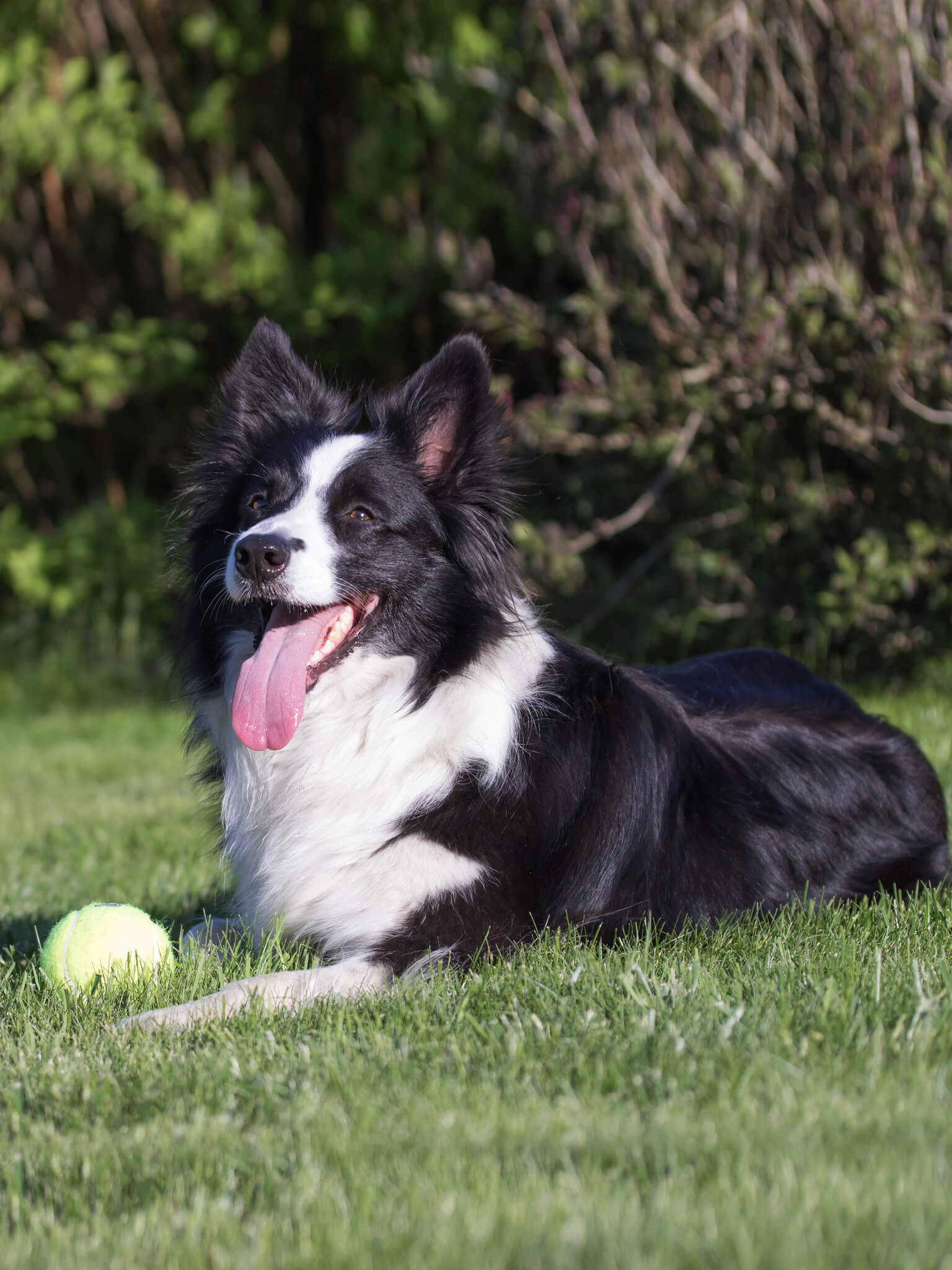
Because of their genetic predisposition toward activity, Border Collies can become restless when confined inside a home or pen. These dogs respond well to indoor activities such as playing with familiar toys, new toys, and learning new tricks. These activities provide the mental stimulation required by this breed of dog. Outside, the Collie enjoys physical exertion such as running across large areas, engaging in 'herding' behavior, and playing 'catch' with familiar objects.
Exercise Needs
Indoors or outdoors, the Border Collie can learn how to play 'hide and seek' with people or with hidden treats. This breed easily learns how to locate objects due to its sharp sense of smell. The dog will engage in this type of play for hours. If the dog must be left alone for a period of time, a companion dog will help keep him/her from getting bored. Also, hiding treats and toys around the yard will provide amusement for the Collie.
Sometimes Border Collies are not inclined to become active when left alone. They may require someone to prompt them and assist them in active behavior.
Grooming
It is important to care for the Border Collie’s undercoat, especially during times of the year when the dog sheds. It is recommended that the Collie’s feet be groomed under the knee only; the hair on the tail and upper-leg areas can be left alone. This is mainly due to the dog’s preference for the lower leg areas to be closely trimmed.
There are several grooming tools which can help groom a Border Collie, such as a matt splitter, a palm brush, and a nail clipper. A matt splitter should be used sparingly to break apart areas of thickly matted fur. A soft-bristle palm brush will result in a smoother coat and a relaxing massage for the dog. Owners can also use a ‘parrot’ (rounded) nail clipper, but it is recommended that a professional groomer or veterinarian perform toenail clipping to prevent harm or discomfort from ‘short trimming’ the dog’s nails.
The breed requires weekly grooming, which includes combing and brushing, to maintain its coat, prevent shedding, and detect insects or fleas. The Collie has a soft, short thick undercoat and an outer coat that is long and dense. The Border Collie requires bathing only if necessary, not on a regular basis. The ears should be checked for ticks and fur in and around the openings of the ears should be trimmed to a short length.
Free Border Collie Training Secrets
Free Course on Border Collie Training & Obedience
Stop All Bad Behavior, Excessive Barking and Biting
Health and Care
Genetic Problems
The most prominent illnesses found in Border Collies are hip dysplasia, elbow dysplasia, epilepsy, and hypothyroidism. In addition, males with the 'merle' gene (which produces a multi-colored coat) may develop eye problems, hearing problems, or both. It is recommended that a Border Collie be checked for the above illnesses during middle age, beginning at approximately six years of age.
Litter Size: Averages 6 puppies.
Life Span: 10 to 14 years
National Breed Clubs
National Breed Club
In the United Kingdom, the Border Collie is promoted by The International Sheep Dog Society. This organization provides information primarily to England, Ireland, Scotland, Wales, the Channel Islands, and the Isle of Man. The Society can be reached via the Internet at http://www.isds.org.uk/society/membership.htm.
In the United States, this
breed is represented by The American Kennel
Club. This organization can be reached via
the internet at http://www.akc.org/index.cfm?nav_area=homepage.
The AKC voted to recognize the Border Collie
as an official breed in February, 1995. The
AKC confirmed the showing of Border Collies
at competitions in October, 1995.
Recognition
Recognition
The Border Collie is recognized by The Kennel Club in the United Kingdom in the 'pastoral' classification. In the United States, the dog is recognized by the American Kennel Club in the 'herding' classification.
Group: It is officially recognized as a Pastoral dog by the Kennel Club of the United Kingdom. In the United States, the Border Collie is officially recognized as a herding dog by the American Kennel Club (AKC).
AKC Popularity Ranking: 35
Also known as: Sheep Dog.
Train Your Border Collie To Listen To You
Get Instant Access to Your Training Now - For Free
Sign up for our Free Border Collie Mini Course to have a housebroken, obedient dog that happily comes to you every time you call.
You'll learn new commands to obedience-train your dog as well as how to housebreak your dog in 6 days or less.
You'll also learn how to eliminate bad habits like barking, nipping or biting, jumping, or pulling on the leash.Here's just s small fraction of what else you'll learn in the course:
How to lead and think like a pack dog - the new psychology.
3 dangerous mistakes that most Border Collie owners make when they are trying to potty train their dogs.
The 2 main reasons why your dog barks excessively and how to control its excessive barking.
How to obedience train your Border Collie to permanently end behavioral problems like Jumping, Aggression, Pulling on Leash.
A surprisingly easy way to teach your dog cool new tricks.
How to improve your dog's lifespan and keep it from getting overly heavy with a healthy and nutritious diet.
Getting Pro help fast - how to get access to our expert trainers when you need them most.
One hidden psychological trigger that all Border Collies have... that practically allows you to "analyze" and "control" your dog's every action.
Priority access to the free online seminars conducted by our training experts.
Whereas other dog training related web sites and books offer generic information for dogs in general, ours is the ONLY web site that offers Border Collie information specifically, from a renowned panel of experts - because as you probably know, Border Collies have their own special training requirements that other dogs don't have.




What Other Dog Owners Say…

Our Free Courses
Dog Obedience TrainingDog Housetraining
Stop Dog Barking
Stop Dog Biting
HomeMade Dog food
Dog Grooming
Adopting A Dog
Read More
PureBred Dog BreedsMixed Dog Breeds
Dog Groups
Training Small Dog Breeds
Training Medium Dog Breeds
Training Large Dog Breeds
Exercising Your Dog
Dog Health
More Articles
Dog Grooming Needs
Our Tribute