Privacy Policy: Your email address is 100% safe.
We don't spam and hate it as much as you do :-) You can also unsubscribe from our mailing list at any time.

Subscribe to The FREE Barbet Training Course to learn how you can easily turn your unruly and disobedient Barbet into a loving, friendly companion. Step-by-step tips for puppy housebreaking, dog obedience training and stopping bad behavior.
Sign Up
Sign Up
Barbet: Personality, Health, Grooming (French Water Dog)
About Barbet
Country of Origin, History of Barbets
Though the real origin of the Barbet is lost in antiquity yet it has been opined that France had been the country of origin of the dog. The Barbet has been perceived as the original water dog of Europe. It had been known since the Middle Ages. Its progenitors date to the fourteenth century. Again this dog has been the ancestor of various modern breeds and types like the Poodle, the griffons, the Newfoundland and French sheepdog of Brie region.
Over the years Barbets had been employed for a variety of tasks. They had been used as a hunter’s assistant, as a shepherd dog for driving flocks and as a sailor’s companion helping out in securing lost items and lines at sea. The versatility of the breed and the multiple purposes to which they can be put has made the Barbets so very popular.
Barbet Tools
Breed Selector Tool - is the Barbet the right breed for you?
Is the Barbet the right breed for you and your family?
Find out by using our Free Dog Breed Selector Tool
Check Your Barbet's Learning Style
Are you aware dogs also have a learning style that can greatly affect their ability to housetrain as well as be trained correctly. Evaluate your Barbet's learning style and personality using our free Learning Style tool so that you are better able to provide him with the proper Barbet training methods.
Is your Barbet dominating over you?
Does your Barbet bark unnecessarily? Does your Barbet come to you when you call? Download a FREE Report on Dog Dominance for you and your Barbet and learn how to control your dog.
Do you make these mistakes with your Barbet?
Are you inadvertently snow-balling bad behavior in your Barbet? Evaluate your Dog Training Style from our Free Tool and learn how best to deal with your dog.
Barbet Calorie Calculator
Do you know how many calories your Barbet needs every day and how many cups of food you should be giving it every day? Click here to use our Barbet Calorie Calculator.
A General Description of the Breed
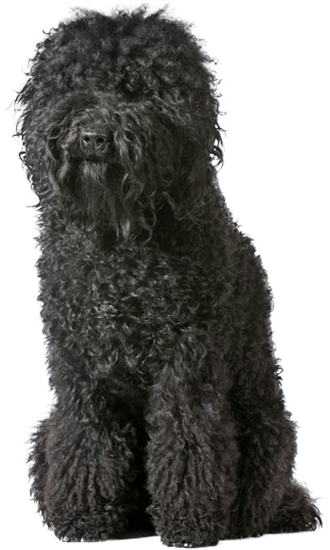
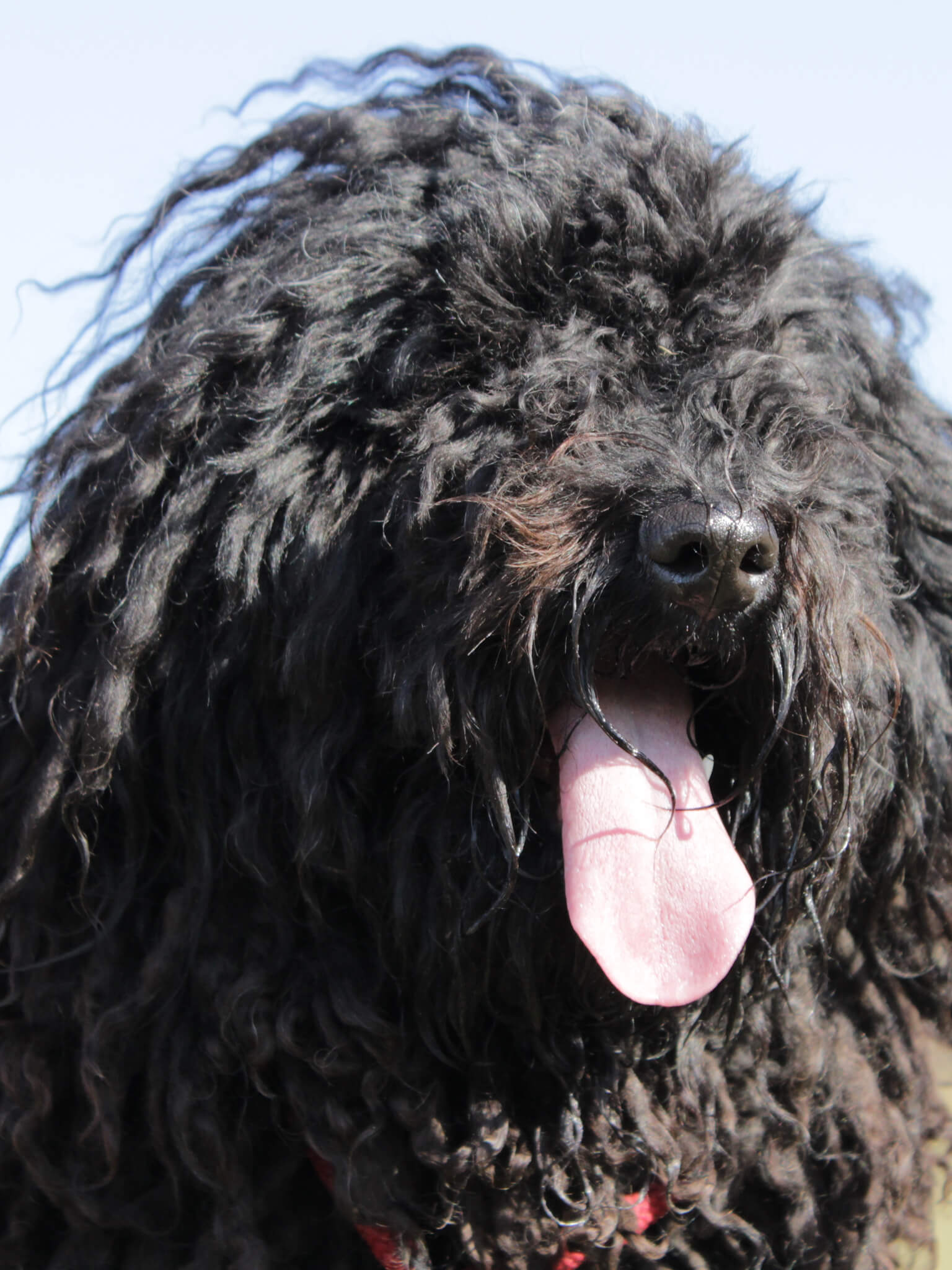
Barbets are medium sized and medium proportioned and have a characteristic thick, woolly coat covering their entire body. This coat is more curly than wavy. The coat provides efficient protection against damp and cold and forms a beard on the chin (‘barbe’ in French) that gives the dog its name- Barbet. The hairs on the head are especially long and cover up the eyes and the nose and form a mustache too (covering the bridge of the nose fully) alongside the beard. Their colors vary between black, chestnut, fawn, gray and white. However, it is uncommon to find mixed colors on the dog’s body. The dogs may or may not have any markings on their bodies.
Barbets have rounded and broad skulls and defined stops. They have square muzzles that are slightly shorter than the skulls. They have dark brown eyes and a black or brown nose. Their ears are long and broad and dropping. They have long tails whose ends form a slight hook.
Height
Male: 57 cm and 66 cm
Female: 52 cm and 62 cm.
Weight: 17 kg and 28 kg.

Free Barbet Training Secrets
Free Course on Barbet Training & Obedience
Stop All Bad Behavior, Excessive Barking and Biting
Barbet Personality Traits

Temperament of the Breed
The Barbets have a passion for water. Their love for swimming/engaging in playful activities in water does not die down even if it is cold. They are friendly and joyful creatures that serve as good and efficient companions. Barbets can be easily trained and they adapt themselves well to different situations. Hunters find them capable retrievers particularly of waterfowl while shepherds find them an effective aide in driving flocks. Again, sailors perceive them as a great help in fetching lost items and lines at sea.
Better suited to outdoor or indoor lifestyle?
Barbets adjust well to just any home environment and do not create problems with children and dogs or other pets of the household. They take well to apartment life provided their owners arrange for long walks for them and arrange for their occasional indulgence in swimming or other water sporting activities. It is important that the owners and members of their families devote time for caring for their pet Barbets as these dogs always crave for attention and companionship.
Barbets make perfect pets and can adjust well in a household environment. The company of children or other dogs or other pets does not create any problems for them.
How active is the breed?
Since by origin Barbets are working dogs and enjoy water and retrieving tasks they need to be given such works regularly. This will provide them the exercising that they need. It is a good idea to take Barbet pets on long walks on a daily basis. Since swimming is a passion for such dogs they ought to be provided with opportunities for swimming as well.
Grooming
Maintenance of the wooly coat characteristic of the Barbet requires lot of efforts. The wooly coat gets matted easily particularly if the dog goes into water. This should be brushed and detangled with a comb with lots of care. The twigs, mattes, leaves etc. that may get stuck to the coat while the dog pursues its daily activities through bushes etc. can thus be removed.
In order to facilitate the proper growth of the coat and get a tighter curl it is advised to completely shave a puppy when it is between 4 months and 6 months of age. Even later on periodic shaving of the coat helps it to become thick.
Free Barbet Training Secrets
Free Course on Barbet Training & Obedience
Stop All Bad Behavior, Excessive Barking and Biting
Health and Care
Barbets are not high-strung outdoors and have been known to be having fewer health problems. However, in some bloodlines hip dysplasia, cataracts and skin allergies have been observed. These need to be checked out in case of puppies that are being purchased to be kept as pets.
National Breed Clubs
Life Expectancy: 12-15 years.
Group: Sporting Group. As per F.C.I. classification these are Group 8 Retrievers, Flushing Dogs, Water Dogs.
AKC Popularity Ranking:
Also known as: French Water Dog, Barbette, Griffon d’arret a poil laineux and French Gun Dog
Train Your Barbet To Listen To You
Get Instant Access to Your Training Now - For Free
Sign up for our Free Barbet Mini Course to have a housebroken, obedient dog that happily comes to you every time you call.
You'll learn new commands to obedience-train your dog as well as how to housebreak your dog in 6 days or less.
You'll also learn how to eliminate bad habits like barking, nipping or biting, jumping, or pulling on the leash.Here's just s small fraction of what else you'll learn in the course:
How to lead and think like a pack dog - the new psychology.
3 dangerous mistakes that most Barbet owners make when they are trying to potty train their dogs.
The 2 main reasons why your dog barks excessively and how to control its excessive barking.
How to obedience train your Barbet to permanently end behavioral problems like Jumping, Aggression, Pulling on Leash.
A surprisingly easy way to teach your dog cool new tricks.
How to improve your dog's lifespan and keep it from getting overly heavy with a healthy and nutritious diet.
Getting Pro help fast - how to get access to our expert trainers when you need them most.
One hidden psychological trigger that all Barbets have... that practically allows you to "analyze" and "control" your dog's every action.
Priority access to the free online seminars conducted by our training experts.
Whereas other dog training related web sites and books offer generic information for dogs in general, ours is the ONLY web site that offers Barbet information specifically, from a renowned panel of experts - because as you probably know, Barbets have their own special training requirements that other dogs don't have.




What Other Dog Owners Say…

Our Free Courses
Dog Obedience TrainingDog Housetraining
Stop Dog Barking
Stop Dog Biting
HomeMade Dog food
Dog Grooming
Adopting A Dog
Read More
PureBred Dog BreedsMixed Dog Breeds
Dog Groups
Training Small Dog Breeds
Training Medium Dog Breeds
Training Large Dog Breeds
Exercising Your Dog
Dog Health
More Articles
Dog Grooming Needs
Our Tribute