Privacy Policy: Your email address is 100% safe.
We don't spam and hate it as much as you do :-) You can also unsubscribe from our mailing list at any time.
Subscribe to The FREE Akita Training Course to learn how you can easily turn your unruly and disobedient Akita into a loving, friendly companion. Step-by-step tips for puppy housebreaking, dog obedience training and stopping bad behavior.
Sign Up
Sign Up
Akita Dog Training Tips and Info on Akitas (Akita Inu, Japanese Akita Dog)
About Akita
Country of Origin, History of Akitas
The Akita is a large Japanese breed of dog that most probably originated in the Akita Prefecture of Japan, from where it gets its name. The Akita first appeared in Japan during the 16th century and they were originally used for hunting and dog fighting. The Japanese used these dogs for various hunting activities and to hunt several different kinds of animals.
The dogs were often used to hunt bear, deer and wild boar. Both males and females were paired together as work partners.
Today, the Akita can be found in various parts of the world and is now mainly used for security. They also make wonderful pets.The Japanese are very proud of these dogs and they respect them a great deal. The Akita is a symbol of good health and wealth. There is even a monument in Japan that commemorates this breed.
Helen Keller was the first to bring an Akita to the United States in 1936.The Akita Shepherd is a German hybrid of the German Shepherd and the Akita Inu.
The best way to determine the temperament of Akita dogs is to look up the different breeds in the dog’s history and determine the different characteristics from the different breeds.
Akita Tools
Breed Selector Tool - is the Akita the right breed for you?
Is the Akita the right breed for you and your family?
Find out by using our Free Dog Breed Selector Tool
Check Your Akita's Learning Style
Are you aware dogs also have a learning style that can greatly affect their ability to housetrain as well as be trained correctly. Evaluate your Akita's learning style and personality using our free Learning Style tool so that you are better able to provide him with the proper Akita training methods.
Is your Akita dominating over you?
Does your Akita bark unnecessarily? Does your Akita come to you when you call? Download a FREE Report on Dog Dominance for you and your Akita and learn how to control your dog.
Do you make these mistakes with your Akita?
Are you inadvertently snow-balling bad behavior in your Akita? Evaluate your Dog Training Style from our Free Tool and learn how best to deal with your dog.
Akita Calorie Calculator
Do you know how many calories your Akita needs every day and how many cups of food you should be giving it every day? Click here to use our Akita Calorie Calculator.
Description of the Dog
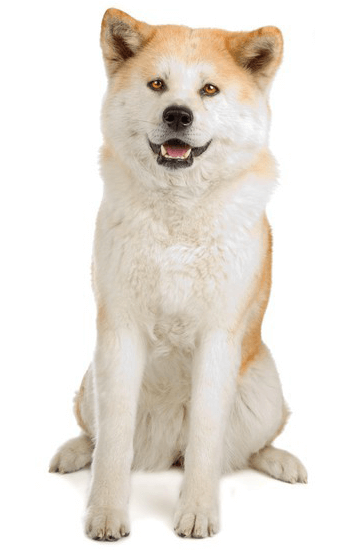
The Akita is the largest of the Japanese Spitz-type breeds. The dog is very powerful, solid and well proportioned. The dog has a broad, deep chest and level back. The head is broad and blunt with a triangle shape to it. The ears are small and erect and are carried forward. The eyes are often dark brown with a triangular shape. The nose is generally black, but brown on white Akitas are allowed. The lips are black and the tongue is pink. The tail is carried high and curls over the back. The Akita has cat-like feet. A black mask is forbidden in the breed standard.
Coat Color: Pure white, Red, Sesame, Brindle
Coat type
The coat is a double coat with a waterproof harsh layer on the outside and is insulated with a thick and soft undercoat.
Height
Male 26-28 inches
Female 24-26 inches
Weight
Male 75-100 pounds
Female75 -110 pounds

Free Akita Training Secrets
Free Course on Akita Training & Obedience
Stop All Bad Behavior, Excessive Barking and Biting
Akita Personality Traits
Akita Dog Temperament
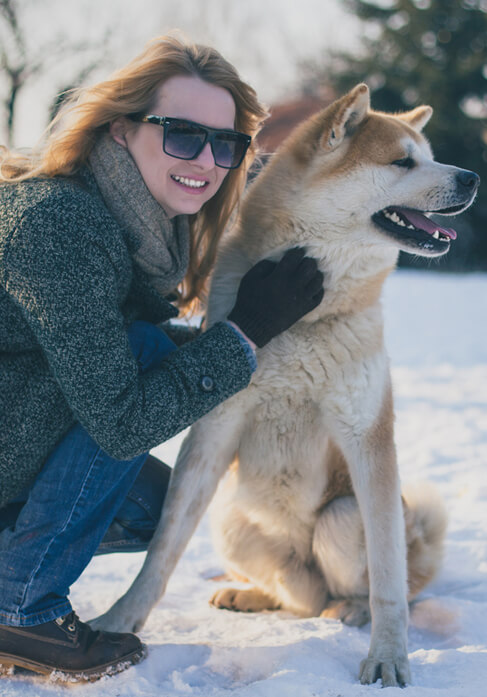
The Akita is usually a docile dog. However, they can be very aggressive to other dogs. They also do not care for dogs of the same gender. Males do not generally get along with other males, nor do females get along with other females. Akitas should also not be left alone with other breeds of dogs, as they can be very aggressive towards them. The breed is also food possessive and is capable of ferocity. The Akita is, however, a very courageous, intelligent, and fearless dog. They are known for being very protective of their family and their family's children.
The Akita is extremely faithful to its family. The dog should not be allowed to run off its leash around other animals. The dog may not be friendly towards other children and strangers. It is very important that these dogs are highly socialized, however, they should not be left unsupervised around strangers. They should also not be fed with other dogs because of their food possessiveness.
Better suited to an indoor or outdoor lifestyle?
Akitas enjoy both the indoor and outdoor lifestyle. They will feel secluded from their family if left outside all of the time.
Are they suited to homes with kids?
Akitas are good with the children of their family. Akitas should not be left unsupervised with children.
Training
The Akita must be trained by its owner. They do not do well at training schools, as they must learn the owner is the dominant figure in the household. They require a firm bond to be well behaved.
These dogs are very intelligent and they will get bored easily. They also learn very quickly and short training periods are suggested, as they will become bored. They can also be very stubborn and will simply walk away when they become uninterested in training. The Akita must learn basic obedience and the owner must practice with the dog on a continuous basis.
Although the dog is large, they do not require a large amount of exercise, moderate exercise and will be enough for these dogs. Most Akitas enjoy having a job. Try allowing your Akita to bring in the newspaper every morning. They may also try to take you by the wrist and lead you to their leash or dog treats. They do not do this out of aggression, but out of kindness. Firm but not harsh training is required in the early puppy stages.
They also do well with crate training for housebreaking.
Free Akita Training Secrets
Free Course on Akita Training & Obedience
Stop All Bad Behavior, Excessive Barking and Biting
Akita Activity Level
How active is the breed?
The Akita will do well with moderate exercise, and in a sedentary home.
Exercise Need
The Akita does require moderate exercise, however, puppies, should begin a firm training regimen as early as possible. This is important as puppies must learn who the head of a household is. These dogs do well inside or outside and will enjoy an occasional walk. They do not have a lot of energy to expel and will often receive plenty of exercise while running around the yard.
How to take care of an Akita Puppy?
The Akita must learn respect from an early age. It is very important that these dogs have obedience training from the puppy stage. These dogs should also be well socialized as puppies. The puppy is very willful and will need firm training. The Akita must respect its human owners as the head of the household.
Grooming
The course topcoat will require grooming with a firm bristled brush. Bathe only when absolutely necessary as the need topcoat has natural water proofing that will be removed by bathing. The breed is known to shed heavily twice a year.
Free Akita Training Secrets
Free Course on Akita Training & Obedience
Stop All Bad Behavior, Excessive Barking and Biting
Health and Care
Genetic Problems
Hip dysplasia and eye diseases are common genetic disorders. Dams and sires should be x-rayed and receive eye exams. The breed has also been known to suffer from thyroid, hypothyroid, autoimmune thyroiditis and immune diseases and skin problems. They may also have been known to have knee and patella problems.
Breeding the Dog and any Cautions
Hip dysplasia and eye disease should be checked before breeding.
Litter Size: 3 to 12 puppies, 7 or 8 are average.
Life Span: 10
to 12 years
National Breed Clubs
National Breed Club: Akita Club of America
Recognition: AKC, ACA, FCI, UKC, KCGB, CKC, NKC, NZKC, CKC, APRI, ACR, ACA
Group: Working Group
AKC Popularity Ranking: 47
Also known as: Akita Inu, Japanese Akita, Japanese Akita Inu, Great Japanese Dog
Train Your Akita To Listen To You
Get Instant Access to Your Training Now - For Free
Sign up for our Free Akita Mini Course to have a housebroken, obedient dog that happily comes to you every time you call.
You'll learn new commands to obedience-train your dog as well as how to housebreak your dog in 6 days or less.
You'll also learn how to eliminate bad habits like barking, nipping or biting, jumping, or pulling on the leash.Here's just s small fraction of what else you'll learn in the course:
How to lead and think like a pack dog - the new psychology.
3 dangerous mistakes that most Akita owners make when they are trying to potty train their dogs.
The 2 main reasons why your dog barks excessively and how to control its excessive barking.
How to obedience train your Akita to permanently end behavioral problems like Jumping, Aggression, Pulling on Leash.
A surprisingly easy way to teach your dog cool new tricks.
How to improve your dog's lifespan and keep it from getting overly heavy with a healthy and nutritious diet.
Getting Pro help fast - how to get access to our expert trainers when you need them most.
One hidden psychological trigger that all Akitas have... that practically allows you to "analyze" and "control" your dog's every action.
Priority access to the free online seminars conducted by our training experts.
Whereas other dog training related web sites and books offer generic information for dogs in general, ours is the ONLY web site that offers Akita information specifically, from a renowned panel of experts - because as you probably know, Akitas have their own special training requirements that other dogs don't have.




What Other Dog Owners Say…

Our Free Courses
Dog Obedience TrainingDog Housetraining
Stop Dog Barking
Stop Dog Biting
HomeMade Dog food
Dog Grooming
Adopting A Dog
Read More
PureBred Dog BreedsMixed Dog Breeds
Dog Groups
Training Small Dog Breeds
Training Medium Dog Breeds
Training Large Dog Breeds
Exercising Your Dog
Dog Health
More Articles
Dog Grooming Needs
Our Tribute